Lando Norris
 McLaren
 Mercedes
 Red Bull
 Ferrari
 Williams
 Racing Bulls
 Aston Martin
 Haas
Haas Alpine


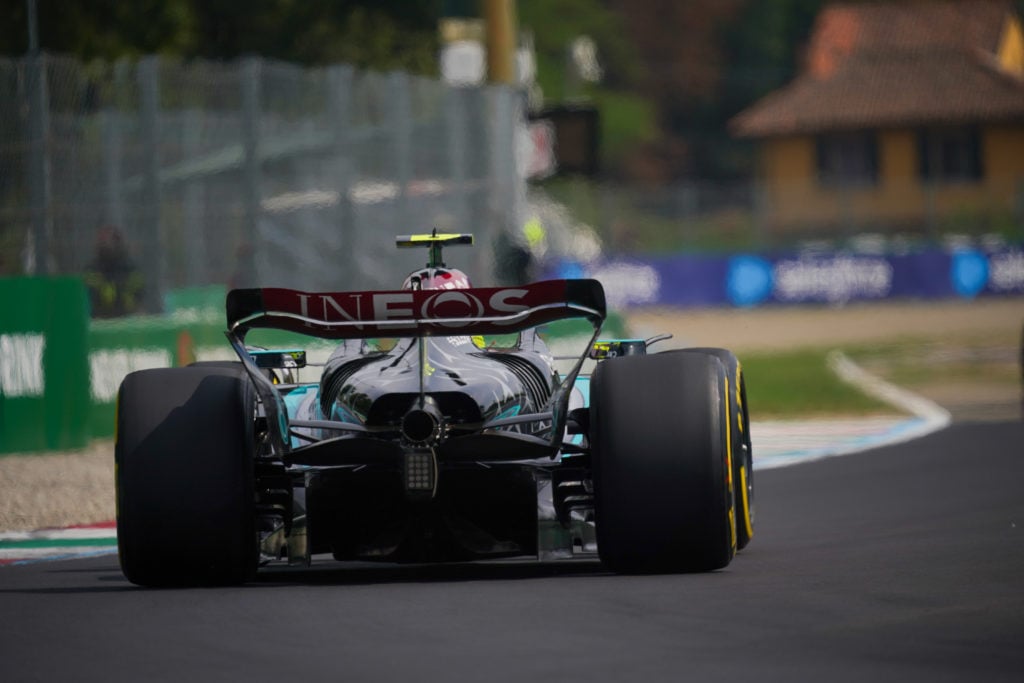
Mercedes has offered an explanation into why Lewis Hamilton’s seat was running ‘extremely hot’ during the Italian Grand Prix weekend.
Throughout the weekend Lewis Hamilton complained to his Mercedes team over feeling heat through his seat, with teammate George Russell also noting that his seat was running hot after FP2.
Hamilton said it was ‘roasting’ and theorised that it could have been down to the radiators leaking hot air into the cockpit, while Russell also asked his engineer to look into the issue.
It seemingly went unbothered for both drivers in the race, with Hamilton finishing fifth while Russell dropped back to seventh after a messy start.
Mercedes head of trackside operations Andrew Shovlin has explained why the issue affected their drivers in the first place when speaking on their Strategy Debrief video.
READ MORE: Everything you need to know about Mercedes AMG F1 Team from team principal to lineage
Andrew Shovlin says ‘extreme heat’ in W15 cockpit down to car design
It is not uncommon for the cockpit in an F1 car to reach extremes of up to 60ºC at circuits such as Singapore and Qatar, while the ambient temperatures at Monza were also high over the Italian GP weekend.
Shovlin believes it was a mix of heat sources that impacted Hamilton and Russell, given the high temperatures throughout the weekend.
“The most significant cause was in Monza it was extremely hot. The seat in the car is always running extremely hot, there is a lot of heat generated by the power unit that you’re trying to dissipate,” said Shovlin.
“You’ve got a lot of electronic boxes and they are working quite hard and they generate their own temperature. So you’re trying to lose that out of the cockpit. You’ve also got a lot of straights at Monza and there is a few places where the plank is hitting the road and that in itself will generate temperature through friction and that will conduct up through the floor of the car.
“With the ambient temperature through the floor, nothing can be below that but you’ve also got numerous heat sources and it just pushes it up, the cockpit gets above the driver’s body temperature, then it’s hard for them to cool down and the heat builds.”
FIA to trial aircon system in F1 cars
To combat the extreme temperatures sometimes experienced by the drivers in the cockpit, the FIA is set to trial an air conditioning system for F1 cockpits, according to Autosport.
It comes after drivers experienced extreme heat during the 2023 Qatar GP, with temperatures staying above 31°C throughout most of the race at what is a high-energy circuit.
It led to several drivers suffering from physical problems, including former Williams driver Logan Sargeant who had to withdraw from the race with heatstroke and Esteban Ocon vomiting in his helmet.
The FIA already mandated a second cooling inlet scoop at the top of the nose at the front of the cockpit to improve airflow to drivers, now they are researching the use of active cooling systems such as zircon.
Receive exclusive F1 news and updates twice a week to your mailbox