Lando Norris
 McLaren
 Mercedes
 Red Bull
 Ferrari
 Williams
 Racing Bulls
 Aston Martin
 Haas
Haas Alpine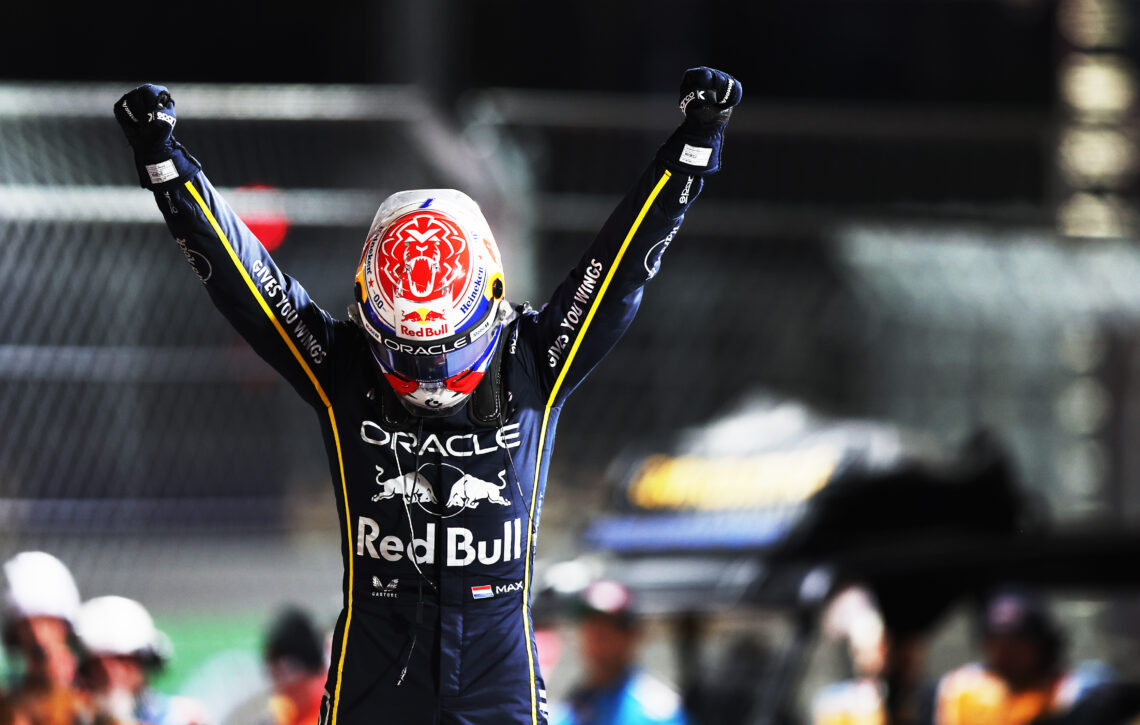


Max Verstappen has a clear advantage in natural talent over the majority of the drivers currently on the F1 grid, and his passion for sim-racing is only helping him to hone his skill set.
Since joining the grid in 2015, the F1 paddock has seen Max Verstappen grow from being a brash 17-year-old into one of the greatest drivers that has ever competed in the category.
Only Lewis Hamilton and Michael Schumacher stand above the Dutchman in the all-time list of Grand Prix victories, and he is well within the scope of surpassing them since he is only 28 years old.
Now heading into his 12th season of competition in F1, Verstappen enjoys a unique position on the grid of being experienced in every different facet of the sport, and is still young enough to make the most of what the next generation of drivers are doing to maximise their development.
When will Max Verstappen beat Michael Schumacher’s Formula 1 records?

F1 psychologist identifies how sim-racing has been helping Max Verstappen ‘improve performance’
During a recent interview with Motorsport.com, Formula Medicine’s Riccardo Ceccarelli identified how the Dutchman’s lengthy sessions on the simulator at home, as well as Red Bull’s Milton Keynes facility, have aided his ongoing development as a driver.
On the topic of the ever-changing technology that F1 teams utilise, the highly-rated F1 physician was asked how an older driver can overcome the challenges that new regulations impose.
Ceccarelli said, “It’s difficult to answer because, obviously, people who are able to clear their minds of superfluous thoughts and complications are more lucid simply because their frontal lobe is like a clean, blank slate.
“Those people are able to make better use of automatisms and therefore have a much more efficient cognitive side because they can manage many things automatically, devoting their energy to strategies that can improve performance.
“The prototype of this driver is Verstappen. Max is also capable of spending hours on the simulator without effort, so the Dutchman will be able to exploit his cognitive reserves to manage the most complex controls.
“Obviously, these are assessments we make on paper. We haven’t seen the drivers in the 2026 single-seaters yet, except for Audi, but the topic is very exciting, and we’ll be following the individual adjustments.”
- READ MORE: Max Verstappen now possesses ‘motorcycle racer’ trait that his Red Bull teammates can’t match
Would Max Verstappen’s level drop if he left Red Bull?

Max Verstappen is renowned for his awareness during Formula 1 races
Verstappen’s mental fortitude is highly regarded as a key attribute of the Dutchman’s that has aided his recent success in F1.
Former teammate Alex Albon previously touched upon how Verstappen’s ‘brain capacity’ sets him apart from other drivers, highlighting how the Red Bull star is able to identify what is happening elsewhere on the track during the heat of battle.
Jos Verstappen’s rigorous karting practices have been identified as a crucial component to the four-time world champion’s prowess, which leads to Verstappen continuing with it during his extra-curricular simulator sessions.
With the upcoming F1 season offering an even bigger challenge in terms of tools that drivers will be able to utilise, it means that Verstappen will be best-placed to adapt to them quicker than anyone else on the grid.
Receive exclusive F1 news and updates twice a week to your mailbox