Lando Norris
 McLaren
 Mercedes
 Red Bull
 Ferrari
 Williams
 Racing Bulls
 Aston Martin
 Haas
Haas Alpine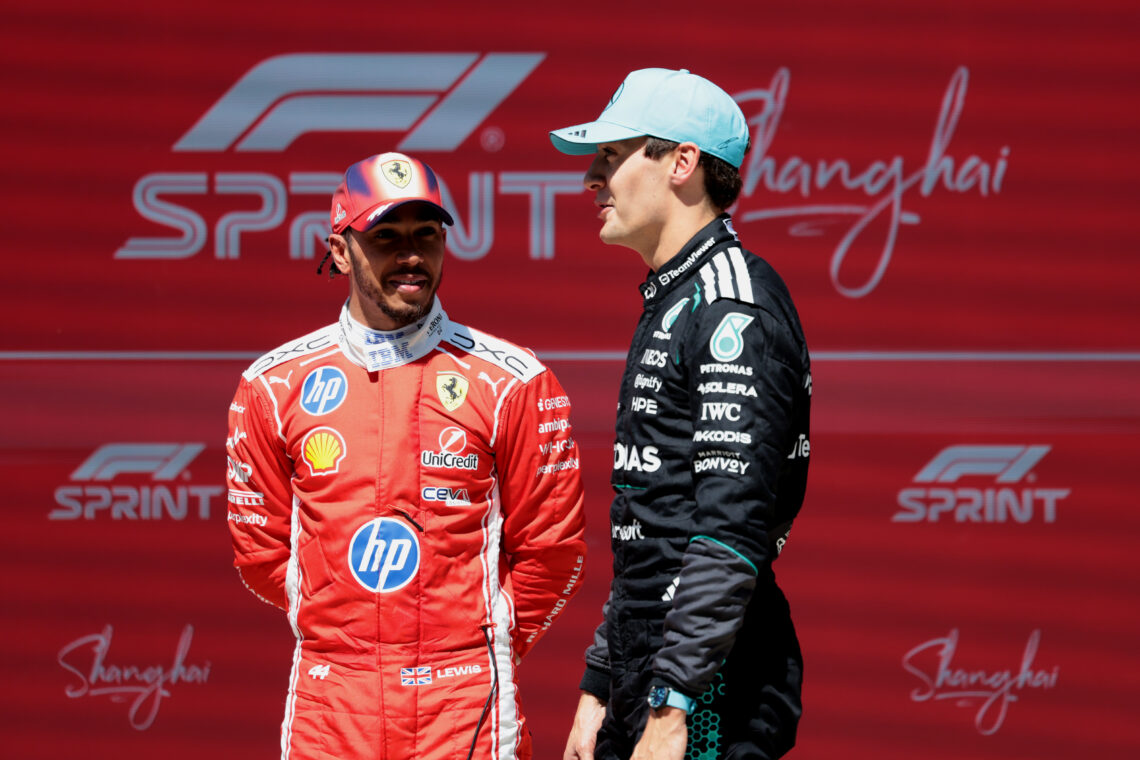


Lewis Hamilton may have overestimated the scale of Mercedes’ engine advantage at the start of the 2026 Formula 1 season. Hamilton was the nearest challenger to the Silver Arrows at the Chinese Grand Prix.
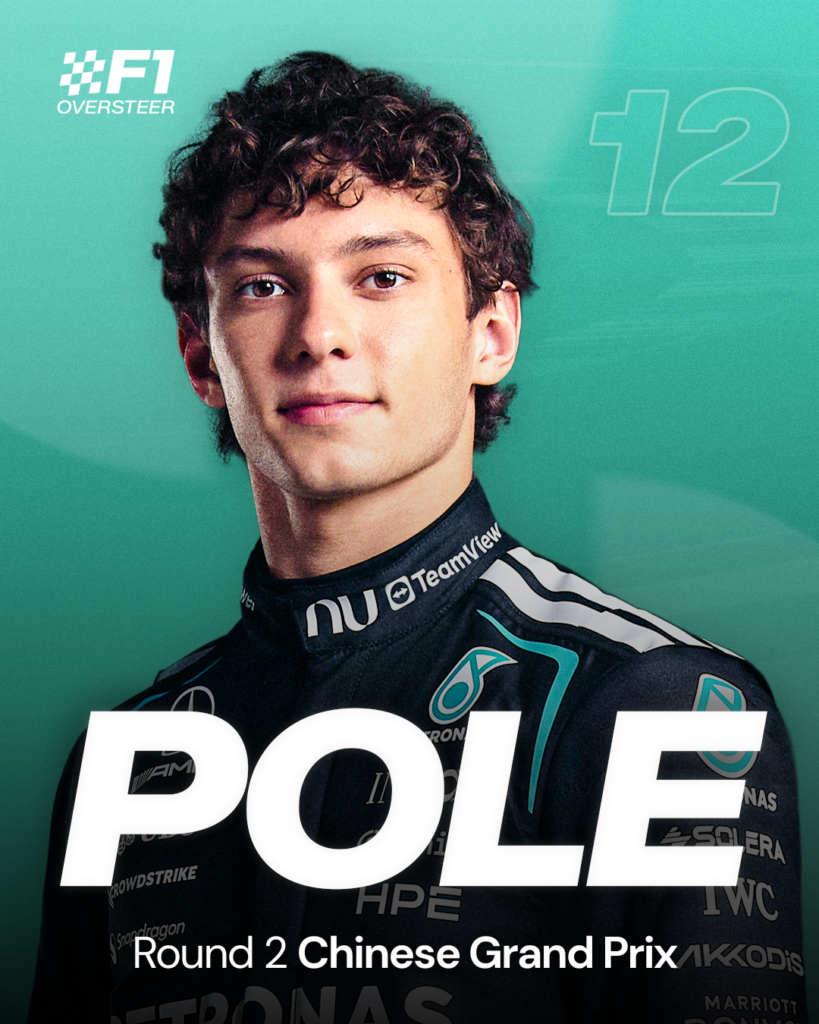
Kimi Antonelli took pole position in Shanghai, capitalising on the disruption on the other side of the garage. George Russell only completed one lap in Q3 after stopping early on but still managed to join Antonelli on the front row.
Hamilton edged out Ferrari teammate Charles Leclerc to qualify third, improving by one position compared to Sprint qualifying. The Scuderia have been more competitive against Mercedes in race trim, giving the seven-time world champion hope of fighting for victory.
Kimi Antonelli becomes the youngest driver to score a Grand Prix pole position in China!
Who is your favourite for the race win in Shanghai?
Mercedes’ ‘party mode’ may not be as powerful as it looked
Speaking after his third-place finish in the Sprint race, Hamilton theorised that Mercedes were engaging a ‘party mode’ during Q2 worth around ‘half a second’.
They used to make a similar leap at the height of Hamilton’s dominance as he battled Sebastian Vettel and Ferrari.
“You see in Q1, we’re not that far away,” Hamilton explained, via Crash.net. “And then all of a sudden, it’s like a huge step. One tenth in Q1 behind, I think it was, and then all of sudden it’s another half a second. It’s a big step.”
- READ MORE: Charles Leclerc agrees with Lewis Hamilton about Ferrari’s gap to Mercedes at the Chinese Grand Prix
But on Saturday, Leclerc was only four-hundredths adrift of Antonelli’s best time in Q2. While the gap increased in the top 10 shoot-out, Hamilton was only three and a half tenths off pole.
That’s Ferrari’s best qualifying performance of the season so far. Perhaps Russell would have set a faster time in a clean session, but there are signs that Ferrari are making progress.
Have Ferrari just seen the Mercedes weakness they can exploit?
After having issues with energy deployment in the first two qualifying sessions of 2026, Ferrari clearly got closer to optimising their engine on Saturday.
At the start of the rules cycle, the teams are learning more than ever about their power unit. Even before upgrades, they have plenty of performance to unlock.
It emerged on Friday that Mercedes had only dialled their engine to 3.5 out of five in terms of mapping. While this may be seen as sandbagging, it is also linked to reliability.
And as Q3 showed, the W17 is not bulletproof, even if it possesses formidable speed.
Receive exclusive F1 news and updates twice a week to your mailbox