Lando Norris
 McLaren
 Mercedes
 Red Bull
 Ferrari
 Williams
 Racing Bulls
 Aston Martin
 Haas
Haas Alpine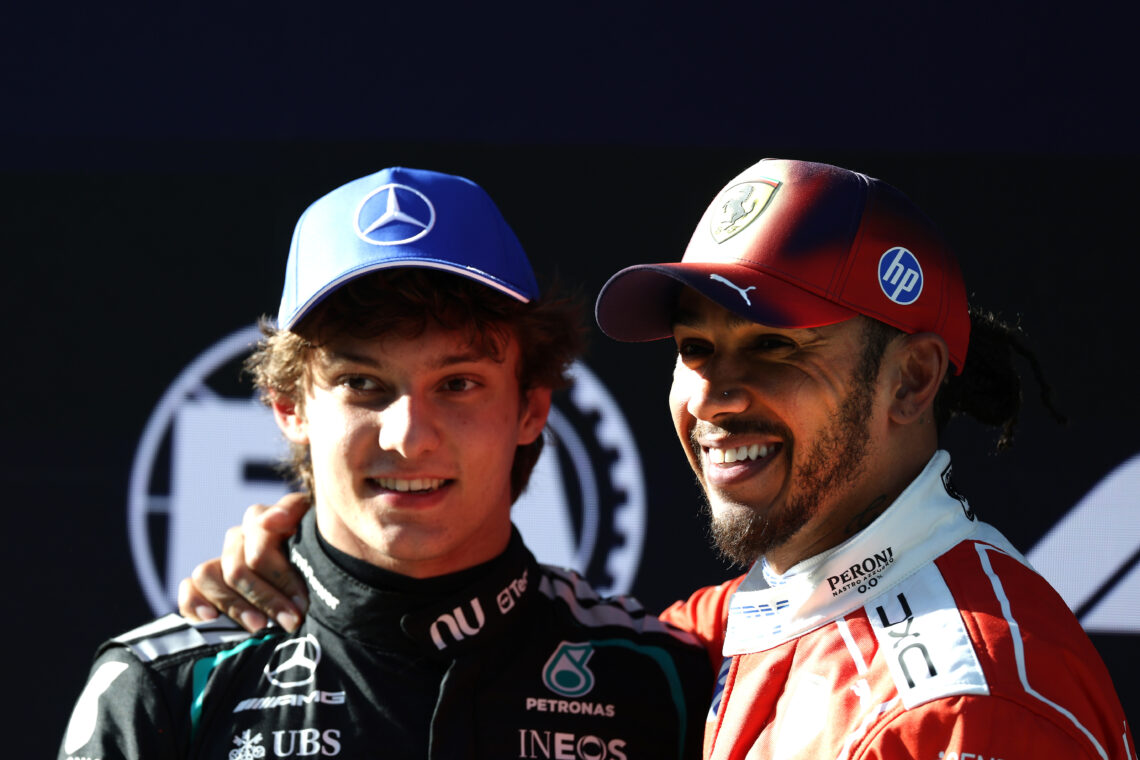


Lewis Hamilton had to rely on ‘talent’ rather than ‘telemetry’ on his rise to Formula 1, Davide Valsecchi says.
Hamilton started his F1 career in 2007 – the same year Racing Bulls newcomer Arvid Lindblad was born. Among the current grid, only Fernando Alonso (2001) made his debut earlier.
Speaking to Formula1.it, Valsecchi explained that the drivers of Hamilton and Alonso’s generation had nowhere near the same technological support as today’s youngsters.
Today’s F1 rookies enjoy technological luxury Lewis Hamilton never had as a youngster
2012 GP2 champion Valsecchi says that, nowadays, up-and-coming drivers have access to telemetry, engineers and on-board footage even in karting. Their physical and mental health regimes have also been professionalised.
This has arguably reduced the emphasis on natural talent compared to the 2000s.
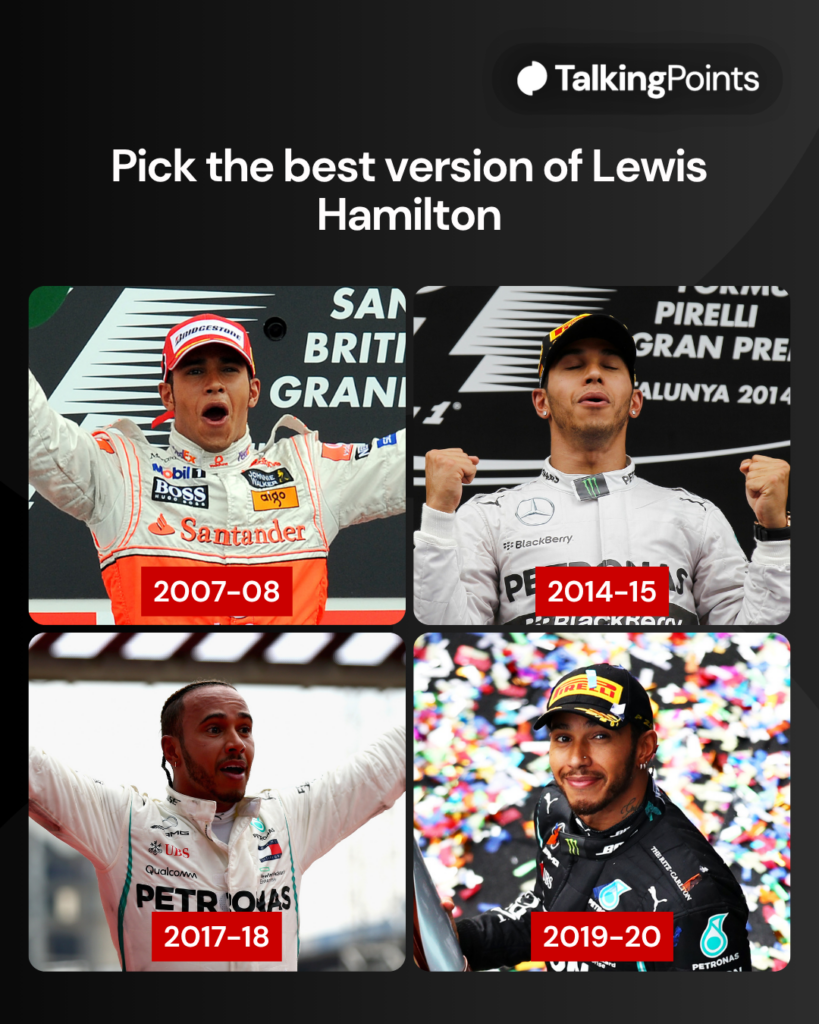
When did Lewis Hamilton hit his PEAK?
If we've missed his best year, let us know
“Sometimes young drivers lack consistency in performance,” Valsecchi said. “They come in spurts, and it’s always been like that in all sports. They don’t always have the mental maturity to perform at their best all year round.
“Obviously, however, one thing must be said: young people today are much better prepared than they used to be. They arrive in Formula 1 at practically 22 and are already at their peak.
“It wasn’t like that back then. Hamilton arrived in Formula 1 when telemetry wasn’t yet available in karting, and thanks to his talent, he immediately fought for the world championship in his first year, missing out by next to nothing.
“The young drivers who are now arriving in the top categories are used to having telemetry, engineers, on-board monitors, cameras from a young age.
“They study the trajectory, do physical exercise, have a psychologist, but above all a simulator, which wasn’t available in the generation of Hamilton, Alonso, or Raikkonen. This is why I say we need to focus on young drivers, because they are proving to be very good.”
Hamilton’s rookie season was the stuff of legend as he finished level on points with McLaren teammate and two-time world champion Alonso, missing out on the title by just one point. He displayed remarkable consistency from the outset with 12 podiums in 17 races.
Despite their superior resources, even the brightest prospects of recent years have struggled to reach that level quickly, with Oscar Piastri and Kimi Antonelli only hitting their stride in year two.
Piastri has lent on the support of F1 veteran Mark Webber, while Mercedes team principal Toto Wolff has delicately managed Antonelli, who faced the unparalleled pressure of succeeding seven-time world champion Hamilton.
Hamilton’s teammate Charles Leclerc is 13 years younger than him, and some think this partly explains the ongoing deficit. Since the Briton’s last title in 2020, the sport has been dominated by a group of drivers born in the late 1990s, featuring Max Verstappen, Lando Norris, Leclerc and George Russell.
There’s a school of thought that the complexity of the new regulations suits younger, more adaptable drivers whose minds aren’t clouded by several past generations of cars, but the sample size is currently too small to prove that theory.
Receive exclusive F1 news and updates twice a week to your mailbox