Lando Norris
 McLaren
 Mercedes
 Red Bull
 Ferrari
 Williams
 Racing Bulls
 Aston Martin
 Haas
Haas Alpine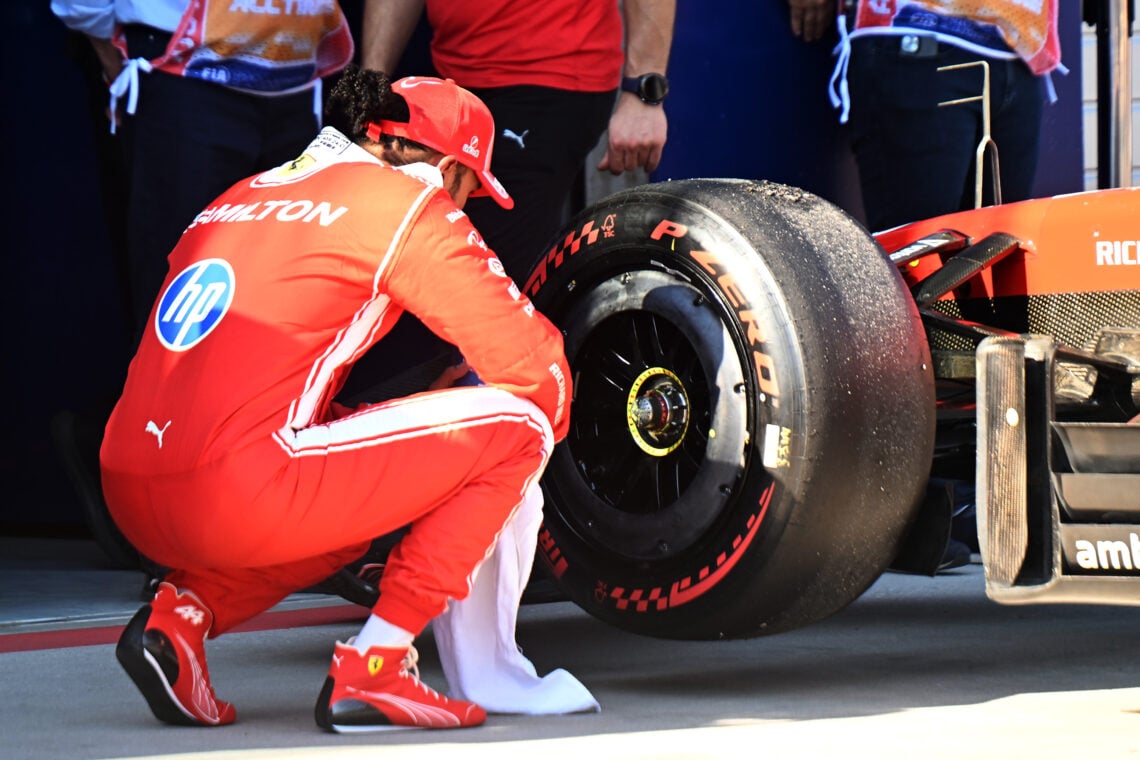


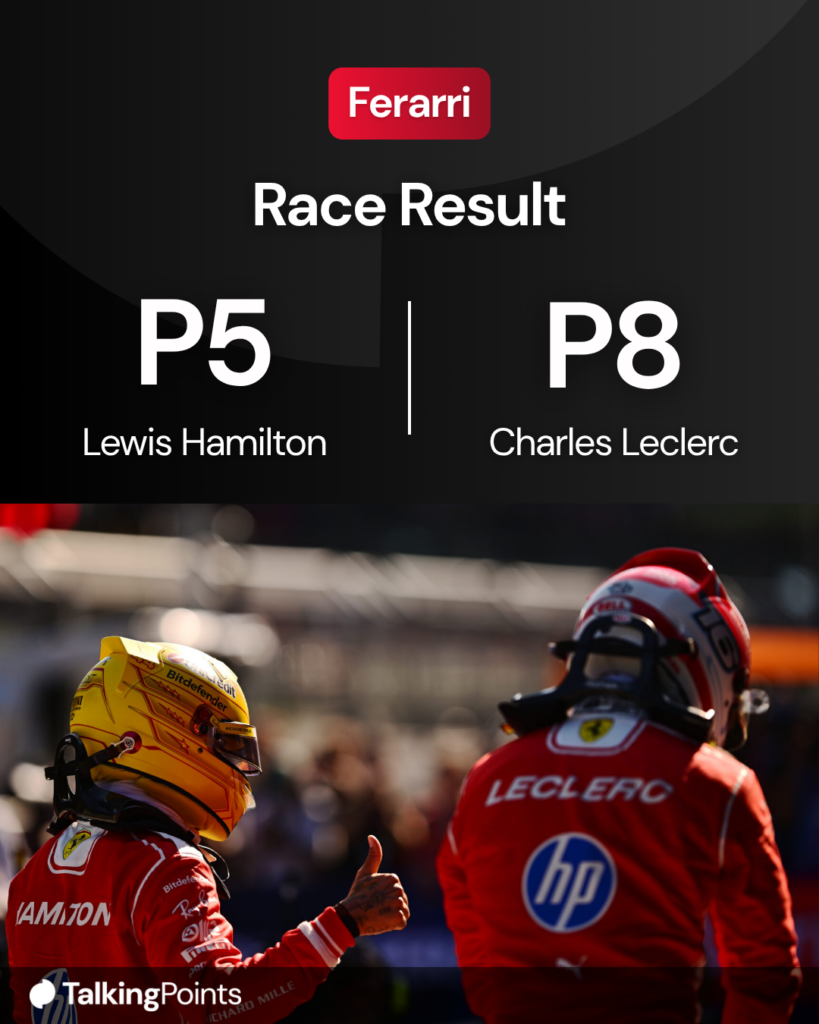
Lewis Hamilton’s struggles at the Austrian Grand Prix were partly down to tyres. The Ferrari driver was running second early on but ultimately finished fifth.
Hamilton made his third pit stop just 42 laps into the 71-lap race, before race leader George Russell had even come in twice. Lando Norris and Max Verstappen reached laps 47 and 49 with their second stints.
Like in Barcelona, Ferrari prioritised pace over track position. But rather than repeating his victory, Hamilton lost touch with the leaders, unable to take advantage of his fresher rubber.
What went wrong for Ferrari at the Austrian Grand Prix?
Lewis Hamilton’s tyres looked spent even when they were still new
Speaking in commentary for Sky Sports F1 on lap 21 of the race (28/06, 14:28), Karun Chandhok noted how quickly the inside shoulder of Hamilton’s front-left tyre had started breaking up. The Red Bull Ring is a clockwise circuit, which means it naturally works that tyre hardest.
Hamilton had come out onto the track on fresh tyres on lap 13, so had only driven around 20 miles before the fronts started to suffer. This was a clear demonstration of Ferrari’s issues on a day where temperatures nudged the mid-30s.
“Look at the tyres here,” Chandhok remarked. “Watch as Lewis comes through the corner. The inside shoulder of that front left already doesn’t look in great shape.”
When it was put to him by Sky after the race that the Ferrari didn’t agree with the hard tyres, Hamilton said: “It didn’t agree with any of these tyres today!”
Max Verstappen thought Lewis Hamilton deserved a penalty during their Austrian GP battle. What did you make of the scrap? 🍿
Later in his interview, he added that he had also been struggling with the rears, which ‘dropped off on every set, for some reason’.
Hamilton’s teammate Charles Leclerc also pitted three times, though he felt he had nothing to lose after losing seventh place to Lando Norris, with a huge cushion to the midfield drivers behind.
In addition to tyre wear, Ferrari also suffered with overheating. Hamilton was repeatedly told to enter a lower engine mode to ensure he made it to the end of the race.
In the eyes of Fred Vasseur, Ferrari fundamentally lacked pace on this power-sensitive layout, which was a bigger issue than their questionable execution.
Receive exclusive F1 news and updates twice a week to your mailbox