Lando Norris
 McLaren
 Mercedes
 Red Bull
 Ferrari
 Williams
 Racing Bulls
 Aston Martin
 Haas
Haas Alpine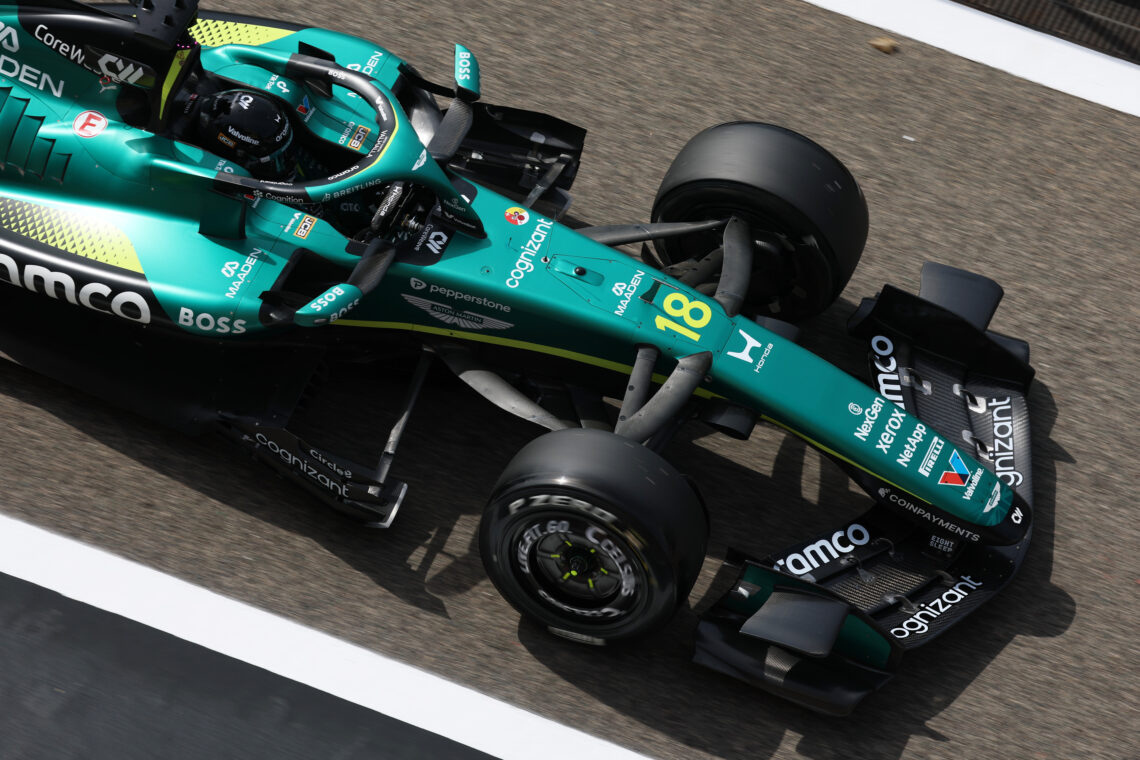


As Aston Martin study their data from the first pre-season test of the 2026 regulations era in Bahrain, they will see that Honda are responsible for 37.5% of their pace deficit.
Aston Martin have endured a difficult start to the latest phase in their history, after replacing Red Bull as the factory Honda engine team. The Silverstone outfit abandoned their customer Mercedes engine deal after Honda pulled a U-turn on the brand’s initial decision to leave F1.
Honda revealed in October 2020 that the Japanese giant would shut its F1 engine division at the end of 2021, but it agreed to continue working with Red Bull through 2025. The 2026 F1 regulations then tempted Honda to stay and it signed a deal with Aston Martin in May 2023.
Formula 1 has overhauled its regulations this season, with the new engine rules at the heart of the changes. F1 engines now have a near 50/50 share between electrical and combustion power, no longer feature the expensive MGU-H and even run on advanced sustainable fuels.
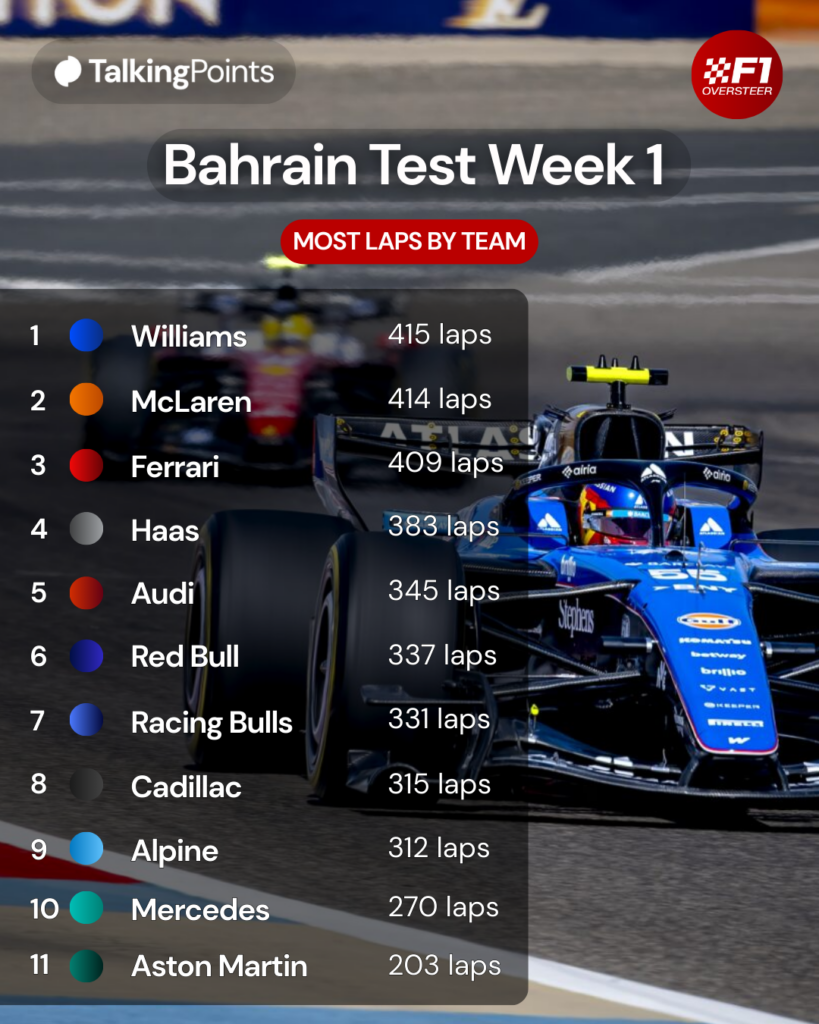
Williams put in the most laps during the first week of pre-season testing in Bahrain – Is this a reassuring sign after they missed the Barcelona shakedown?
GPS data from the first 2026 F1 Bahrain test shows Honda’s engine costs Aston Martin 1.5s a lap
But while Honda had roughly the same lead time as the other F1 engine constructors – now also including Red Bull – to develop a power unit under the 2026 regulations, GPS data from the first Bahrain pre-season test shows the engine is costing Aston Martin around 1.5s a lap.
READ MORE: Everything you need to know about F1’s 2026 engine and aero regulations
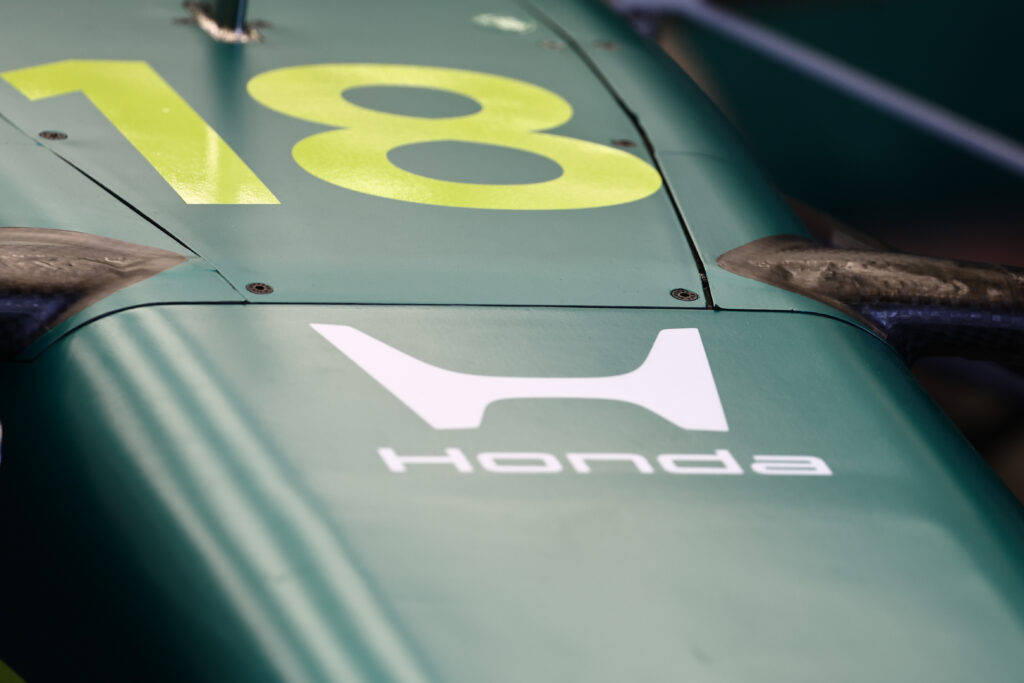
That is according to BBC Sport, which reports that GPS telemetry that was available to all 11 teams in Bahrain highlighted how the Honda engine accounts for 37.5% of the four seconds per lap that Aston Martin driver Lance Stroll fears his team lack compared to the top outfits.
The remainder of Aston Martin’s pace deficit to the likes of Red Bull, Ferrari, Mercedes and McLaren at the first Bahrain test stemmed from their issues with their first car designed by Adrian Newey. The AMR26 particularly ‘performs worse’ the slower the corner gets, as well.
Aston Martin can point to delays with their 2026 F1 car and having to now design a gearbox, having previously bought them from Mercedes. But why Honda’s engine is so far behind is a mystery, having had essentially three years to rebuild the department it diversified in 2021.
Aston Martin must overcome their gearbox and set-up issues, regardless of Honda’s engine
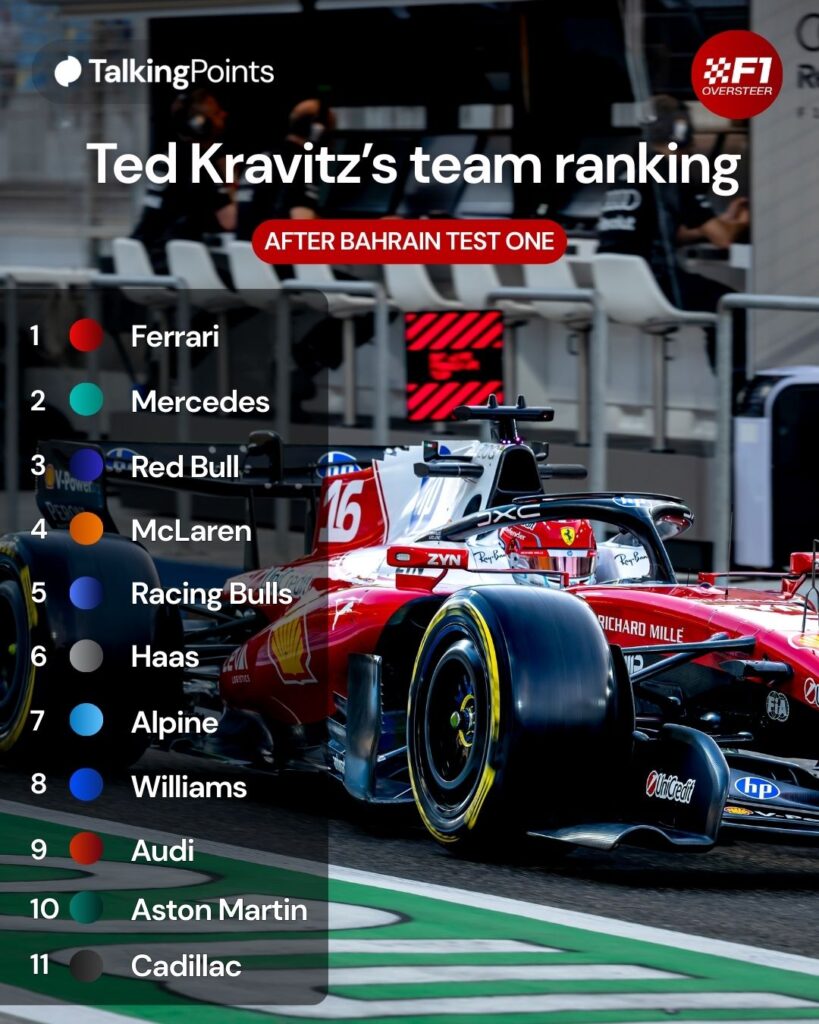
The first pecking order predictions are IN!
What jumps out?
Newey believes Aston Martin’s 2026 car was four months behind schedule due to his arrival from Red Bull coming three months after they could begin developing their package, as well as encountering issues with the wind tunnel in Silverstone that were not resolved until April.
Now, the problems Aston Martin encountered with Honda’s 2026 F1 rules engine during the first Bahrain test have sparked a bleak outlook for the season ahead. It is said that Fernando Alonso’s inner circle fears a year in hell in 2026 at Aston Martin for the two-time champion.
Alonso can see some reasons to be optimistic about Aston Martin’s ability to trim their four-second deficit that teammate Stroll fears they currently face to the top teams, though. After noticing their swings in performance with different set-ups, Alonso feels Aston Martin could “unlock seconds” once they finally enjoy some sustained running in the second Bahrain test.
Receive exclusive F1 news and updates twice a week to your mailbox