Lando Norris
 McLaren
 Mercedes
 Red Bull
 Ferrari
 Williams
 Racing Bulls
 Aston Martin
 Haas
Haas Alpine


Mercedes ace George Russell has now outlined a novel way of improving wet weather running in F1 after frustrating delays over a rain-affected Belgian Grand Prix weekend.
Spa is renowned for enduring changeable conditions throughout the 7km circuit. While one part of the track may be dry, another may have torrential rain. But the vast amount of spray that Formula One cars produce when running on the full wet tyres creates its own problem.
Drivers often complain about the lack of visibility whilst running close to other cars when F1 races in heavy rain. The sheer volume of the downpour in Belgium even led to fears that the sessions on Friday and Saturday may have to be cancelled. But the show managed to go on.
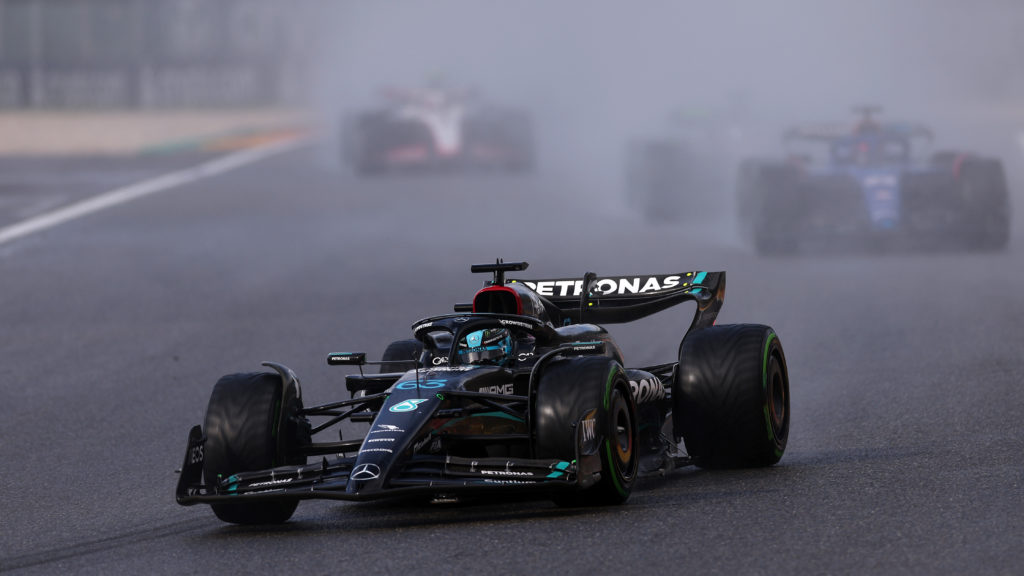
Pirelli’s wet weather tyres are ‘useless’ in F1’s current thinking
The FIA ultimately delayed the start of the Sprint Shootout at the Belgian GP by 35 minutes as conditions improved. It also meant the drivers just needed the intermediate tyres in SQ1. While Lance Stroll gambled on slick tyres in SQ2, only to crash after losing the rear of his car.
Unfortunately, the rain returned ahead of the start of the Sprint and the race started behind the safety car. Oscar Piastri would lead a flurry of cars into the pit lane the moment that the Sprint started, too. The McLaren star led the charge of drivers switching their wets for inters.
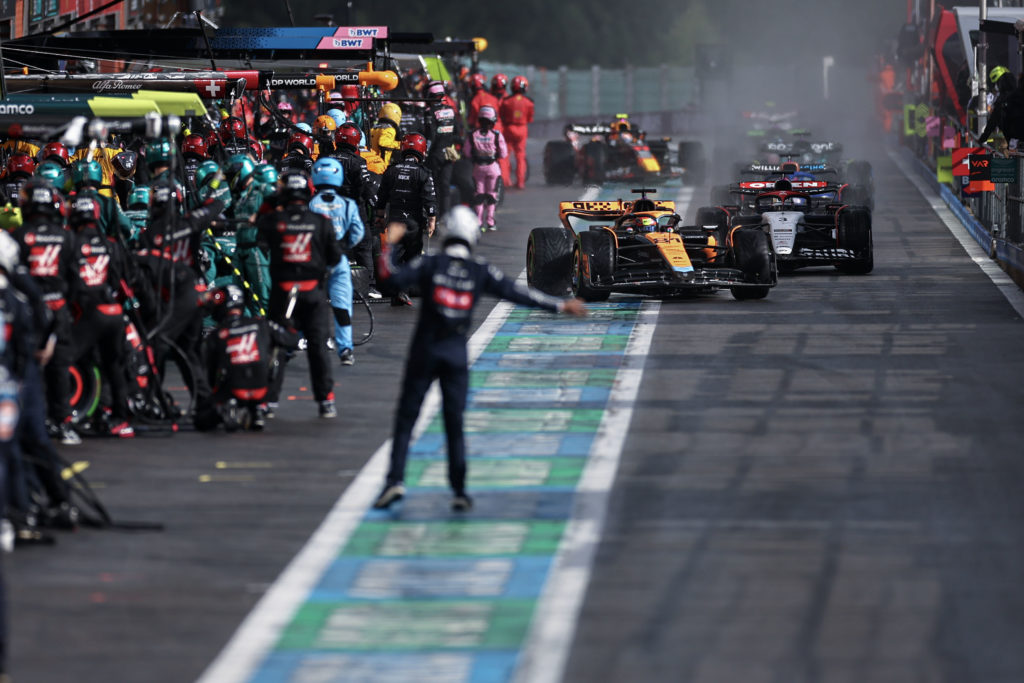
Russell outlines a novel way to improve rain-affected Grands Prix
The Belgian GP Sprint was far from the first time that F1 started a rain-affected race with the safety car. It was also far from the first race to see most of the drivers swap the full wet tyres for the inters as soon as possible. But the full wet tyres have almost become safety car tyres.
Even Pirelli’s head of motorsport, Mario Isola, admits their full wet tyres are ‘useless’ if they are only used behind a safety car. Mercedes and McLaren also participated in a wet-weather wheel-arch trial at Silverstone in July. Pirelli are looking into a solution to the extreme spray.

But Russell has now suggested a novel way to possibly improve rain-affected F1 Grands Prix. The Mercedes star and Grand Prix Drivers Association (GPDA) director claims running more fast laps could help to clear circuits quicker before using the safety car to get the race going.
Russell explained, via quotes by GP Fans: “I think it was like in Japan [in 2022] where we did a lot of laps behind the Safety Car, and the conditions didn’t really improve then.
“So, maybe it’s a solution for the future if they allow us to do two, three or run at full speed for four laps and then have the safety car come back on track to get the field together, because after two laps of racing the conditions were much better.”
Receive exclusive F1 news and updates twice a week to your mailbox