Lando Norris
 McLaren
 Mercedes
 Red Bull
 Ferrari
 Williams
 Racing Bulls
 Aston Martin
 Haas
Haas Alpine


Formula 1’s new rules and regulations are going to come under intense scrutiny next year.
All 11 teams are frantically working on next season’s car as they tackle one of the biggest regulations changes in Formula 1 history.
A completely new aerodynamics system is being introduced alongside hybrid power units that will likely determine which teams will dominate the beginning of the next ruleset.
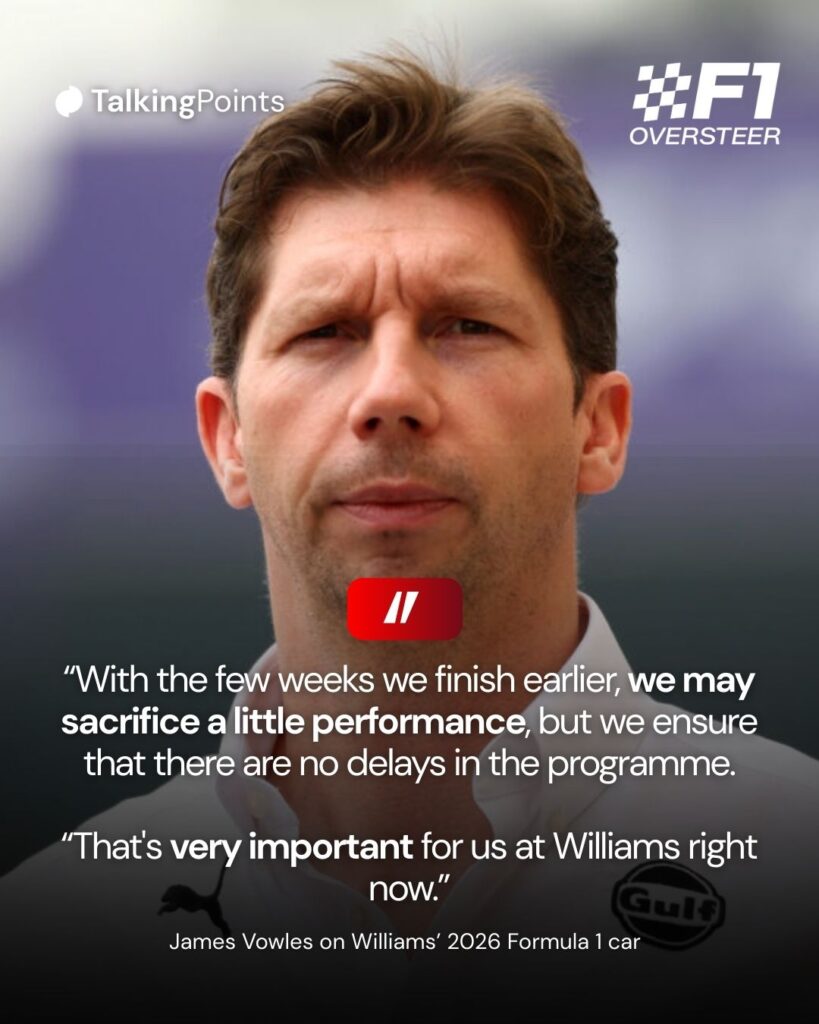
James Vowles has taken the perfect approach to 2026 with Williams – change our minds
Let us know your thoughts!
Ferrari are already lobbying the FIA, as Mercedes and Red Bull may have found a loophole in the engine rules.
Gary Anderson has given his verdict on whether he thinks Mercedes and Red Bull are ‘cheating’, and has also spoken about the complexity of modern F1 cars.
He believes that many components on current Formula 1 cars are being over-designed and would never have existed in his time as technical chief of Jordan.
READ MORE: Ferrari are now working flat out to fix a ‘concern’ with Lewis Hamilton’s 2026 engine
Gary Anderson thinks F1 rules around brake ducts are a ‘complete mess’
Gary Anderson was speaking about the upcoming rule changes on The Race F1 Tech Show.
He said: “So, my point of view, I think the new regulations would have been, do what they’re doing to the tyres completely, make the cars narrower, shorter, and lighter by a significant amount.
“If you look at the little things, like if you take a wheel off one of these cars, you see nothing.
“The brakes are completely covered up, and about triple-layer brake ducts, there’s so much stuff on the cars that could be taken away.
“It would affect the performance of the car, but they could be taken away and make the car lighter, and you have to give the team a choice as to what they want.
“You need brake ducts. But, you could write in the regulations, for example, that from every angle, you’ve got to be able to see the brake disc.
Mercedes are expected to have the best 2026 F1 regulations engine. How many wins will they take in 2026?
“So you sometimes have to eliminate the teams from themselves. The rear brake duct, for example, is a complete mess of downforce-producing, vortex-producing turbulence.
“Do away with that completely, just eliminate it. You’re allowed to brake duct with a hole in the front of it that closes the brakes.
“It’s very easy to write the regulations and do away with all those downforce-producing devices that are there. Same on the front brake ducts.
“The brake ducts, back when I was doing it, and I’m talking early 2000s here, you would struggle to design a brake duct like what’s on the cars currently.
“Even if you have the knowledge of what it might do, you would actually struggle to design it. It’s so complicated.
“And it’s just one of these things where the regulations have driven you to that level, that’s what you need to do.”
READ MORE: Stefano Domenicali now ready to ‘discuss’ two key changes to Formula 1 Sprint Races with teams
How brake ducts briefly played a role in the 2025 Formula 1 title race
Every team is looking for every potential advantage available to them in each Formula 1 ruleset, and the brake ducts nearly played a role in last season’s title battle.
Red Bull believed McLaren were blocking the brake ducts on their car to affect how their Pirelli tyres were being cooled.
Nothing ever came of this accusation, but it shows just how important brake ducts can be when it comes to the performance of the car.
The brake duct rules are changing in 2026, forcing teams into another redesign, but nothing like what Anderson has suggested.
Adrian Newey has said in the past that Formula 1’s regulations are becoming increasingly complicated and prescriptive, denying designers the opportunity to be creative.
This appears to be another example of where stringent rulemaking might be holding the sport back.
Receive exclusive F1 news and updates twice a week to your mailbox