Lando Norris
 McLaren
 Mercedes
 Red Bull
 Ferrari
 Williams
 Racing Bulls
 Aston Martin
 Haas
Haas Alpine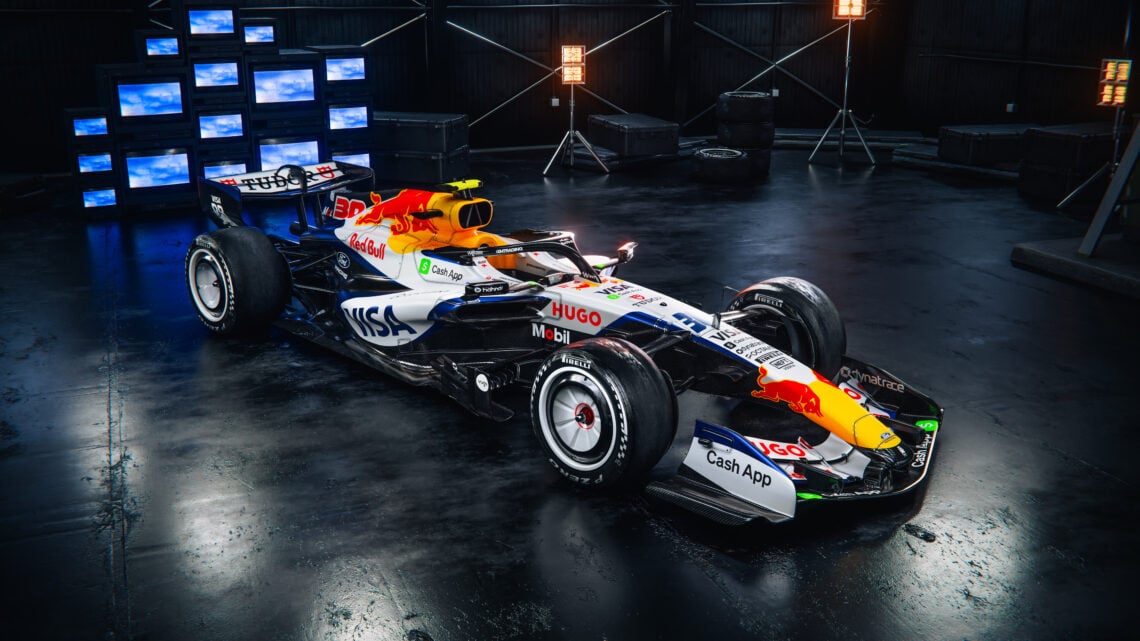


Gary Anderson has run the rule over Racing Bulls’ 2026 F1 car, after Liam Lawson took the VCARB 03 out for its first laps in the rain during a shakedown at Imola on Tuesday.
Racing Bulls became the latest team to put their car built under the 2026 F1 regulations on a track, as the Faenza team look to establish a baseline ahead of the private shakedown test in Barcelona on January 26-30. F1 will hold open tests in Bahrain on February 11-13 and 18-20.
Lawson got the honour of putting the VCARB 03 through its initial paces, before rookie Arvid Lindblad also took his first laps this Tuesday. Racing Bulls will also hold a filming day at Imola on Wednesday, when their drivers will be able to complete up to 200km of on-track running.
F1’s rules limited Racing Bulls to 15km of on-track activity this Tuesday, as the team declared it as a shakedown. Lawson and Lindblad also used Pirelli’s demonstration tyres, but the brief run gave former Jordan technical director Anderson a chance to see Racing Bulls’ real car.
Have Red Bull improved Racing Bulls’ image with their rebrands over the years?
Let us know why in the comments!

Gary Anderson suspects Racing Bulls will ‘exploit’ their push-rod front suspension in 2026
Lawson’s laps in the VCARB 03 on Tuesday immediately caught the eye of a lot of F1 fans, as well as Karun Chandhok, who noticed the “massive” size of Racing Bulls’ air intake. The front suspension set-up on Lawson’s Racing Bulls VCARB 03 also drew the attention of Anderson.
READ MORE: Everything you need to know about the 2026 F1 engine and aero regulations
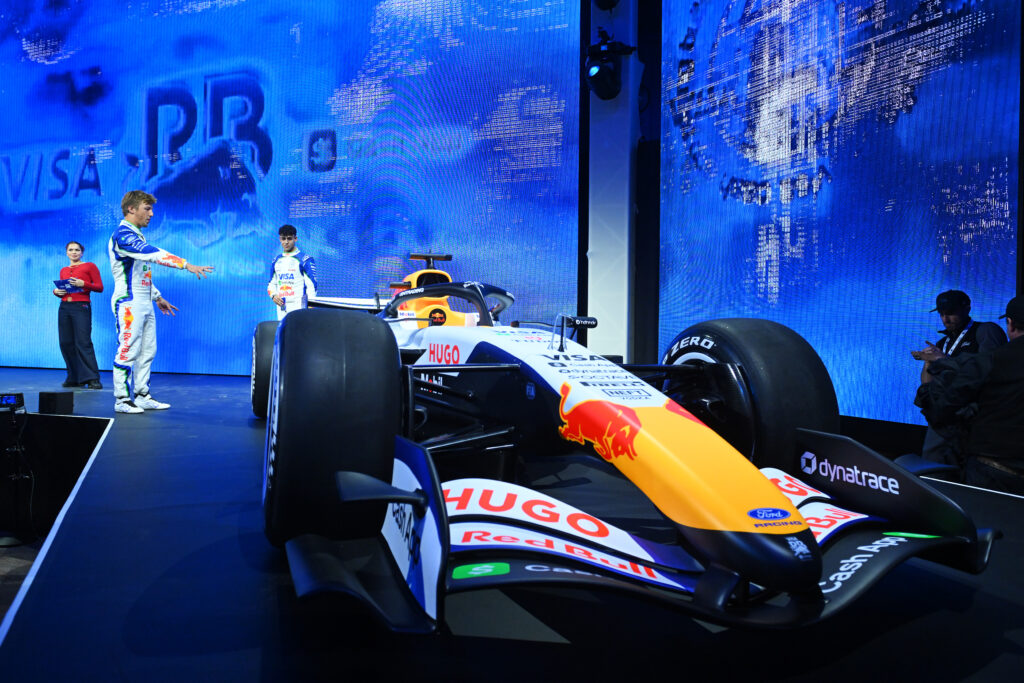
Racing Bulls have opted to use push-rod suspension as F1’s 2026 rules call for a greater ride height compared to the ground-effect era from 2022 to 2025. And Anderson expects Racing Bulls will exploit the lowest suspension arm to improve the contact patch for the front tyres.
Anderson told The Race: “A multi-link suspension system as opposed to simple A-frame wishbones can generate massive differences in kingpin and camber angles with varying steering lock. So, I wouldn’t be surprised to see this being exploited to optimise the tyre contact patch.”
Racing Bulls’ 2026 car shows F1 is ‘stepping back in time’
How do you rate the 2026 Racing Bulls livery out of 10? 👇

Racing Bulls’ push-rod front suspension set-up seen on Lawson’s car during the shakedown at Imola also caught Anderson’s eye, as the upper wishbone features a lot less anti-dive than their final ground-effect era F1 car. Their rear suspension shows a similar amount of anti-lift.
READ MORE: Racing Bulls hit problems with Red Bull’s engine at Liam Lawson’s shakedown
In fact, Anderson feels Racing Bulls’ 2026 car shows F1 is “stepping back in time” to the last non-ground-effect era. Teams like Red Bull, in particular, often ran extreme levels of rake on their F1 cars in the past to generate more downforce as the rear-end squats under braking.
Anderson said: “The top wishbone has a lot less anti-dive than used last year. The reasoning for this is likely that it is in line with the increased ride height and, more importantly, rake.
“For these reduced ground-effect cars with their reduced underfloor tunnels and smaller diffusers, it looks like we are stepping back in time to the car concepts from pre-2022.
“More rake basically means the whole car attitude works to accelerate the airflow underneath the underfloor from the front to the rear.
“If rake generates increased underfloor downforce, then increased rake under braking will again increase the downforce. That might be a bit simplistic, but it’s an early overview.”
Racing Bulls used pull-rod front suspension in 2025, with which Lawson, Isack Hadjar and, briefly, Yuki Tsunoda combined for 92 points. Racing Bulls secured a sixth-place finish in the 2025 F1 constructors’ standings for their best result since 2021 under the AlphaTauri name.
Receive exclusive F1 news and updates twice a week to your mailbox