Lando Norris
 McLaren
 Mercedes
 Red Bull
 Ferrari
 Williams
 Racing Bulls
 Aston Martin
 Haas
Haas Alpine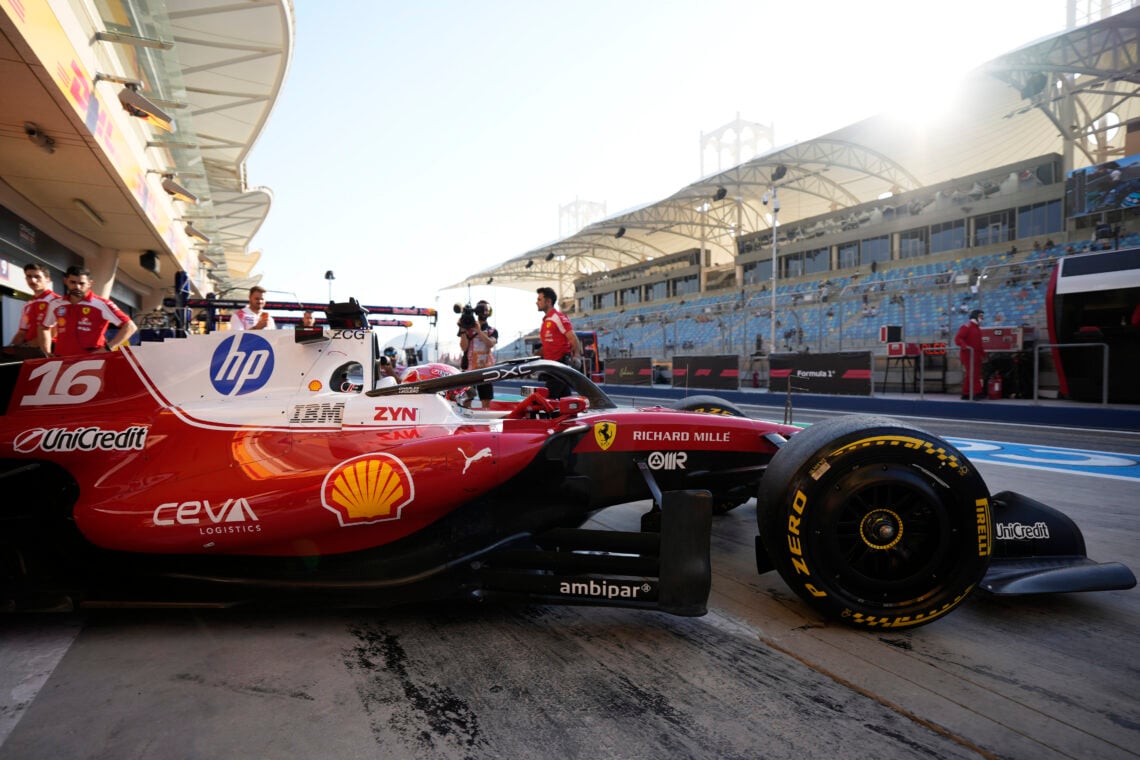


Ferrari were one of the most innovative teams on the F1 grid during pre-season testing, and it has now emerged that their exhaust wing pushes the limits of the FIA technical regulations.
The headline development in Bahrain was Ferrari’s ‘upside-down rear wing’. The rotating part, unprecedented in modern F1, made a brief appearance on Lewis Hamilton’s car on day two.
While Ferrari have shelved the wing until later in the season, the rear aero trialled in Sakhir may be here to stay. Rather than two individual flaps, the SF-26 features one continuous panel directly behind the exhaust, marking it out from rival cars.
Which F1 team revealed the best upgrade at the 2026 Bahrain test?
It was already known that Ferrari’s exhaust wing required special FIA approval, but The Race have now revealed more information about the lengths that aerodynamics chief Diego Tondi went to.
Ferrari’s exhaust wing went through ‘lengthy’ FIA approval process
Ferrari carried out simulations to assess whether the wing would be beneficial and were encouraged by their initial findings. This led to ‘several redesigns’ to ensure compliance with the rear crash structure regulations.
There was a ‘lengthy’ period of correspondence with the FIA before the governing body granted their approval to Ferrari’s solution.
This in itself is not unusual. Indeed, Mercedes received assurance from the FIA engine boss that their much-talked-about fuel compression ratio trick was legal.
That’s testing done, so it’s time to predict who will win the 2026 F1 title
What matters is that Ferrari are clearly being aggressive, having ‘traditionally’ been more ‘conservative’ at the rear of the car than their direct competitors. This exemplifies the change in their approach for 2026.
Indeed, Ferrari are trying to emulate the success of Red Bull in the early 2010s. The diffuser on the Adrian Newey-designed cars was central to their advantage, helping Sebastian Vettel win four straight titles.
How does Ferrari’s exhaust wing make the car faster?
The flap directs hot air from the exhaust up towards the rear wing, which improves the car’s aerodynamic efficiency. It’s believed that no team can copy Ferrari in this area, which would cement any advantage.
Data also shows that Ferrari enjoyed improved tyre wear after introducing the upgrade. The car was more stable in the corners, and less sliding meant less strain on the Pirelli tyres.
The SF-26 would have been the first Ferrari designed by Newey had the Scuderia succeeded in their 2024 pursuit. But even without the influence of the legendary engineer, there are signs that they have outwitted the rest of the big four.
Receive exclusive F1 news and updates twice a week to your mailbox