Lando Norris
 McLaren
 Mercedes
 Red Bull
 Ferrari
 Williams
 Racing Bulls
 Aston Martin
 Haas
Haas Alpine


Toto Wolff has revealed Mercedes’ suspicions about how Ferrari are staying within the F1 cost cap with their upgrades in 2026, but the Scuderia benefit from a simple bonus.
Upgrades are always a key theme throughout every season, but they are increasingly vital in 2026 after F1 introduced a host of regulatory changes. Every team in the paddock also knew before the season started that whoever wins the development race should make big strides.
So, Ferrari have invested a lot to bring regular and sizable upgrade packages for the SF-26 to help Lewis Hamilton and Charles Leclerc catch Mercedes, after Andrea Kimi Antonelli and George Russell’s dominant start. Yet the rate of Ferrari’s updates has not sat well with Wolff.
Drop your podium prediction for the Belgian Grand Prix 👇
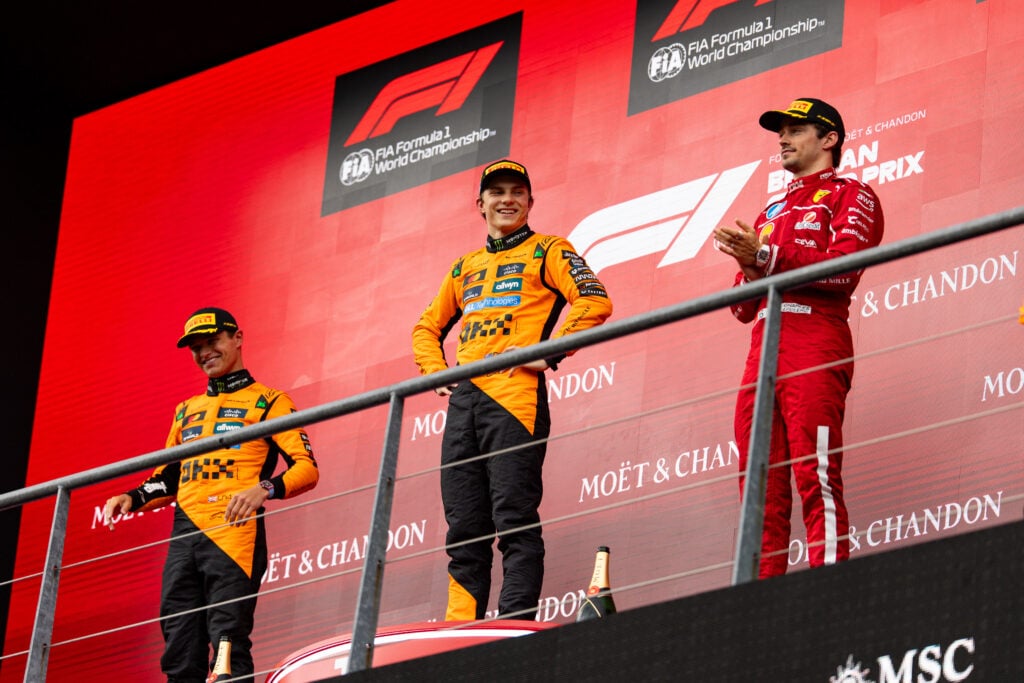
Ferrari’s cheaper supply chain offers them a cost cap bonus compared to Mercedes
Mercedes started a war of words about Ferrari’s cost cap situation prior to the British Grand Prix, after their CEO and team principal Wolff admitted that the Silver Arrows are “a little bit surprised” by the Scuderia’s ability to bring frequent upgrades without fearing F1’s cost cap.
READ MORE: Top 10 drivers to race for Ferrari in Formula 1, ranked
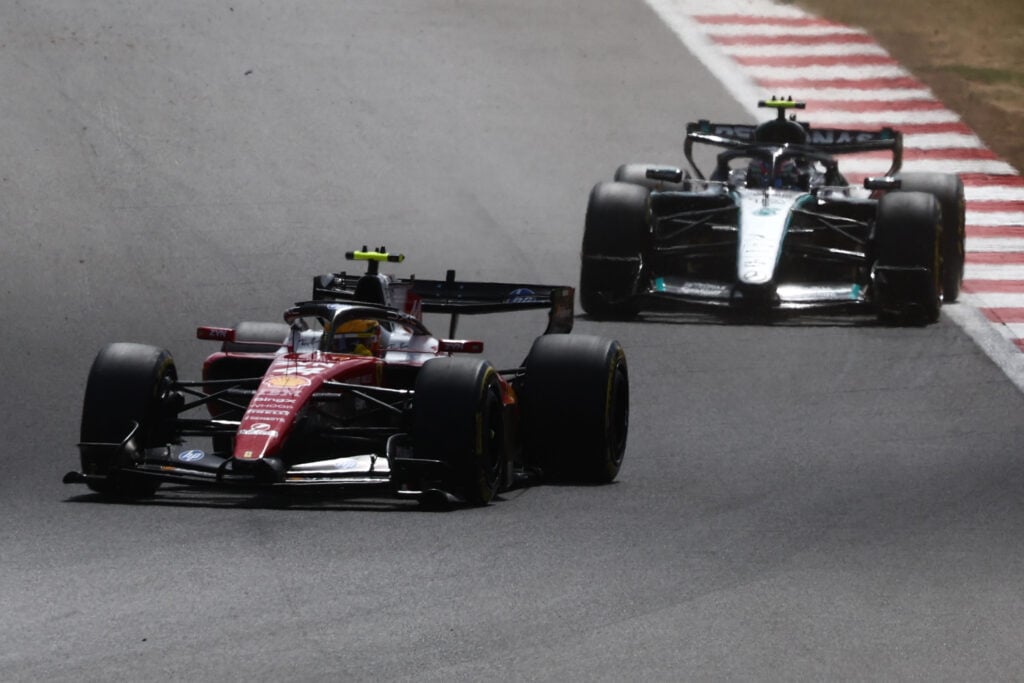
Wolff also claimed that Ferrari “need to be running out of money soon”, after the pride of Italy revealed a major upgrade package in Miami and another in Barcelona. The Austrian is certain that Mercedes cannot afford to bring as many upgrades and not fear breaching the cost cap.
Ferrari team principal Fred Vasseur hit back soon after, as he thought Wolff’s remarks were “a joke” and noted that it was “ironic” for the Mercedes boss to be the one suggesting that the Scuderia are pushing the limits. And Ferrari’s confidence may actually be easily clarified.
According to Formula Technica, while Mercedes shop in the same market as seven of the 10 other teams on the 2026 F1 grid, being based in England, Ferrari only need to compete with Racing Bulls. Their lack of competition in the supply chain in Italy means Ferrari benefit from being able to buy cheaper parts, as well as having those parts produced and delivered faster.
Ferrari have built their supply network over a number of decades, and are now utilising their external collaborators to build any updates in the most time-efficient and budget-conscious ways. And to further make their supply network a ‘bonus’ that Mercedes can do little about, Ferrari do not have to spend as much as some of their rivals to develop the same upgrades.
How would PRIME Michael Schumacher stack up against the current grid?

So, while Wolff is having to count the pennies at Mercedes and ensure that they do not face any issues with the cost cap, Vasseur is able to afford Ferrari’s engineers more freedom. The impact has been clear, with Ferrari debuting major upgrades in Miami and Barcelona so far.
Mercedes have so far only revealed one sizable upgrade package for the W17 with the parts they introduced at the Canadian Grand Prix. Those updates appeared to negate much of the progress that Ferrari hoped their package in Miami would deliver, but are no longer enough.
So, Wolff has started to reveal Mercedes’ suspicions about Ferrari’s situation relating to the cost cap, which F1 set at $215m (£160m) for 2026 given the new regulations. But Ferrari do not feel they have anything to worry about, and their supply chain may ensure they do not.
Receive exclusive F1 news and updates twice a week to your mailbox