Lando Norris
 McLaren
 Mercedes
 Red Bull
 Ferrari
 Williams
 Racing Bulls
 Aston Martin
 Haas
Haas Alpine


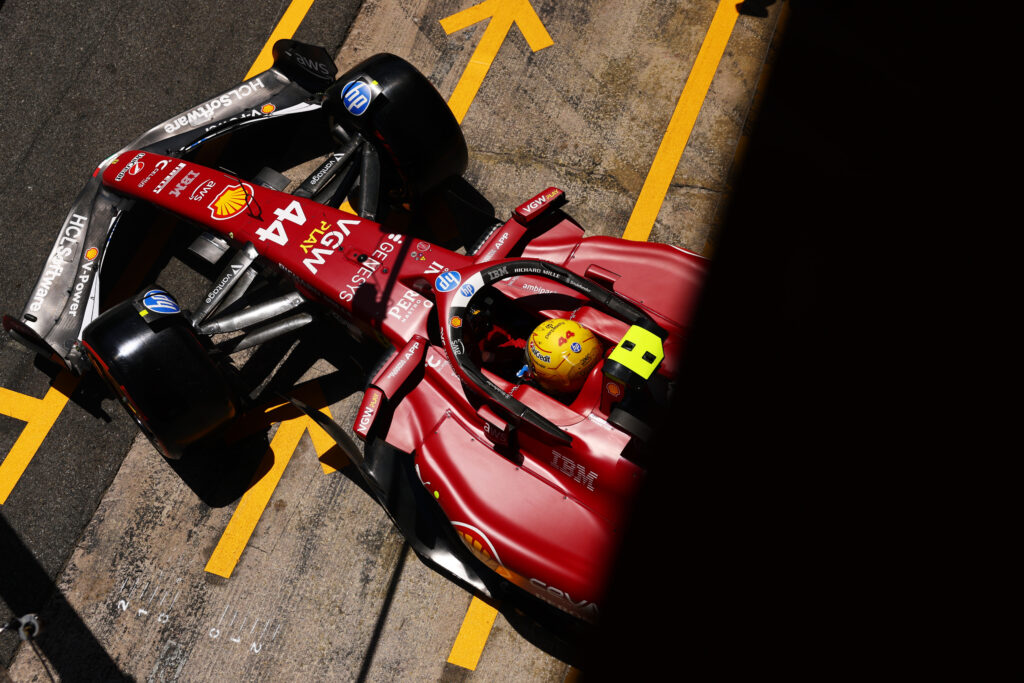
Ferrari and Lewis Hamilton are now pinning their hopes on the 2026 F1 regulations yielding their route to a title after an underwhelming year for the Scuderia in 2025.
The pride of Italy had high hopes for the 2025 F1 season before a wheel turned in anger. But what optimism the Maranello outfit held ahead of the campaign quickly evaporated, as their wait for another F1 drivers’ championship is set to reach 18 years and 17 for the teams’ title.
McLaren can win the 2025 constructors’ title at this weekend’s Azerbaijan Grand Prix if they outscore Ferrari by just nine points in Baku. The Woking natives currently enjoy a 337-point lead over the Scuderia in second place, but there will be 346 left to play for after this week.
Ferrari ran McLaren to within just 14 points for the 2024 constructors’ title. But while Oscar Piastri and Lando Norris boast 324 and 293 points as the papaya pilots fight for the drivers’ title, Charles Leclerc and Hamilton sit fifth and sixth in the standings on 163 and 117 points.

Ferrari are in a ‘race against time’ to improve the reliability of their 2026 F1 rules engine
Ferrari are also the only one of F1’s big four teams yet to win a Grand Prix this year, with the only highs that the Scuderia have so far enjoyed being Hamilton’s F1 Sprint win in China and Leclerc’s pole position for the Hungarian GP. So, their focus has already shifted over to 2026.
READ MORE: Everything to know about the 2026 F1 engine and aerodynamic regulations
| TEAM | ENGINE |
| Red Bull | Red Bull Powertrains (in partnership with Ford) |
| Ferrari | Ferrari |
| McLaren | Mercedes |
| Mercedes | Mercedes |
| Aston Martin | Honda |
| Racing Bulls | Red Bull Powertrains (in partnership with Ford) |
| Haas | Ferrari |
| Williams | Mercedes |
| Alpine | Mercedes |
| Audi | Audi |
| Cadillac | Ferrari |
But Formula1.it now reports that Ferrari are already in a ‘race against time’ to improve their engine for the 2026 F1 regulations, as there are concerns regarding its reliability. Ferrari had experimented with a steel cylinder head but ‘abandoned’ the concept due to their concerns.
Ferrari have reverted to a more traditional additive-treated aluminium to try to improve the reliability of their 2026 engine. Their steel cylinder head could not handle the temperatures and pressures created in the combustion chamber, and it has delayed Ferrari’s development.
Now, on top of the concerns that Ferrari’s 2026 F1 engine could lack power compared to the power unit that Mercedes are developing, the Scuderia are already concerned that any lack of reliability with their cylinder heads might lead to grid penalties for Hamilton and Leclerc.
The lengthy timeframe that Ferrari now require to bench test their 2026 power unit and be confident that their engine will be reliable has put the pride of Italy on the back foot ahead of having to homologate their design. Ferrari are yet to finish testing their engine for 2026.
It is also forcing Ferrari to delay producing all of the parts needed to provide power units for engine customers Haas and Cadillac, plus the Scuderia’s own engines for 2026. Cadillac will replace Sauber as an engine customer of Ferrari, before having factory GM engines in 2029.
Ferrari want to begin production of their 2026 F1 rules power unit by the start of next year
F1 engine manufacturers must submit their power unit homologation dossiers before March 1 of the first season in which the engine will be entered. Engine manufacturers can also only submit one dossier for homologation of a power unit to be used through to the end of 2030.
READ MORE: All you need to know about Scuderia Ferrari from team principal to factory
| TEAM | RUNS | WIND-ON HOURS | OCCUPANCY HOURS | CFD MAuh |
| McLaren | 224 | 56 | 280 | 4.2 |
| Mercedes | 240 | 60 | 300 | 4.5 |
| Ferrari | 256 | 64 | 320 | 4.8 |
| Red Bull | 272 | 68 | 340 | 5.1 |
| Williams | 288 | 72 | 360 | 5.4 |
| Haas | 304 | 76 | 380 | 5.7 |
| Racing Bulls | 320 | 80 | 400 | 6.0 |
| Aston Martin | 336 | 84 | 420 | 6.3 |
| Sauber | 352 | 88 | 440 | 6.6 |
| Alpine | 368 | 92 | 460 | 6.9 |
| Cadillac | 368 | 92 | 460 | 6.9 |
Approval of an F1 engine homologation dossier can also take up to 14 days. But while Ferrari could theoretically wait until mid-February to finalise their 2026 engine plans, the Scuderia’s current intention is to begin production of their power unit by the start of 2026 at the latest.
Also, whispers are coming out of Maranello following the departures of Wolf Zimmermann and Lars Schmidt to join Audi that Ferrari’s early 2026 engine bench tests produced a lack of results. Ferrari are also yet to test the full version of their 2026 engine on their test benches.
Receive exclusive F1 news and updates twice a week to your mailbox