

 Lando Norris
 McLaren
 Mercedes
 Red Bull
 Ferrari
 Williams
 Racing Bulls
 Aston Martin
 Haas
Haas Alpine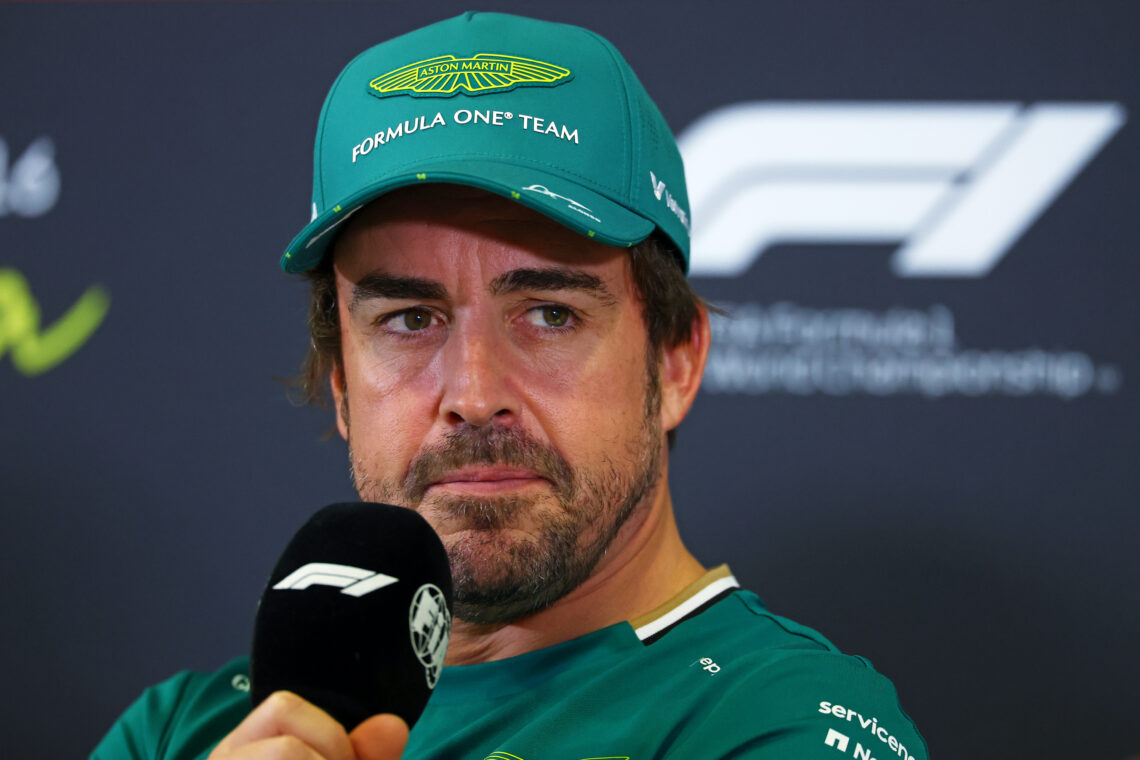


Fernando Alonso is desperate to move onto 2026 after a frustrating 2025 campaign with Aston Martin, but things may not be much better next year.
The Spaniard has struggled to score consistent points in the AMR25, sitting 13th in the standings with 40 points. Aston Martin are eighth in the constructors’ championship, a far cry from where they were back in 2023, when podiums were a regular occurrence.
After the Las Vegas Grand Prix, Alonso expressed how much he disliked his 2025 car and is looking forward to not driving it anymore after Qatar and Abu Dhabi. The Spaniard is looking to 2026, as Aston Martin are backed for success.
| Position | Constructors' Standings | Points |
| 1 | McLaren Racing | 756 |
| 2 | Mercedes-AMG Petronas | 431 |
| 3 | Red Bull Racing | 391 |
| 4 | Scuderia Ferrari | 378 |
| 5 | Williams F1 Team | 121 |
| 6 | Racing Bulls | 90 |
| 7 | Haas F1 Team | 73 |
| 8 | Aston Martin F1 Team | 72 |
| 9 | Stake F1 Team Kick Sauber | 68 |
| 10 | Alpine F1 Team | 22 |
With Honda power units and Adrian Newey designing the car, the Silverstone squad seemingly have what they need to fight for a championship. Alonso has been astounded by Newey behind the scenes and cannot wait to work with him.
However, the 2026 F1 regulations have been heavily scrutinised by the drivers. The 50/50 split of internal combustion and electrical power has many worried about the speed of the cars and whether the battery will need to be recharged on main straights.
Alonso has hinted at retiring in 2026 if Aston Martin can give him a competitive machine; he wants to end his career on a high note. However, recent comments from sim driver Jak Crawford will not make for good reading.
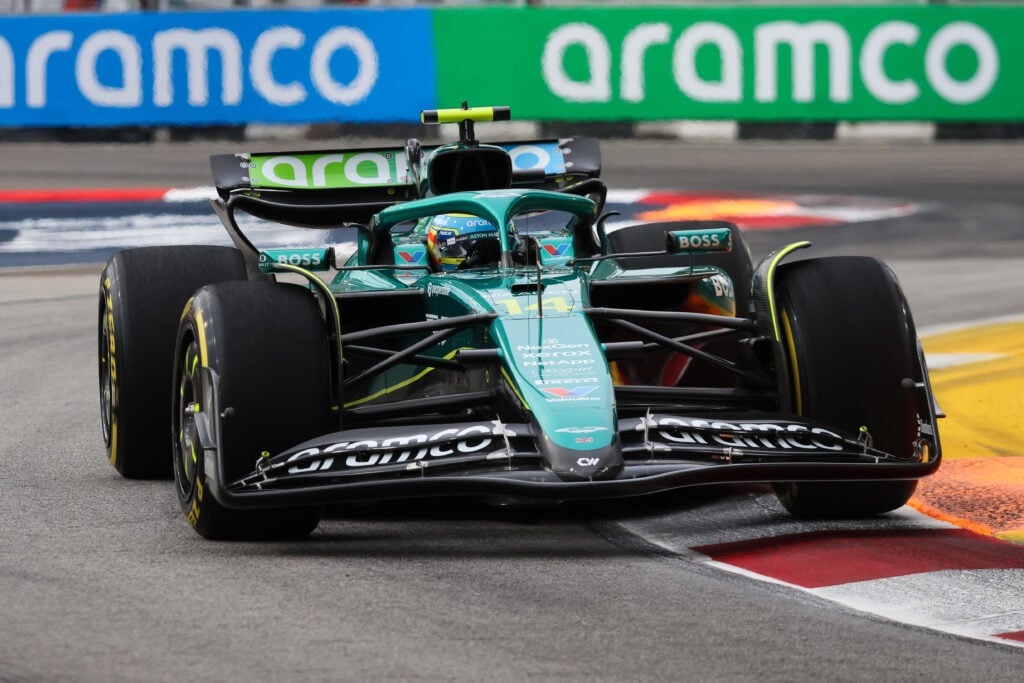
Jak Crawford says Fernando Alonso’s 2026 F1 car felt like ‘an F2 car’ in the simulator
Many drivers were critical of their 2026 cars after testing them in the simulator. Speed has been the main problem, and the latest comments about the new rules are even more damning.
As per The Race, Racing Bulls driver Isack Hadjar suggested in Las Vegas that the 2026 F1 cars ‘are closer to an F2 car’, but he clarified that he meant ‘car performance-wise’.
Aston Martin reserve driver Crawford echoed these feelings. He claimed that the new car was ‘quite similar to drive to F2’ after being in the simulator.
Do you think the new 2026 F1 regulations will improve the racing? And let us know your thoughts!
The American was not talking about pace specifically, and his and Hadjar’s comments could simply be interpreted as the 2026 cars are slower than the current generation. However, he could have also implied that they are in fact closer to F2 cars, which will worry Alonso.
The 44-year-old has had his fair share of frustrations with engine power throughout his career, most notably at McLaren. He referred to his Honda engine as a ‘GP2 engine’ back in 2015 – it could well be deja vu at Aston Martin in 2026 if Crawford’s assessment comes to fruition.
READ MORE: Aston Martin driver Fernando Alonso’s life outside F1 from net worth to Cars 2

FIA’s Nikolas Tombazis debunks claims that 2026 F1 cars are similar to F2 in pace
Alonso will make a ‘crucial’ decision on his F1 future in the first few months of 2026. If the car is uncompetitive, he may call time on his career.
Hadjar and Crawford’s F2 comments are the latest criticism of the 2026 regulations, but Nikolas Tombazis has denied this claim is true. Speaking to The Race, the FIA chief says that it is ‘way off the mark’.
“Comments about Formula 2 pace are way off the mark. We are talking about laptimes overall which are in the region of one or two seconds off where we are now, depending on the track, depending on the conditions,” he said.
“Obviously, at the start of the cycle it would be silly to be faster than the previous cycle. It would cost us nothing from a regulation point of view. It would be very easy to make the cars go faster, but one has to gradually claw back what is gained by natural development.
“So you can’t start the cycle going faster than the previous one. Then in 20 years from now, you can imagine what would happen. So it’s natural the cars are a bit slower, but I don’t think we are anywhere near the ‘it’s not Formula 1’ discussion in any way or shape.”
Receive exclusive F1 news and updates twice a week to your mailbox


