Lando Norris
 McLaren
 Mercedes
 Red Bull
 Ferrari
 Williams
 Racing Bulls
 Aston Martin
 Haas
Haas Alpine


Kimi Raikkonen was arguably one of the greatest Formula 1 drivers of the 2000’s decade, and one of few men to ever challenge Michael Schumacher at Ferrari.
The one world championship next to his name – won in his debut season with the Scuderia after replacing the German great in 2007, was a tale of ‘it isn’t over until the chequered flag has dropped’.
For all he enjoyed his fair share of bad luck that year, his ability to get over it quickly is what enabled him to keep fighting right until the end.
A 17-point deficit with 20 up for grabs in the final two rounds should’ve meant that his dreams were over, yet against the trends of 2003 and 2005 Formula 1 seasons, he fought back to finally claim the coveted silverware.
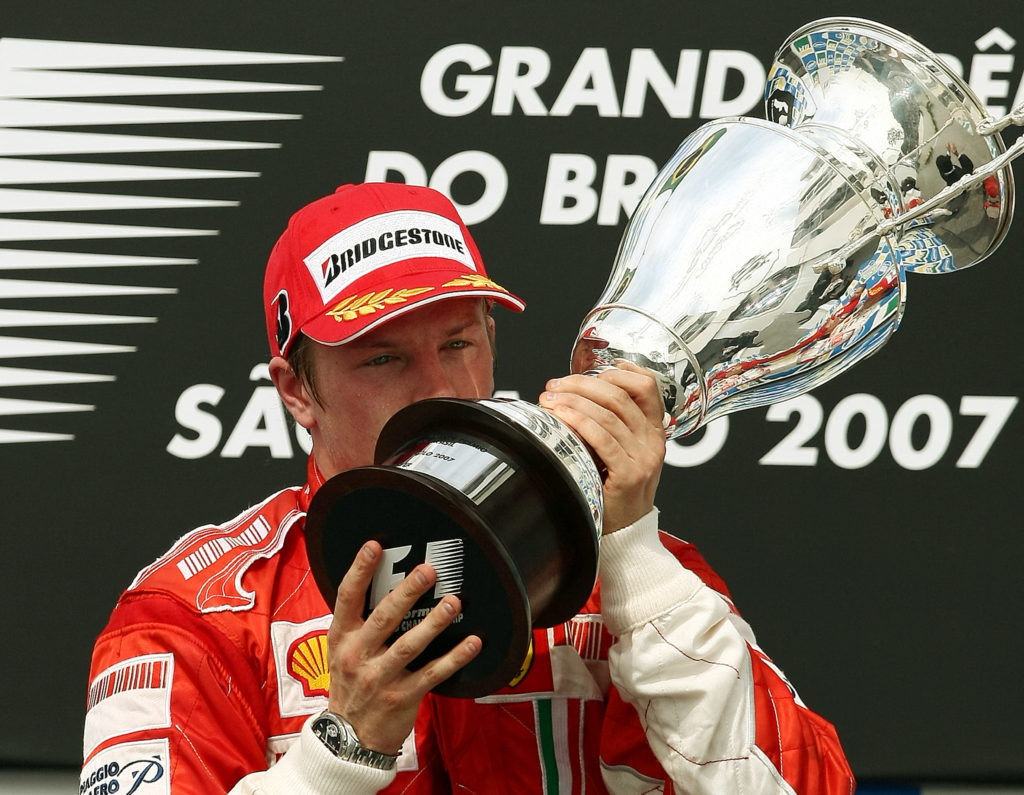
Kimi Raikkonen’s F1 performance coach reveals ‘massive’ advantage over rivals
Speaking on Marc Priestley’s Pit Lane Life Lessons podcast, Mark Arnall – Raikkonen’s former performance engineer discussed some of the Finn’s strengths during his long Formula 1 career.
To have raced for nearly two decades requires a lot of mental and physical strength, the former of which Arnall praised him for having in abundance.
READ MORE: Daniel Ricciardo explains Helmut Marko’s requirements as he fights to save his RB seat
“Kimi was one of these characters that was just very good at forgetting what just happened,” he said.
“It’s like, it was a race, if it didn’t go well, whether it was mechanical or it was him, he’d be p—-d off at the time, but then by the evening, it’s done.
“It’s finished, let’s move on. I thought that was one of his massive strengths. He had this ability to not think back, not regret.”
What’s the best example of Raikkonen getting over a race disappointment?
One incident that comes to mind immediately is the 2006 Monaco Grand Prix, where racing for McLaren at the time, Raikkonen was forced to retire from the race after his heatshield blew up in spectacular fashion.
He retreated to a yacht in the harbour (while the race was going on), and continued his day as if he hadn’t been flying around the principality at nearly 200mph 30 minutes beforehand – he didn’t appear all too bothered that his race day was over.
READ MORE: What people in the F1 paddock are now saying about McLaren after their Monza team orders
The 2006 season was a bit of a disaster for McLaren anyway, and their driver line-up altered to feature a rookie Lewis Hamilton and reigning two-time champion Fernando Alonso for 2007.
Their mental strengths and on-track performances were no match for Raikkonen in the end, who overcame both to win his only championship, beating his new rivals and former employers in the process.
Sadly, he wouldn’t come too close to winning the title again, fading away in 2008 and threatening in 2012, but he certainly went on to fulfil a great legacy and inspire a whole generation of fans.
Receive exclusive F1 news and updates twice a week to your mailbox