Lando Norris
 McLaren
 Mercedes
 Red Bull
 Ferrari
 Williams
 Racing Bulls
 Aston Martin
 Haas
Haas Alpine


Damon Hill says Lewis Hamilton’s battle with Kimi Antonelli at Silverstone highlights how F1 racing has changed.
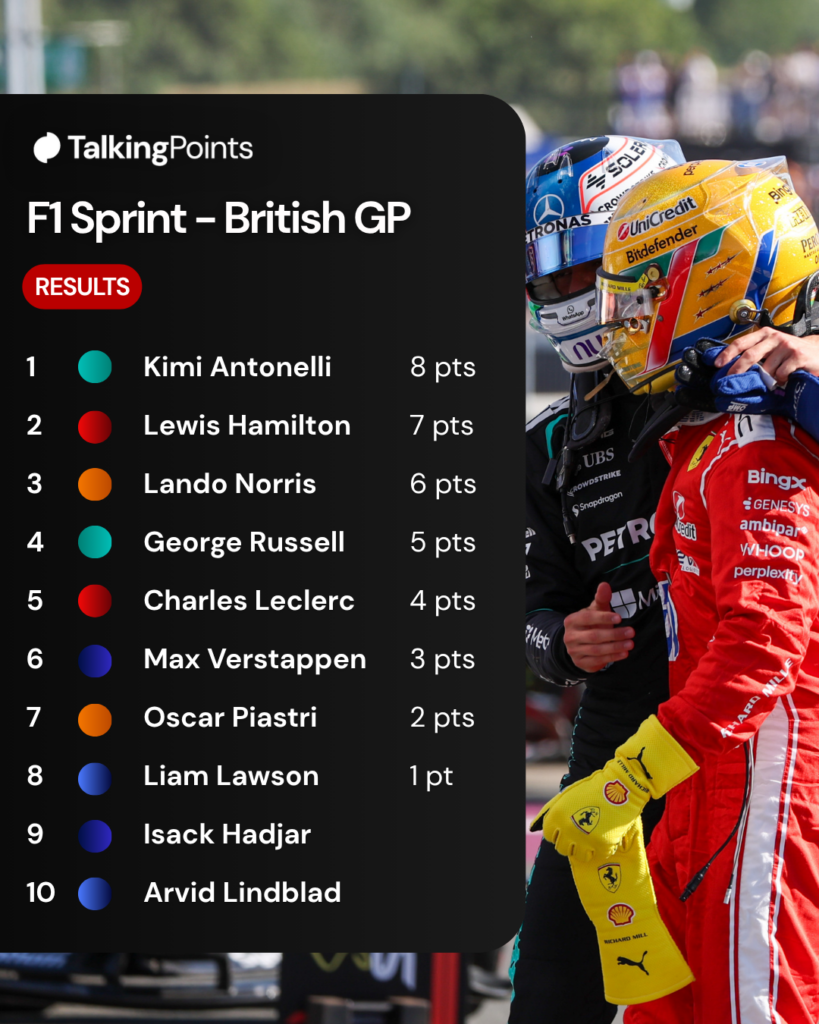
Hamilton and Antonelli battled for victory in Saturday’s Sprint race, with the Mercedes driver making a decisive overtake on lap eight out of 17.
The 41-year-old tried to stay within range but the W17, which has won all but two races this year across both formats, proved to be too strong thereafter.
Kimi Antonelli wins the British GP Sprint. Who can stop him winning the Grand Prix?
Damon Hill shocked by pace swings between Lewis Hamilton and Kimi Antonelli
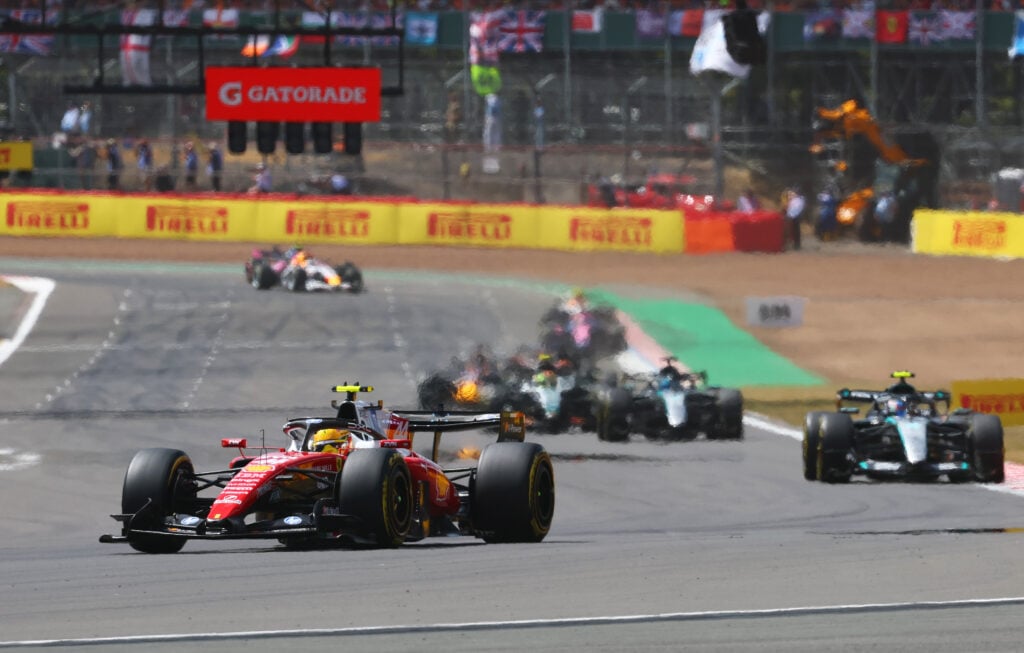
Hamilton and Antonelli quickly broke free of the pack to set up a direct head-to-head, with the remaining drivers from the top four teams relentlessly exchanging places behind.
The Ferrari man desperately tried to keep his pursuer out of the one-second barrier to deny him overtake mode, but Antonelli was able to break that barrier.
He was able to get particularly close in the first sector before Hamilton, deploying more energy, clawed back time through the middle part of the lap. When he was forced into defensive lines, he knew it was only a matter of time.
After the lead changed hands, Hill was shocked by the dramatic fluctuations in the gap, a sign of the constant experimentation on the pit wall. Ordinarily, it would only evolve by one or two tenths per sector, but here the swings were far greater.
“It’s extraordinary,” Hill remarked on BBC Radio 5 Live (04/07, 12:21). “One minute, you look at it and it’s almost back down to a second, then it goes back to 1.7.
How is energy management affecting the spectacle at Silverstone? 🪫
“They’re getting a lot of communication from their engineers in the pits, who are telling them where to deploy. They’re probably changing where to deploy, they’re experimenting with the ways that they can charge up their battery and deploy it to get the maximum lap time.
- READ MORE: What F1 TV directors concealed after Kimi Antonelli passed Lewis Hamilton at British Grand Prix
“It’s an incredibly tactical and complicated business, using these very heavily battery-oriented power units.”
The effect of the batteries is more pronounced at Silverstone because of the shortage of heavy stopping zones, which are crucial for recharging. Drivers and teams have to choose where to unleash their limited energy, aware they will inevitably haemorrhage lap time elsewhere in the lap.
Receive exclusive F1 news and updates twice a week to your mailbox