Lando Norris
 McLaren
 Mercedes
 Red Bull
 Ferrari
 Williams
 Racing Bulls
 Aston Martin
 Haas
Haas Alpine


Given Red Bull’s current struggles with the 2026 regulations and their impact on their chassis, Christian Horner’s comments from three years ago have become more prominent.
It’s been speculated that Red Bull’s chassis issues, beyond its overweight nature, play a major role in their struggles this season.
In fact, Red Bull cannot address the RB22 without compromising 2027. This has put a great strain on the team, as they work tirelessly to improve the car.
Isack Hadjar blames Red Bull’s chassis for their poor start to 2026 – Are you surprised that their engine has not been the biggest issue?
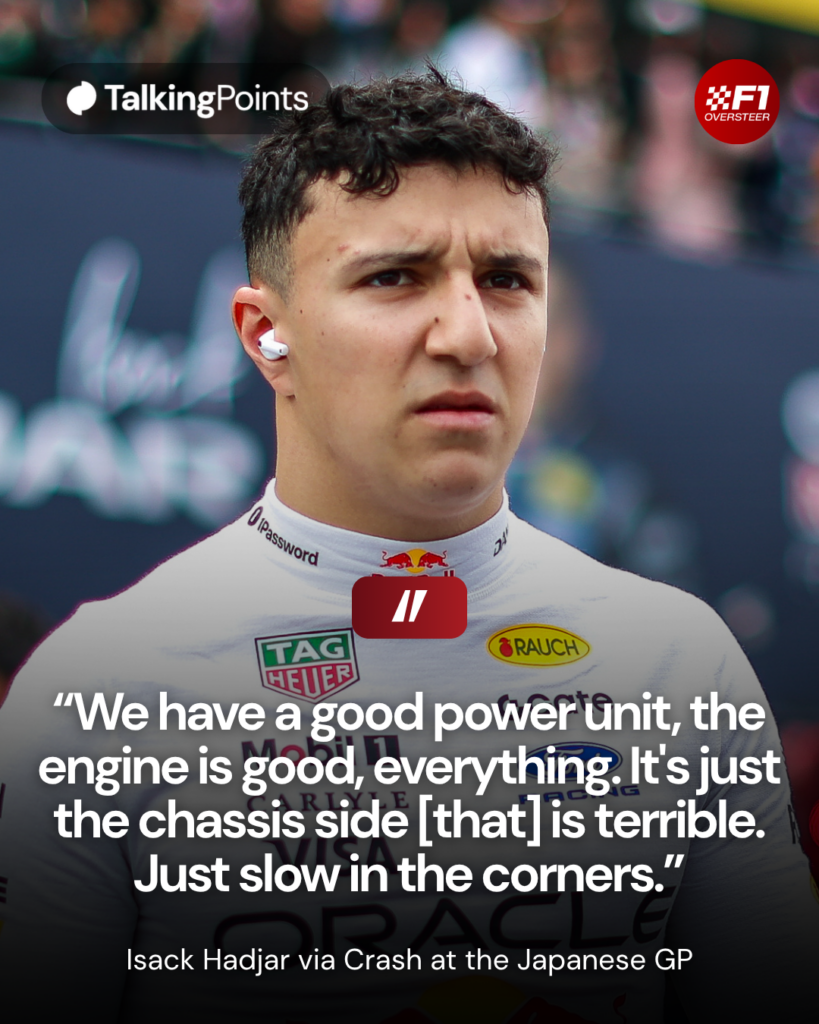
Given the shock and concern surrounding Red Bull’s engine division, many felt that it would be their power unit that would hold them back.
Instead, it’s the chassis that has failed them. But one person within Red Bull saw this coming – Christian Horner. And the former team principal and Red Bull CEO knew the chassis regulations would make life difficult for the team.
READ MORE: Laurent Mekies reveals what Isack Hadjar is saying about Red Bull’s RB22 compared to Max Verstappen
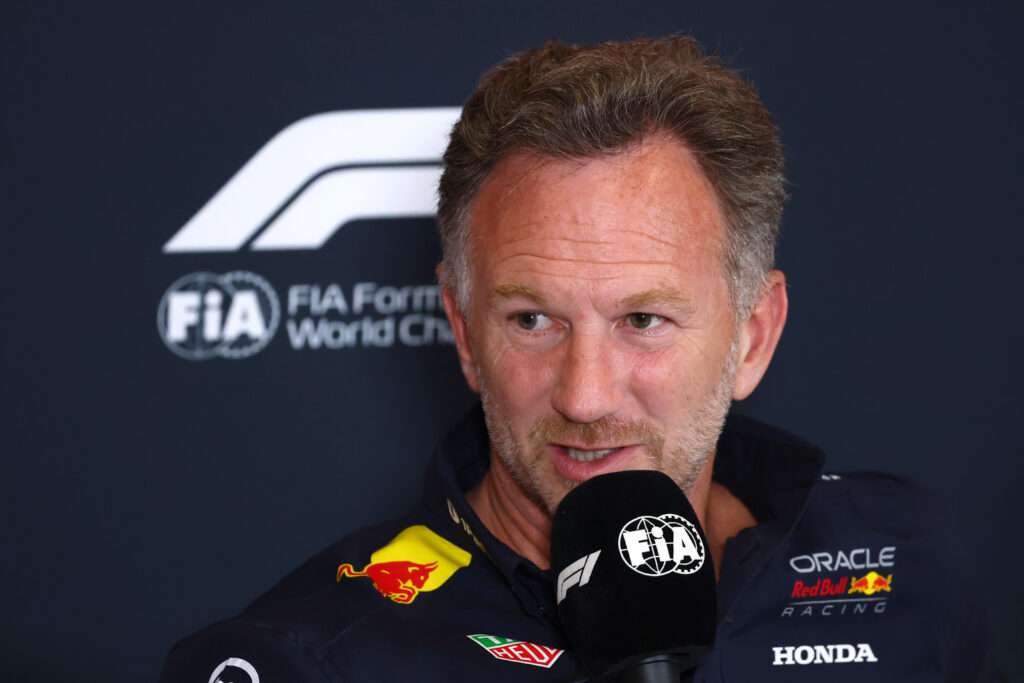
Christian Horner’s comments on 2026 regulations show Red Bull were always going to struggle
In an interview with Race Fans back in 2023, Christian Horner explained how the new regulations would impact the sport when they came into effect in 2026.
Horner predicted F1 would create ‘Frankenstein’ cars where the chassis would need to compensate for the imbalance between the combustion power and electrical power.
“The problem could easily be addressed with just tuning the ratio between combustion and electrical power.
“We still have two and a half years. I think if there is a slight redress, it would then create potentially a better platform for the chassis.
“Because otherwise, the chassis regs that are undefined yet and uncommitted, we’re going to be trying to cater for those compromises.
“So I think if we just tune that ratio, I think very quickly you could take the dependence away from having the need for active aero and constantly movable diffusers and wings and the complexity that will bring.”
Should Red Bull have given up on the 2025 title to prioritise 2026?
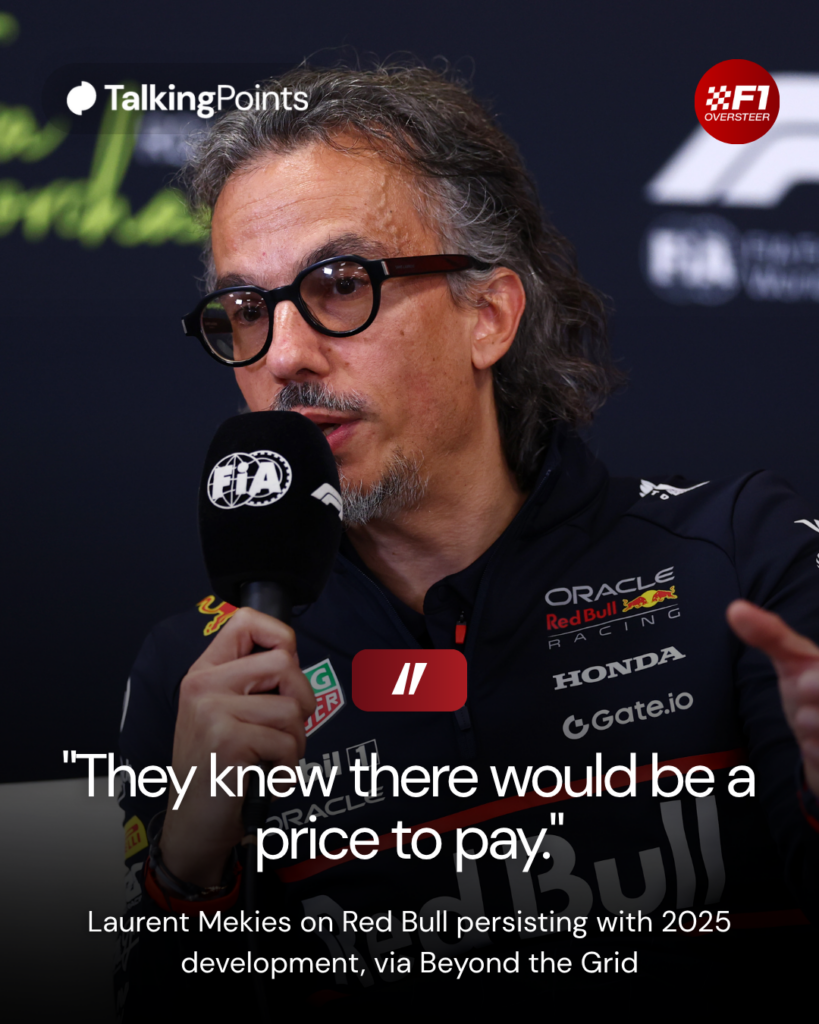
Toto Wolff was immediately dismissive of Christian Horner’s comments
Unsurprisingly, Toto Wolff was the first to shut down Christian Horner’s call for a redressal of the new regulations, noting that it took years of work to put them in place.
“We’ve developed those regulations over many years with all the auto manufacturers being involved. It was a compromise that attracted Audi to finally join the sport, for Honda to stay in there.
“The best possible case that one could imagine for Formula 1. Is it challenging? Are our chassis designers saying, ‘How are we going to do this?’ Yeah, super.
“But zero [chance]. These regulations are not going to change any more. They’re not going to be postponed any more because the world needs to show innovation around sustainability. We need to reduce emissions, and we’re super-excited.”
It’s hard to know whether Wolff already knew how well Mercedes would do compared to other teams under the new regulations three years in advance, or he was just trying to antagonise Christian Horner.
In the end, things worked out well for Wolff and Mercedes, while other teams, including Red Bull, have found it challenging to adapt their chassis to the new regulations.
Receive exclusive F1 news and updates twice a week to your mailbox