Lando Norris
 McLaren
 Mercedes
 Red Bull
 Ferrari
 Williams
 Racing Bulls
 Aston Martin
 Haas
Haas Alpine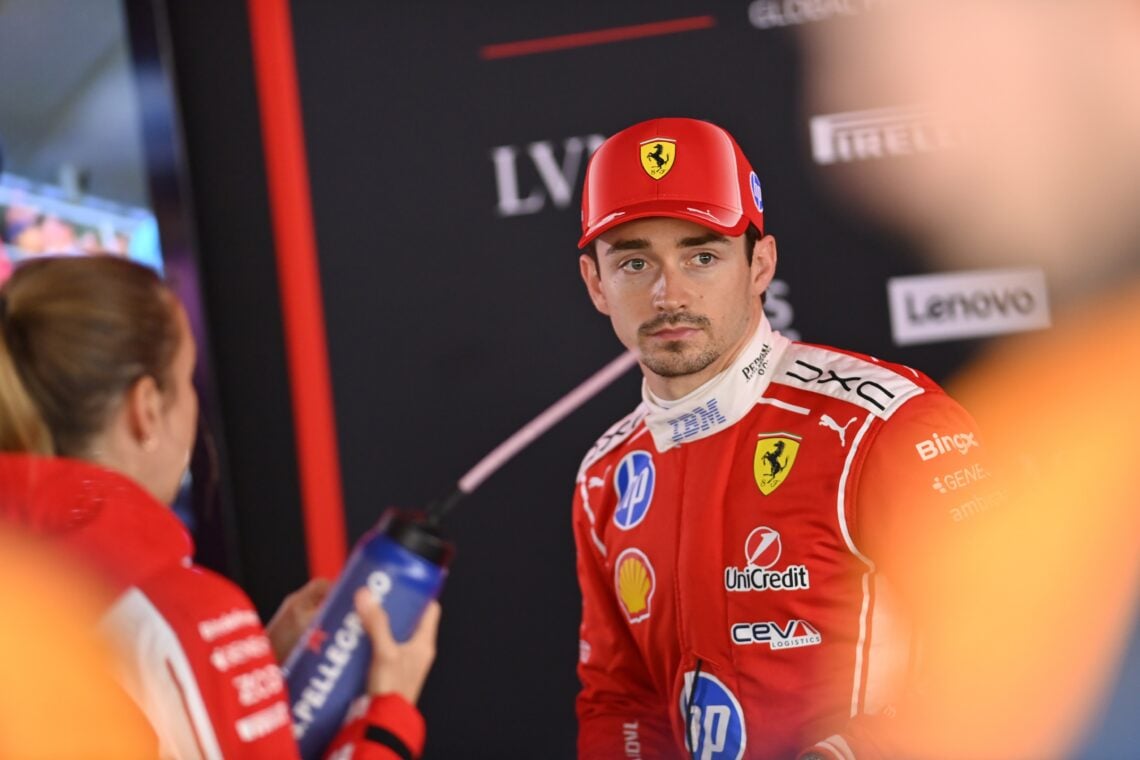


The FIA implemented a rule change for qualifying at the Japanese Grand Prix due to concerns over the amount of energy harvesting that is necessary at the iconic Suzuka circuit. Still, Charles Leclerc’s data from the session indicates that it wasn’t enough.
Ahead of the 2026 Japanese Grand Prix, the FIA reduced the amount of allowed energy harvesting during each flying lap in qualifying from nine megajoules to eight, following concerns over super clipping at the circuit.
Here’s how the grid will line up for the 2026 Japanese Grand Prix – Which driver can spring a surprise at Suzuka?
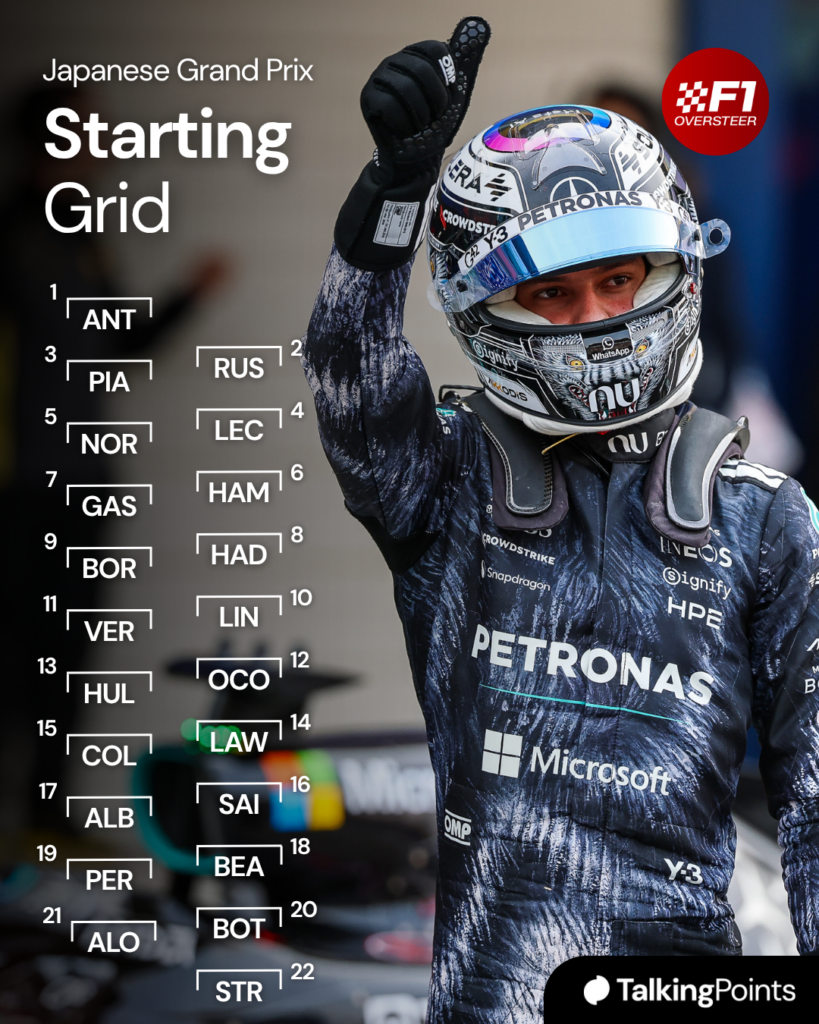
The technical directive was aimed at eliminating the amount of lift-and-coast that was necessary to ensure that drivers still had enough energy to deploy in the final stages of their flying laps.
However, according to the data from Charles Leclerc’s Ferrari F1 car, the limit may need to be reduced even further if the FIA plans on using the same directive at future race weekends.
- READ MORE: David Coulthard praises the FIA’s decision to reduce energy management in qualifying at Suzuka
Charles Leclerc ran out of energy on his final flying lap at Suzuka despite F1’s qualifying rule change
Leclerc’s final flying lap during the Saturday shootout was initially understood to be scuppered by a bout of oversteer he suffered at turn 14.
The Ferrari driver had set a purple first sector before he arrived at the renowned Spoon curve, but crucially lost all of his momentum heading into the 0.7-mile back straight.
However, a report from Motorsport Italia has highlighted that the poor run into 130R was caused by a lack of energy due to excessive amounts of wheel spin upon his exit from the corner.
To correct the oversteer he was experiencing, Leclerc was forced to fractionally lift his foot off the accelerator.
Toto Wolff has claimed 90% of F1 fans like the new regulations… but is he right? 🤔 Do you like the 2026 regulations?
Despite only taking around two to three percent of pressure off the pedal, the wheel spin consumed more energy than planned, meaning that the SF-26 was starved of electrical power by the time he reached the final chicane.
Ferrari had identified the energy delivery issue ahead of the race weekend in Japan and they plan to raise the issue with the FIA. Still, he won’t be able to get the lost time back.
- READ MORE: Charles Leclerc blasts qualifying in F1 2026 with foul-mouthed radio outburst at Japanese Grand Prix
Charles Leclerc was left ‘punching the steering wheel’ after costly moment in Q3
While the moment at turn 14 scuppered Leclerc’s chances of improving on his P4 grid slot for Sunday’s Grand Prix, the Monegasque noted that he was still happy with his efforts.
Of course, Leclerc had had time to collect himself following his frustrations in the cockpit, which he detailed to journalists via La Gazzetta dello Sport.
“The lap wasn’t perfect, but honestly, I’m really happy with it,” the Ferrari star admitted. “I lost a lot of time, so much time on the straight compared to my usual pace, and that’s really frustrating.
“I mean, even though you know when you get in the car that it can happen, when it does, you end up punching the steering wheel. It’s a long straight, so I can really take it out on the steering wheel!
“But no, it’s very frustrating, because, as a driver, we can do so many things in the car, but once we’re at 100% on the throttle on that straight, there’s not much you can do, and when you see that we’re losing time the further down the straight you go, it’s just super frustrating.”
Receive exclusive F1 news and updates twice a week to your mailbox