Lando Norris
 McLaren
 Mercedes
 Red Bull
 Ferrari
 Williams
 Racing Bulls
 Aston Martin
 Haas
Haas Alpine


Audi are partly responsible for Mercedes’ domination at the start of the 2026 F1 season, F1 journalist Michael Schmidt says.
Mercedes have won all five Grands Prix so far this year, as well as two out of three Sprints. Even when they were beaten on Saturday in Miami, it was Lando Norris in the customer McLaren car who took victory.
They have scored almost as many podiums (seven) as the rest of the grid combined (eight) and lead Ferrari by 72 points in the constructors’ standings.
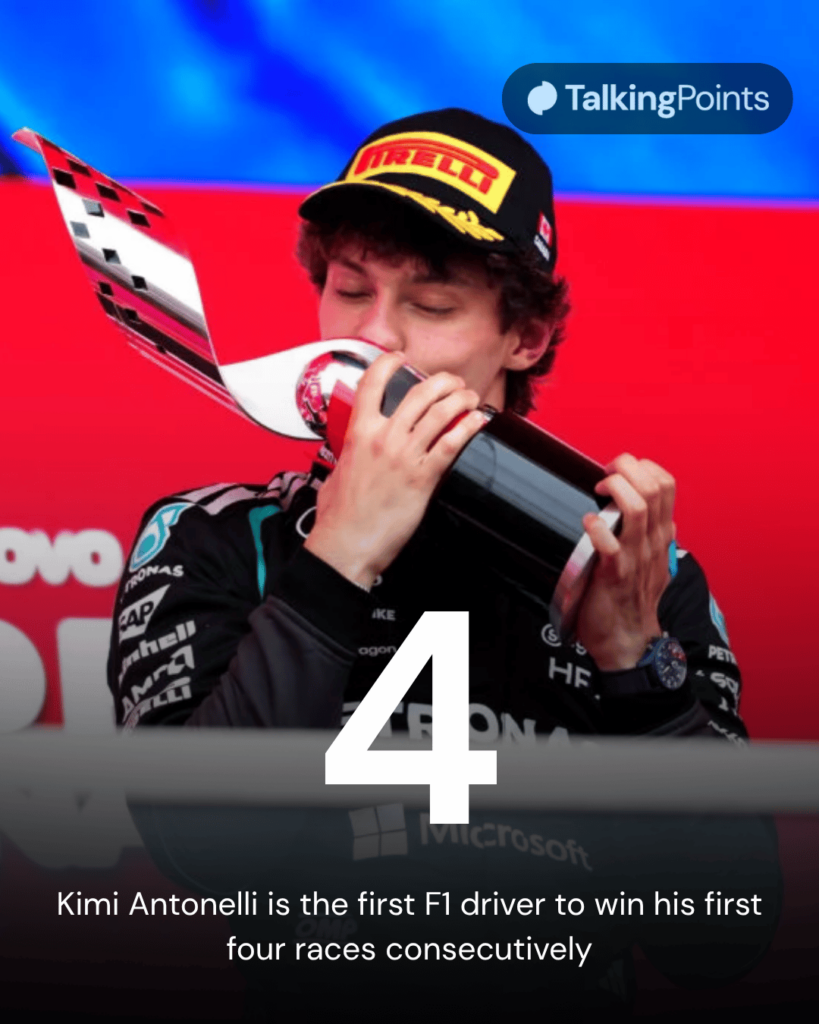
Will Kimi Antonelli’s F1 record ever be beaten?
Mercedes wouldn’t be so dominant with Audi’s accidental help
In a Q&A with Auto Motor und Sport, Schmidt explained that Audi and Porsche ‘insisted’ on both a boost limit for the batteries and a lower fuel compression ratio limit for the internal combustion engine.
Audi officially entered F1 in 2026 after acquiring Sauber, but they announced their plans in the summer of 2022, which gave a seat at the table when the rulebook was being drawn up.
Meanwhile, Porsche held talks with Red Bull before then-boss Christian Horner pulled the plug. Horner later decided the team should set up their own Powertrains division in partnership with Ford.
After Audi’s demand, the compression ratio limit was lowered from 18:1 to 16:1. But Mercedes found a loophole in the rules.
The jewel in the crown is upon us! Who’s your pick for the Monaco Grand Prix? 👑

The FIA only carried out tests at ambient temperature, so if they reached a higher ratio while the engine was hot, it wouldn’t be detectable.
It’s believed that Mercedes have gained as much as 13 horsepower by pushing towards the old 18:1 limit on track. The team themselves have said the advantage is much smaller, and they also received assurances from the FIA that their trick was in the rules.
Ferrari are reportedly 20 horsepower down on Mercedes, if not more. The compression ratio loophole alone may be responsible for around half the deficit.
The consensus is that the Scuderia have built the best chassis on the grid, but they haven’t been able to challenge for victories due to the power unit deficit.
Schmidt believes Mercedes ‘wouldn’t have the advantage they have now’ if it wasn’t for Audi and Porsche. Of course, they couldn’t have been aware of the ramifications at the time.
From the Monaco Grand Prix onwards, the FIA will test the engines at 130 degrees in an attempt to close the aforementioned loophole. The impact, or lack thereof, will be telling.
Receive exclusive F1 news and updates twice a week to your mailbox