Lando Norris
 McLaren
 Mercedes
 Red Bull
 Ferrari
 Williams
 Racing Bulls
 Aston Martin
 Haas
Haas Alpine


Aston Martin went into the Japanese Grand Prix knowing that their issues with Honda would not be received well by the local fans.
Ahead of the Japanese Grand Prix, Honda conceded that Aston Martin’s vibration issue needed more time to fix, dampening their expectations for improvement this season.
But there was more concern surrounding the relationship between Honda and Aston Martin heading into Suzuka, given Adrian Newey’s criticism of Honda.
Can Aston Martin’s relationship with Honda survive long-term?

However, Honda dismissed rumours of tension with Aston Martin, noting that the two sides were working together to address the issues.
And while Honda and Aston Martin are clear on their future as partners, there was a recent shift internally when it came to how they addressed their concerns with their Japanese suppliers.
READ MORE: Aston Martin may be copying McLaren’s old Mercedes tactic with Honda engine criticism
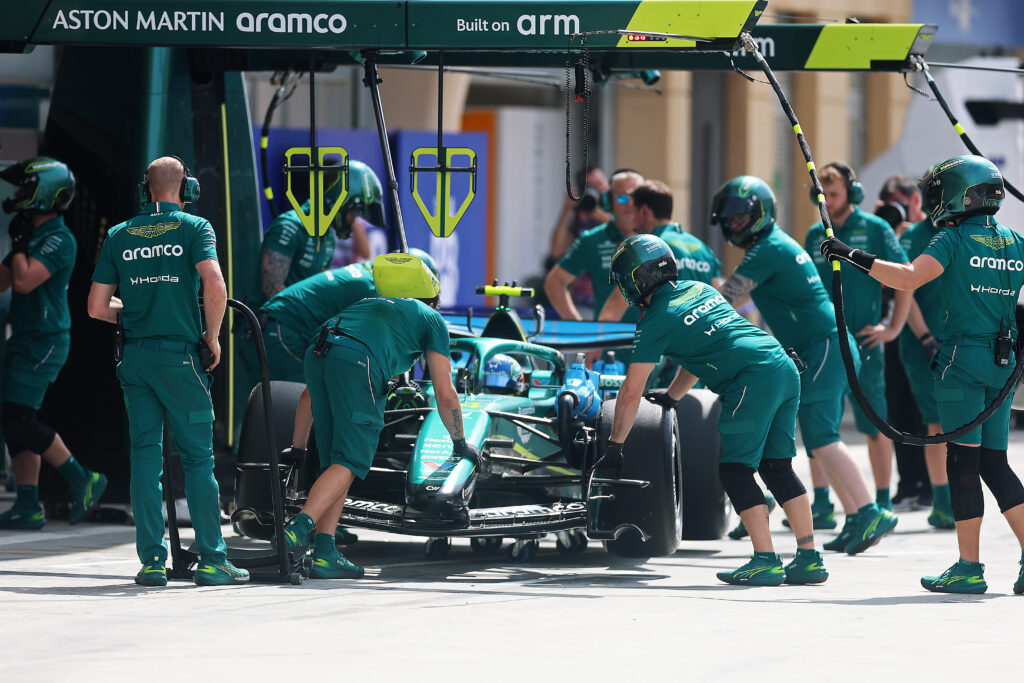
Aston Martin knew Honda criticism wouldn’t be ‘welcomed’ at Japanese Grand Prix
An unnamed former F1 team technical director, going under the pseudonym of Andrew Garrison, reported for Autosport Japan that Aston Martin prepared themselves ahead of the Japanese Grand Prix.
Aston Martin officials knew comments like the ones Adrian Newey previous made wouldn’t be well received by Japanese fans. As such, they’ve instituted a ‘mouth shut’ policy on the matter.
“I think the local media and fans are well aware that Aston Martin itself is also partly to blame for the predicament. While Honda was forced to make significant changes along the way to its power unit plans, rival manufacturers have been working in a consistent direction since early 2022.
“Criticism and blame-shifting were therefore not to be welcomed at Suzuka, and Aston Martin understood this and took a calmer and more sensible approach to dealing with the media.
“The entire Aston Martin team was focused on getting the most out of their power unit performance and trying to understand the capabilities of a chassis that still had a lot of unknowns after the first two races of the season.
“Aston Martin Honda’s performance at Suzuka was by no means excellent, but at least they completed the race without any major problems. Therefore, it can be said that the policy of keeping one’s mouth shut and focusing on one’s work has had some effect.
READ MORE: Damon Hill warns Aston Martin that Adrian Newey could cause ‘catastrophe’ amid 2026 woes
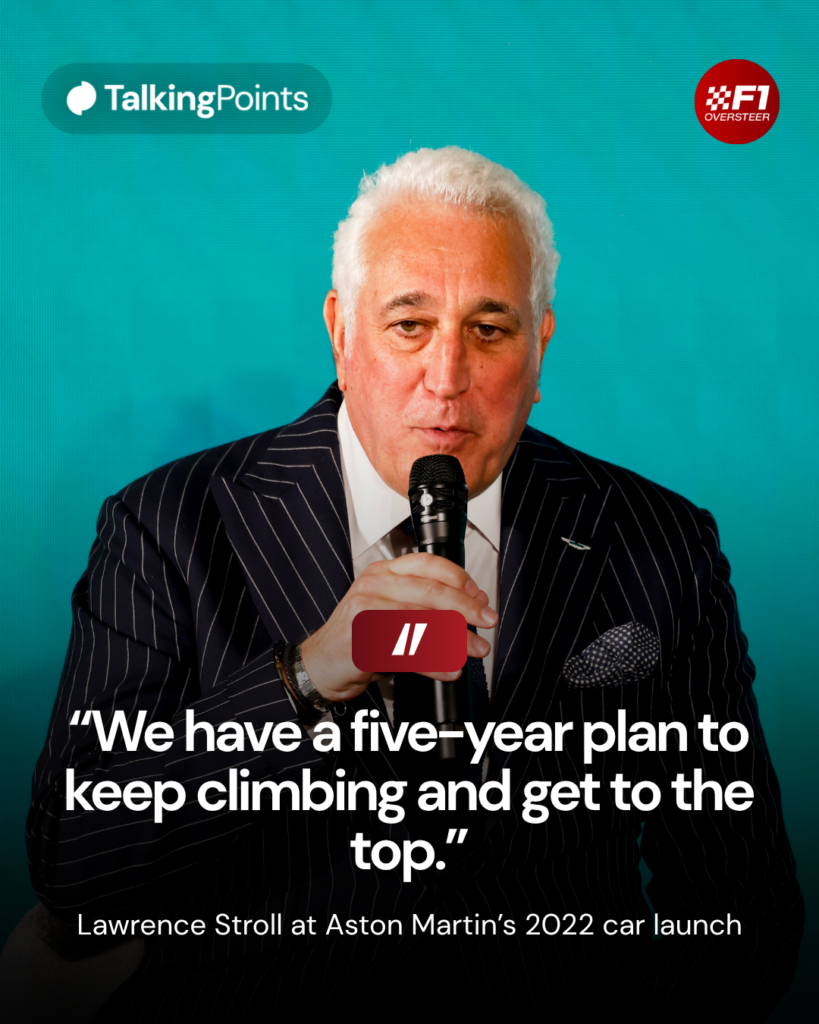
Just one year left in Lawrence Stroll’s five-year plan
Where will Aston Martin be in 2027?
Aston Martin paying the cost for not building chassis to accommodate power unit
When discussing Aston Martin’s performance at the Japanese Grand Prix, Garrison noted that their struggle for pace compared to top teams shows that the chassis is just as much to blame as the errant Honda power unit issues.
“It’s clear that the AMR26 is noticeably slower on the straights. Alonso, who was 2.731 seconds behind the fastest car in Q1, was behind by 8.9km/h against the fastest car in the speed trap, 9.8km/h at the start/finish line, 14km/h at the end of Sector 1 and 8.8km/h at the end of Sector 2.
“These are certainly large differences, but my calculations don’t fully explain the time difference in Q1. Alonso was likely not as fast in the corners either.
“While Honda needs to catch up significantly, Newey and his team also need to get more speed out of the chassis.
“The AMR26 was designed at the mercy of the chassis team, without any compromises to suit the demands of the power unit, and has some very interesting features, such as the shape of the side pods and the structure of the suspension arms, which are an important part of the aerodynamic package.”
This analysis doesn’t come as a surprise, as Honda blamed Aston Martin for the vibrations after seeing their power unit upgrades make just a marginal impact on their race performance.
With the next race not until May, Aston Martin will have to work incredibly hard alongside Honda to ensure that these issues can be further mitigated in time for the Miami Grand Prix.
Receive exclusive F1 news and updates twice a week to your mailbox