Lando Norris
 McLaren
 Mercedes
 Red Bull
 Ferrari
 Williams
 Racing Bulls
 Aston Martin
 Haas
Haas Alpine

It has been a season to forget so far for Alpine after they were relegated to the bottom of the Constructors’ Championship in the last couple of races.
The team decided to change their driver lineup after the first six races of the year, with Jack Doohan making way for Franco Colapinto, but this has so far failed to improve their standing.
Their 2025 challenger has struggled to finish regularly in the points, while there has been a lack of leadership at the top of Alpine due to the abrupt exit of team principal Oliver Oakes earlier this year.
Despite this, the team continues to look towards the 2026 season, with technical director David Sanchez offering insight into one area the team has managed to improve when speaking to AMuS.
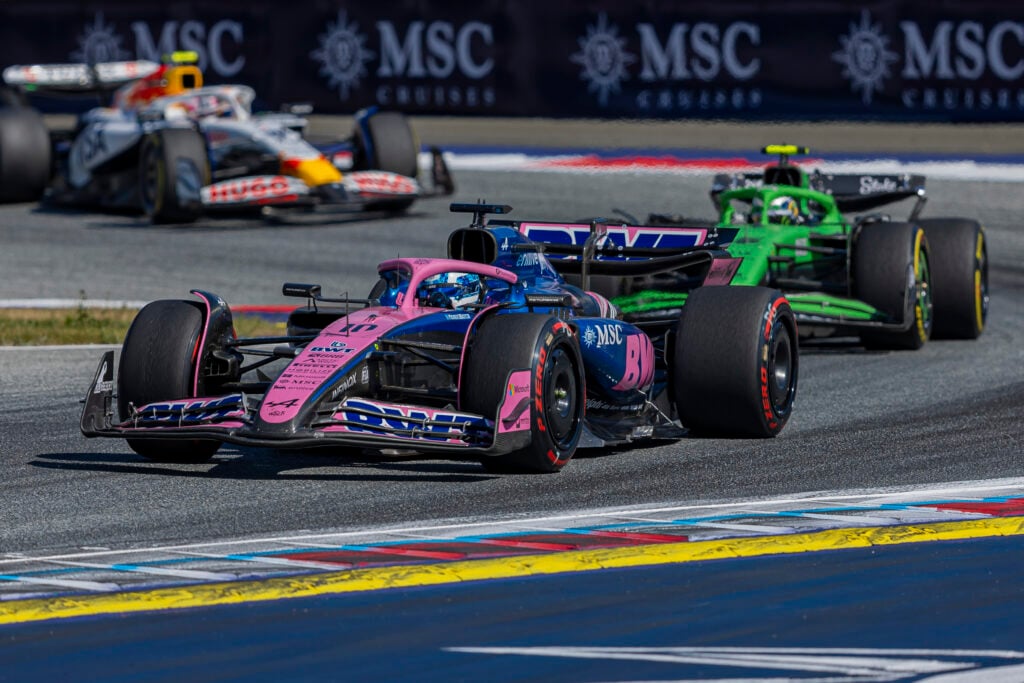
Alpine technical director claims the team has made ‘biggest step’ in 2026 aero
The 2026 F1 technical regulations will see the sport take on an all-new car and power unit combination, with Alpine switching to Mercedes power.
It comes after Renault closed their Viry-Chatillon plant and moved its staff over to focus on its roadcar projects, marking an end to the engine producers after 40 years.
The cars will utilise active aero and Sanchez believes the Enstone-based squad has made the biggest gains of any team since starting work on their 2026 challenger in January.
“Our design departments have developed well – some faster than others. We have probably made the biggest step in aerodynamics. That’s where I come from and where I feel comfortable,” said Sanchez.
READ MORE: Everything we know about F1’s 2026 regulation changes from engines to tyres
F1’s 2026 cars ‘different beast’ to ground effect cars
There is a lot of anticipation over how the 2026 cars will be different to their 2025 counterparts, mainly due to the decreased emphasis on ground effects.
Sanchez believes getting the combination of active aero and energy deployment will be key, after F1 worked with teams to resolve their teething problems.
“The car for next year is a completely different beast, in terms of character. But it’s still a Formula 1 car. It’s still about downforce and a good balance,” said Sanchez.
“If you compare it with the current DRS, it’s not much different. The complexity arises from the coupling with the energy management system. The interaction between the aero efficiency, the mode for the long straight lines and the energy management is a complicated problem that is not so easy to solve. And the downforce level that you have to aim for depends on that.”
F1 enters the final half of the 2025 season with the current specification of cars before switching to the new spec in 2026.
Receive exclusive F1 news and updates twice a week to your mailbox