Lando Norris
 McLaren
 Mercedes
 Red Bull
 Ferrari
 Williams
 Racing Bulls
 Aston Martin
 Haas
Haas Alpine
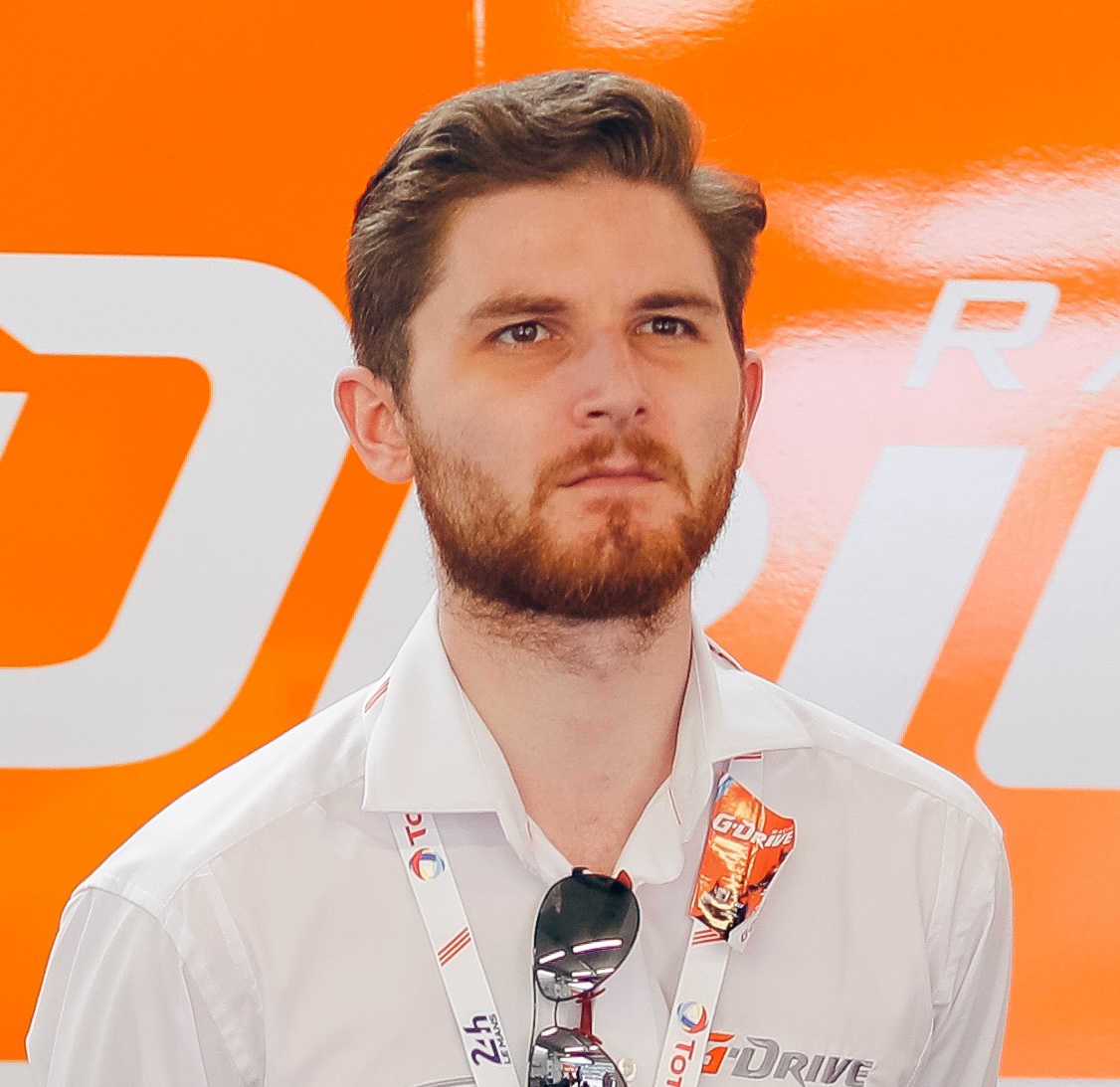

When Lawerence Stroll took to the stage at Aston Martin’s newly opened factory building on their Silverstone campus, he announced the partnership he’d been pursuing for three years.
Adrian Newey had arrived.
Having Newey in your team is like having a cheat code in Formula 1. His ability to crack a regulation cycle early on and exploit areas of performance is what makes him so sought after. It is the final piece of the master plan devised by Stroll having provided his team with a state-of-the-art factory and World Champion driver in Fernando Alonso to get the job done.
The other factor in this title-winning team is probably one of the most important to get right when the new regulations come into F1 in 2026: the power unit. Aston Martin is switching from Mercedes to Honda power and while Newey can offer genius aerodynamic solutions in a complex set of rules, there is one aspect to his decorated F1 career that has often stood in the way of his creations.
Red Bull and Renault’s ‘no light at the end of the tunnel’ moment
Newey’s decorated CV, which includes 12 Drivers’ and 13 Constructors’ Championships so far, is a testament to his success over the last three decades. But underneath his success is also a lot of failures and headaches, one of which he pointed out while on stage during his time at Red Bull.
“It’s well known in 2014 with the hybrid engine, we were in a position where we didn’t have a very competitive PU (power unit) and with no light at the end of the tunnel,” said Newey.
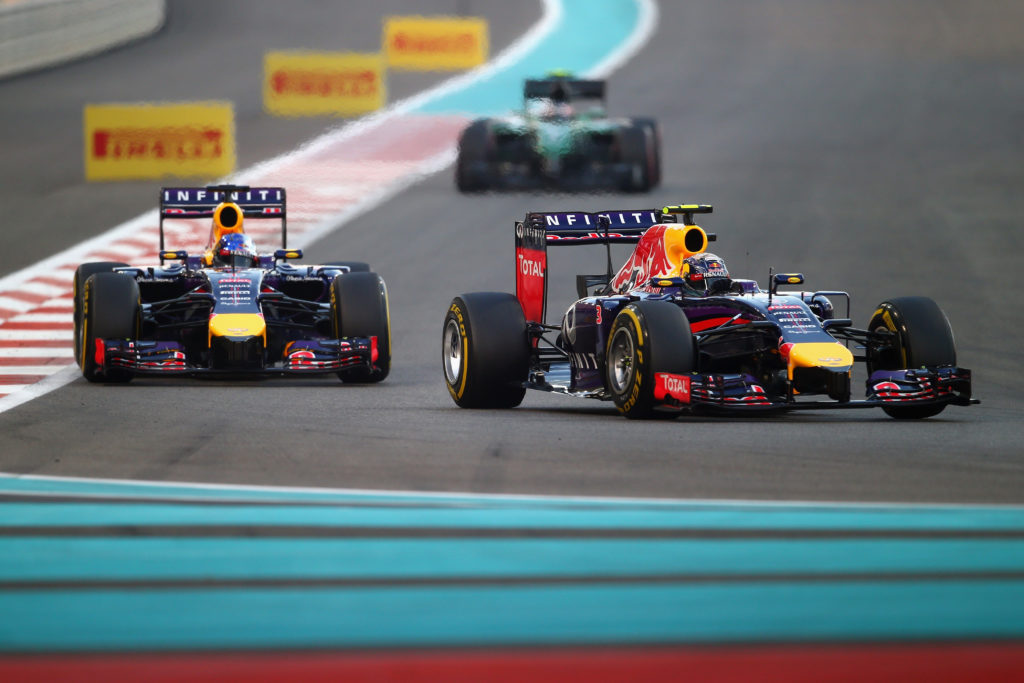
Red Bull ran Renault engines at the start of the current F1 hybrid era and the effects of their rocky relationship are still being seen today, with management within the French car-maker threatening to shut down their F1 engine operations altogether to cut their losses.
Renault’s power unit was down on horsepower compared to the rest of the field and unreliable. When Red Bull tried to switch power units to the other two alternatives, Ferrari and Mercedes, they were unwilling to cut a deal through fears of Newey producing a car that would beat their works team.
While Red Bull braved the next few years with Renault power, Newey entertained offers from other rival teams including Ferrari and Mercedes, but ultimately settled on staying at Red Bull once they figured out a way forward with Honda.
READ MORE: Everything you need to know about Aston Martin F1 Team from team principal to lineage
The Japanese engine-makers had a difficult start to F1 with McLaren and it was only when they switched to Red Bull that they began to reap the rewards of perseverance, something Newey said got them out of the dark tunnel.
“Once we got the Honda PU, it was a very different position and so then I got back involved on the Formula 1 side with the 16, I think it was 14, 15, 16, 16B and then the 18 and so forth,” said Newey.
Honda power unit to be pivotal in Aston Martin’s title chances
The 2026 power units are simplified by contrast to what we have now, with a near 50-50 split between the combustion engine and electrical power underpinned by a 350kW MGU-K, while the MGU-H has been omitted. This is the main reason the FIA was able to attract Audi and convince Honda to stay in F1 despite plans to end their involvement at the end of the 2021 season.
The early signs are that Honda is on track to produce a competitive package, having elected to focus its efforts primarily on nailing down the electrical infrastructure according to Honda Racing CEO Koji Watanabe (via Autosport). But as Newey found out with the Renault package, things could go awry if they do not meet their performance targets early in the partnership.
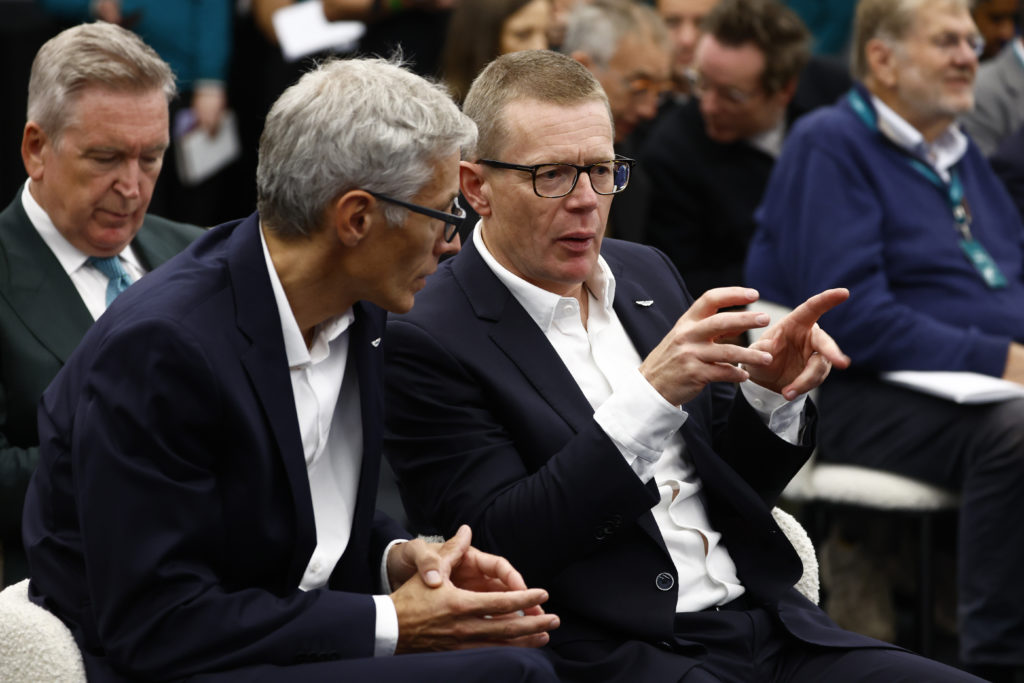
This is where Mercedes High-Performance Powertrains boss and experienced engine boffin, Andy Cowell, comes into the fold. He led the team that created the most successful power unit of the current hybrid era at Mercedes, which was initially unbeatable at the hands of Lewis Hamilton and Nico Rosberg.
While it always takes time for new signings to have the desired impact early on, particularly when it comes to car design, Newey’s experience will be a welcome addition next March when every team will be two months into conceptualising their 2026 machines.
Newey highlighted the importance of getting everything working in tandem: “We have three principal departments: aerodynamics, mechanical design, and vehicle performance.
“It will be about making sure that we have synergy between those departments and with Honda on the PU side, because there will be – probably more than ever – a big interaction between the PU side and the chassis. It’s about trying to come up with a holistic product.”
So while Newey can be seen as the main statement signing and a “bargain” according to Stroll, the real proof will be whether Honda can deliver a competitive engine against Mercedes, Audi, Red Bull and Ferrari.
Receive exclusive F1 news and updates twice a week to your mailbox