Lando Norris
 McLaren
 Mercedes
 Red Bull
 Ferrari
 Williams
 Racing Bulls
 Aston Martin
 Haas
Haas Alpine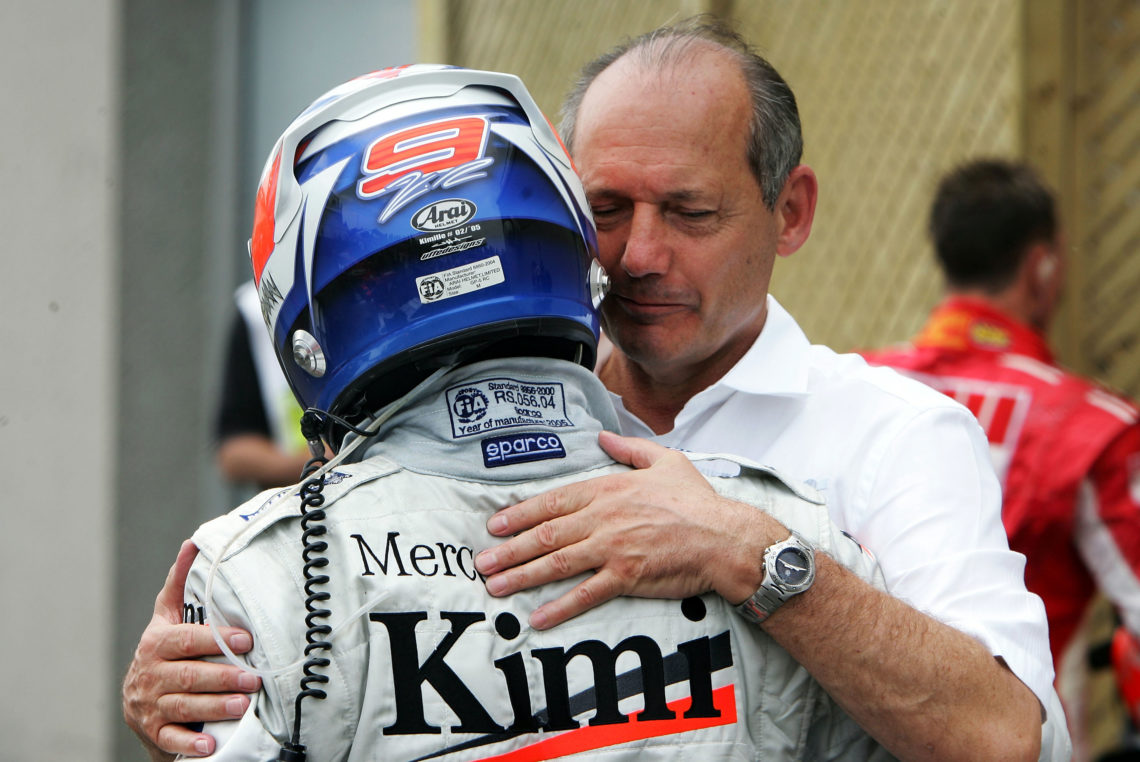

Kimi Raikkonen’s record at Suzuka during his Formula 1 career was largely underwhelming. In his last 10 visits, he failed to score a podium.
The Japanese Grand Prix took place at Fuji in 2007, the Finn’s championship year, and 2008, which may partly explain the drought. But after his comeback, he had multiple podium shots at Lotus and Ferrari.
Raikkonen started out at Sauber in 2001 but, like Charles Leclerc, he swiftly graduated from the Swiss outfit to a front-runner. McLaren signed him in their efforts to break Michael Schumacher’s dominance.
| YEAR | POS | YEAR | POS |
| 2001 | DNF | 2013 | 5th |
| 2002 | 3rd | 2014 | 12th |
| 2003 | 2nd | 2015 | 4th |
| 2004 | 6th | 2016 | 5th |
| 2005 | 1st | 2017 | 5th |
| 2006 | 5th | 2018 | 5th |
| 2009 | 4th | 2019 | 12th |
| 2012 | 6th |
After five years with the Woking outfit, including one of the best runner-up campaigns ever, he relocated to Ferrari, where he immediately became champion. A couple of years later, he dramatically walked away from F1.
His comeback at Lotus in 2012 was a success, paving the way for a second stint at Maranello. But Raikkonen never recaptured his former level alongside Fernando Alonso and Sebastian Vettel and dropped back down to Sauber (now under the guise of Alfa Romeo) before he retired.
Kimi Raikkonen’s Japanese Grand Prix comeback reduced Ron Dennis to tears at McLaren
While Suzuka wasn’t Raikkonen’s strongest track statistically, it was the scene of perhaps his greatest victory. Caught out by the worsening conditions in qualifying, he lined up 17th on the grid.
But Raikkonen produced a truly historic recovery drive that culminated in a late overtake on Renault driver Giancarlo Fisichella for the lead. It would be nearly 20 years before a driver won from so far back (Max Verstappen at the Sao Paulo GP).
Speaking to Pit Debrief, former McLaren engineer Steve Hallam recalled the team’s emotions on the day. While Raikkonen was characteristically ‘nonplussed’, team boss Ron Dennis was apparently crying.
“Over the last three or four laps, I was actually calling out to Kimi over the radio, the sector gaps, because he was closing on Fisichella, and he was taking big chunks out of him in each of the three sectors. I really wanted to keep his momentum going.
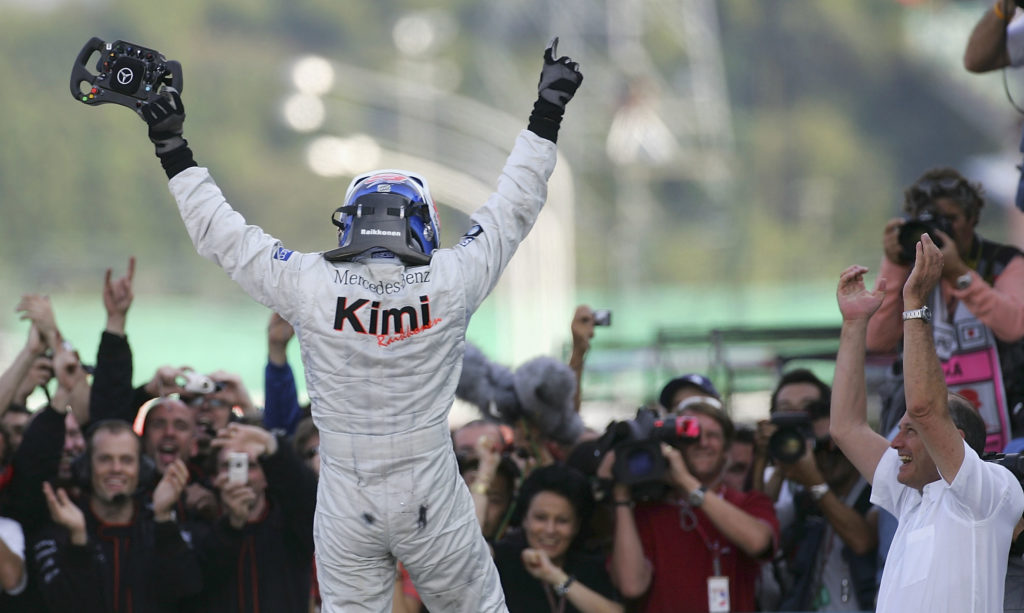
“Not that he needed encouraging, but I wanted him to know what the time gap was. And when he came into view around out of the chicane to start the last lap, he actually took Fisichella going into turn one. I think even Ron was in tears.
“I mean, it was just an awesome drive. You were just happy to have been a part of because he was such a good guy, he was a brilliant driver. And he was just nonplussed, ‘oh, good, won, another one’. We were just over the moon for him. It was awesome, but the good thing about Kimi, he knew how to celebrate as well.”
Fernando Alonso was already the world champion coming into the event, the penultimate round of the season. Raikkonen won seven out of 19 races and scored 12 podiums but was undone by poor reliability.
Kimi Raikkonen made the whole Sauber panic team before his Formula 1 debut
Raikkonen’s manager said the title was ‘taken away’ from him that year. When he finally broke his duck in 2007, David Robertson claimed he deserved to be a three-time world champion already.
Ferrari president Luca di Montezemolo went over Michael Schumacher’s head to sign Raikkonen at the end of 2006 before the German driver retired. That was a mighty gamble after Schumacher’s still-unbeaten run of five straight titles at the start of the millennium, but it immediately paid off.
Four years on from his retirement, the Iceman remains hugely popular with F1 fans. Many enjoy his authentic, monosyllabic approach to interviews and his reluctance to get involved in the sport’s politics – Raikkonen ‘never’ spoke in F1 driver meetings.
And in a sign of just how laid-back he was, Raikkonen fell asleep just before his F1 debut at the 2001 Australian GP. The Sauber team frantically searched for him, and found him just in time.
Receive exclusive F1 news and updates twice a week to your mailbox