Lando Norris
 McLaren
 Mercedes
 Red Bull
 Ferrari
 Williams
 Racing Bulls
 Aston Martin
 Haas
Haas Alpine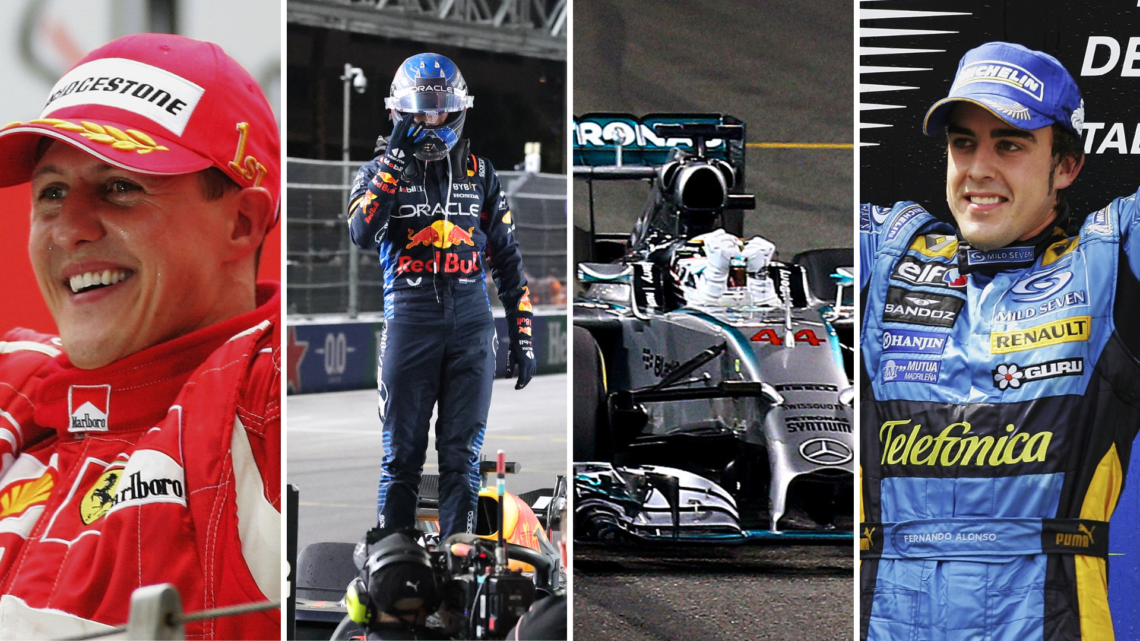


Max Verstappen’s record time at the top of the Formula 1 drivers’ championship came to an end after Lando Norris took victory in the 2025 Australian Grand Prix.
Norris winning the first race of the 2025 season saw the Briton become the first person to dethrone Verstappen from the top spot of the F1 drivers’ standings since the 2022 Spanish Grand Prix.
Verstappen had gone unchallenged at the top of the standings since he dethroned Charles Leclerc en route to winning the 2022 championship for his second of four consecutive titles.
The Dutchman’s 1,029 days at the top of the tree also remain the longest period that any driver has ever led the championship, adding to the impressive records he has achieved in Formula 1.
With that in mind, F1 Oversteer has looked at which drivers have led the championship for the most consecutive days in history.
Max Verstappen – 1,029 days
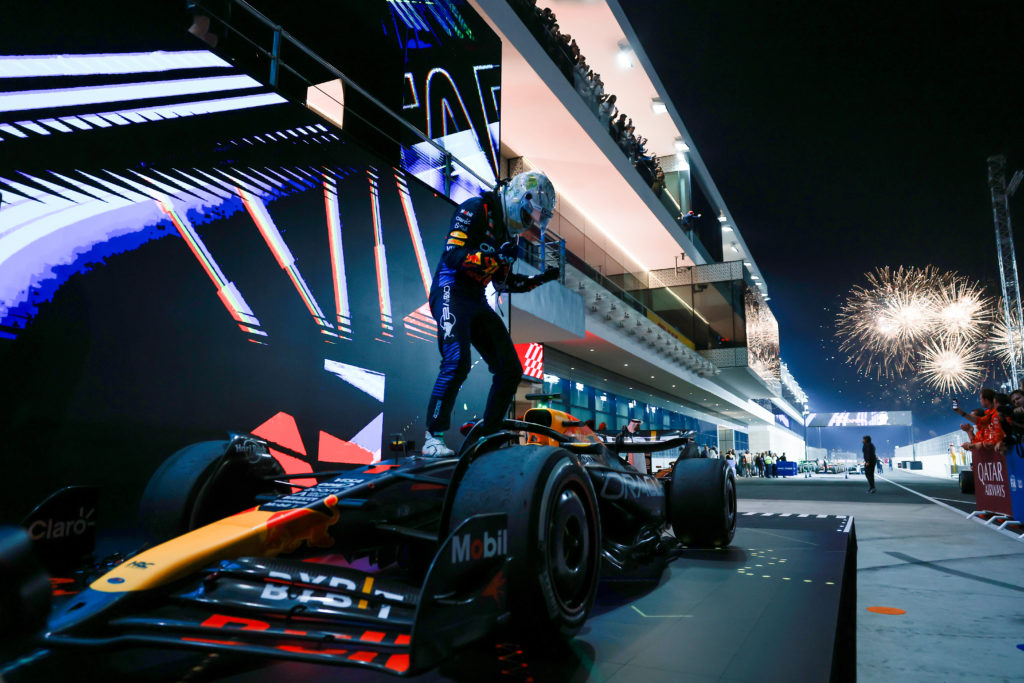
Verstappen’s record run leading the F1 drivers’ standings spans across half the 2022 season and the entire 2023 and 2024 seasons, having never looked back after he won the 2022 Spanish Grand Prix.
It is an impressive record and shows just how dominant both Verstappen and Red Bull were during F1’s latest ground-effect era.
Red Bull started the ground-effect era slowly while Ferrari and Leclerc burst out of the gates, with Verstappen’s retirements in Bahrain and Australia particularly harmful to the start of his maiden title defence.
But the genius of Adrian Newey and his understanding of venturi channels took Red Bull to the top, and they remained without a rival until McLaren stepped forward midway through the 2024 season.
McLaren’s emergence with Norris in 2024 came too late to derail Verstappen’s dominance. But the work that McLaren put in over the winter gave Norris and Oscar Piastri a car with which one would lead after every round of the 2025 season, as Verstappen ultimately fell to second in the standings.
Michael Schumacher – 896 days and 630 days
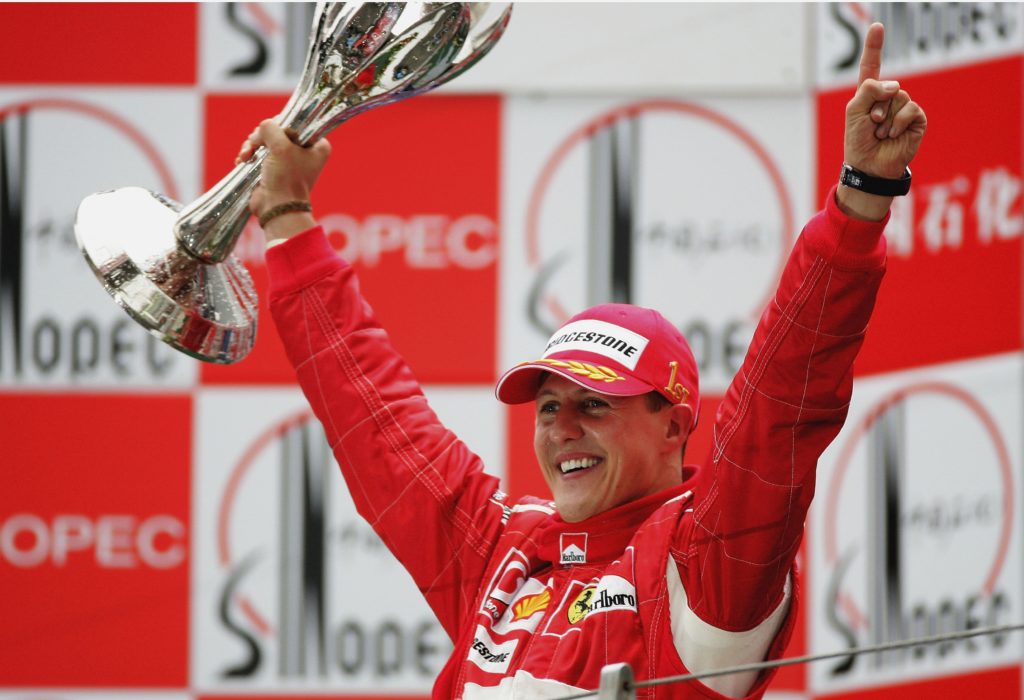
Many will remember the dominant era that Michael Schumacher had with Ferrari in the early 2000s. So, it will not surprise anyone that the German twice set the record for the longest time leading the F1 drivers’ standings.
Schumacher enjoyed his longest run atop the drivers’ standings across the 37 races that took place between the 2000 USA GP and the 2003 Australian GP, a run which also yielded his first three drivers’ titles with Ferrari to draw level on five all-time with Juan Manuel Fangio.
His dominance met its end in the 2003 season-opener in Melbourne, as track conditions improving after a heavy rain shower caused Ferrari to suffer abnormal levels of tyre wear.
The German would ultimately only finish the 2003 Australian GP in fourth place, having also had to pit after damaging the flow diverters on his car, marking his first non-podium finish since the 2001 Italian GP after finishing every race in 2002 on the rostrum.
F1 also introduced a new point-scoring system in 2003 that should have allowed Schumacher’s rivals more of a chance of ending his dominance. Yet after claiming the lead of the championship at the 2003 Canadian GP, he led it through to the 2005 Australian GP.
Schumacher was at his most dominant at the start of the 2004 season, as well, as he won 12 of the first 13 Grands Prix in the legendary F2004. But retiring from the 2005 season-opening Australian GP due to a mechanical issue brought his dominance to an end.
Ayrton Senna – 581 days
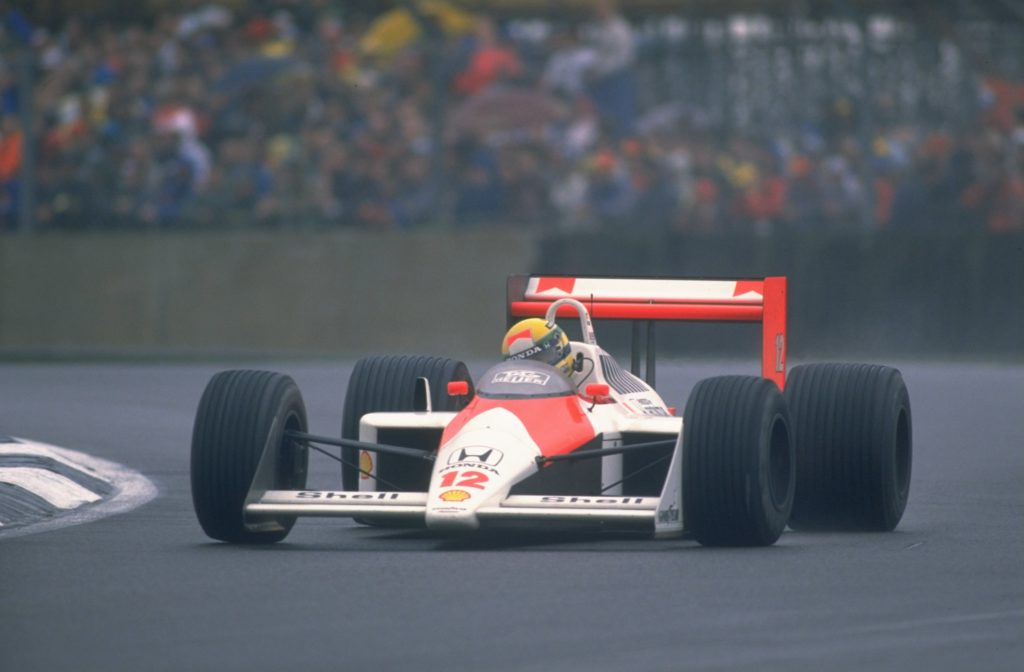
Ayrton Senna produced his longest run leading the world championship during what would be his final two title-winning years at McLaren, beginning at the 1990 German GP and holding on through the entirety of the 1991 season.
Senna took six podiums through the first eight rounds of the 1990 season, and he ultimately finished the season with six victories. Then in 1991, Senna picked up where he left off with four of his seven wins to start the season.
The Brazilian’s run atop the standings came to an end at the first race of the 1992 season, when he finished the South African GP in third place and Nigel Mansell left leading the championship.
Alberto Ascari – 574 days
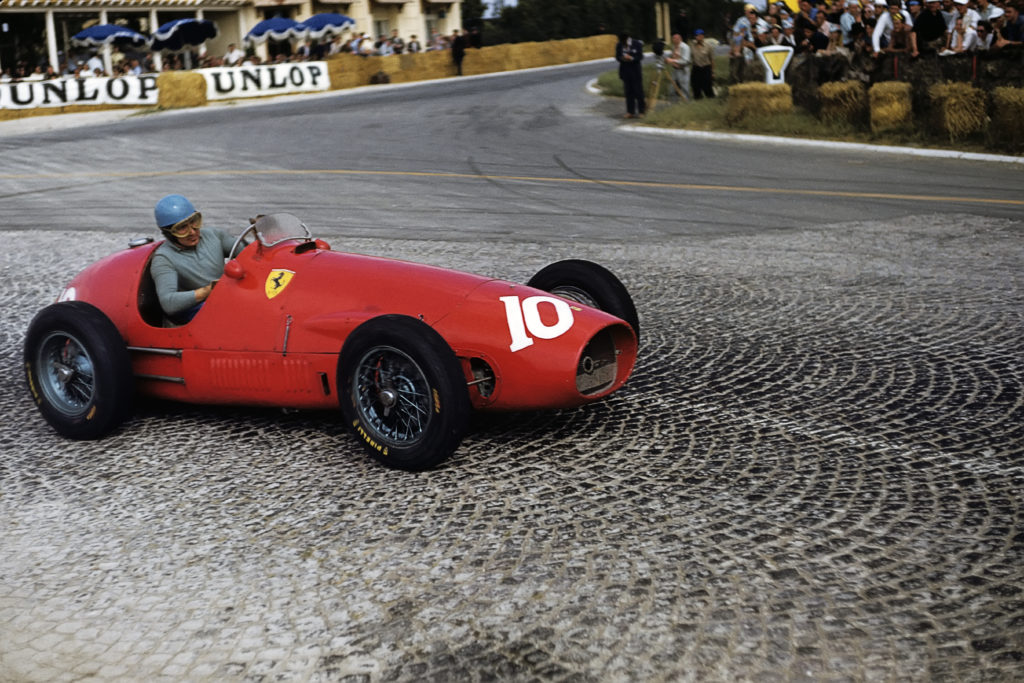
Alberto Ascari held the lead of the championship from the 1952 Belgian GP and throughout the 1953 season, which marks one of the longest runs atop the F1 standings to date despite being the only time that the Italian ever led the way.
He won six out of the seven races he entered in 1952, having decided not to compete at the Swiss GP to participate in qualifying for that year’s Indianapolis 500 – which counted as part of the F1 championship.
Ascari also won three races at the start of 1953 and claimed another two later in the season to secure his second drivers’ championship in a row.
But his time at the top came to an end in 1954 after a dispute over his contract with Ferrari saw him leave for Lancia, having entered just four races out of the nine held that season.
Fernando Alonso – 560 days
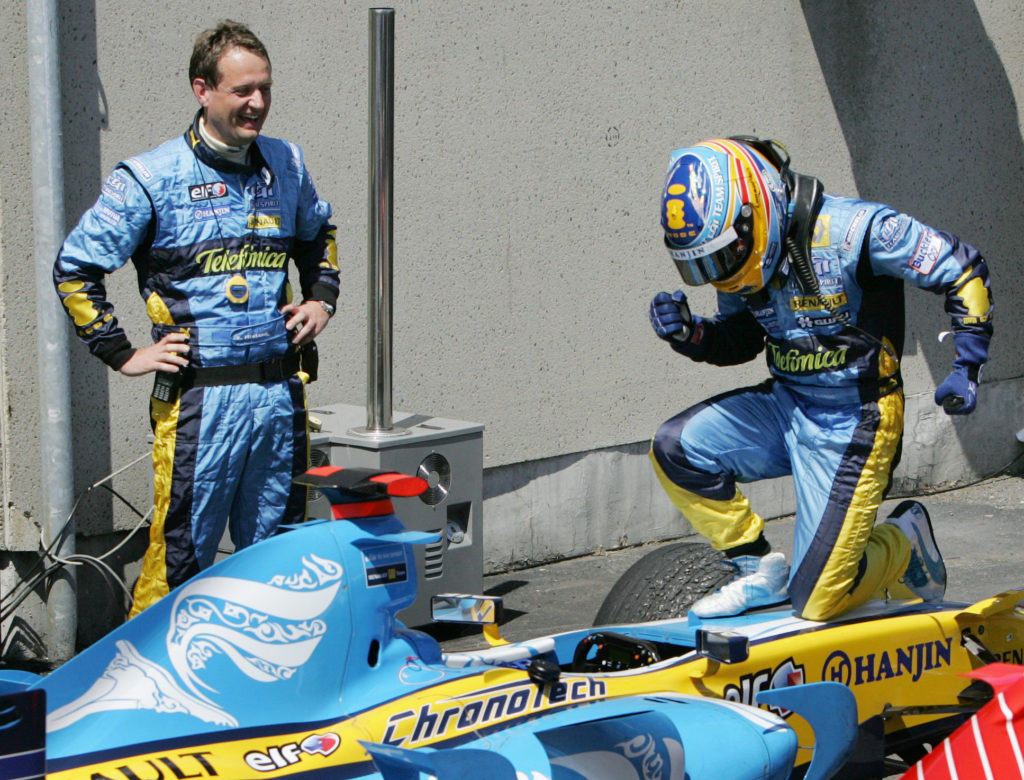
Fernando Alonso enjoyed his longest run leading the F1 drivers’ championship between the 2005 Malaysian GP and the 2006 Chinese GP, totalling 560 days.
Giancarlo Fisichella on the other side of the Renault garage to Alonso had started the year on top, but the Spaniard immediately took control with three successive wins in Malaysia, Bahrain and San Marino.
McLaren rival Kimi Raikkonen tried to threaten Alonso’s title bid, but the superior reliability of the latter’s Renault R25 ultimately won him the title by 21 points.
Alonso became the youngest drivers’ champion in F1 history at the time in 2005 at 24 years old, a record later beaten by Lewis Hamilton in 2008 and again by Sebastian Vettel in 2010.
The Spaniard also continued to lead the way throughout the 2006 season, after starting the campaign with six wins and three P2 finishes, to retain the title.
But a P2 finish in the 2007 season-opening Australian GP after moving to McLaren ended Alonso’s reign, as Raikkonen led leaving Melbourne after joining Ferrari.
Lewis Hamilton – 546 days
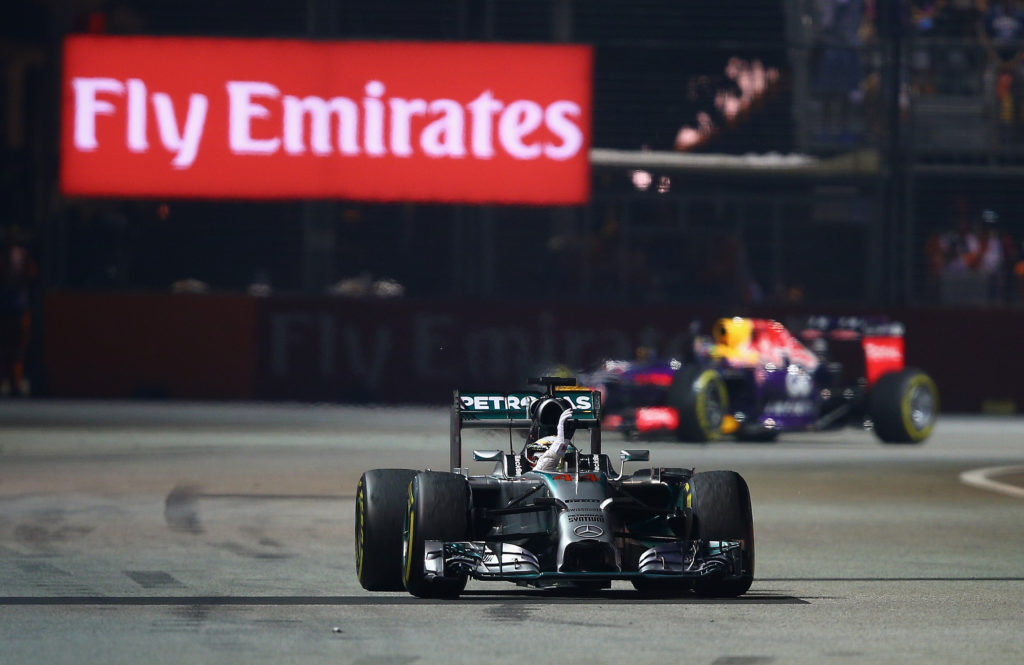
Hamilton sits level with Schumacher in the record books with seven F1 drivers’ titles, and he leads the charts for Grand Prix wins, pole positions and podium finishes.
The Stevenage-born star also drove for Mercedes at the peak of their dominance following the introduction of 1.6L V6 turbo-hybrid power units to Formula 1 in 2014.
Yet Hamilton’s longest run atop the F1 drivers’ standings only sits at 546 days, after taking the lead from then-Mercedes teammate Nico Rosberg after winning the 2014 Singapore GP through until the 2016 season-opening Australian GP.
Hamilton took control of the 2014 championship as the season wound down with six wins through the final seven rounds, and he would lead the standings after every round in 2015.
But a slow start to the 2016 season left Hamilton playing catch-up, as he failed to score a Grand Prix victory through the first five rounds.
A run of six wins through seven rounds in the middle of the year and another run of four consecutive victories to conclude the campaign ultimately saw Hamilton lose out on the 2016 title to Rosberg by five points
Receive exclusive F1 news and updates twice a week to your mailbox