

 Lando Norris
 McLaren
 Mercedes
 Red Bull
 Ferrari
 Williams
 Racing Bulls
 Aston Martin
 Haas
Haas Alpine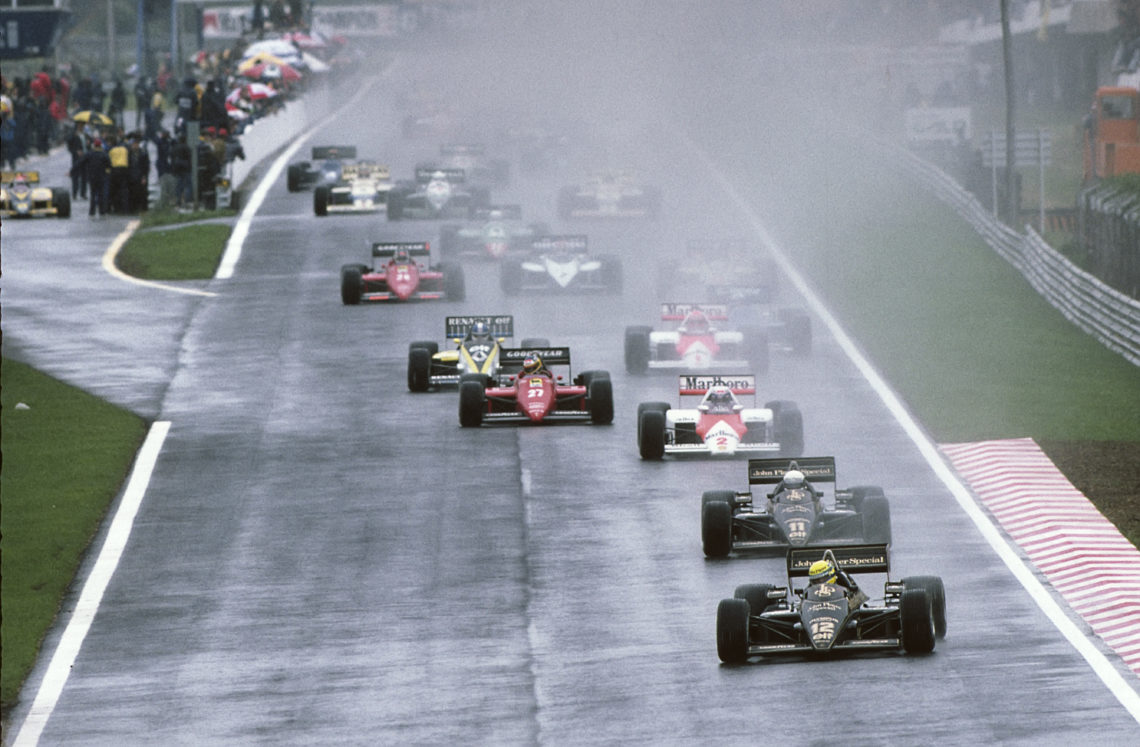


Ayrton Senna is one of Formula 1’s legendary drivers, having recorded 41 victories during his time in F1, leading to three world championships.
He is heralded as one of the most successful drivers in F1 purely down to his skill, particularly in the rain when drivers had to manage the incredibly difficult to drive turbo-charged cars.
It’s no surprise that Senna’s first success came during this era of F1, when he was first driving for Lotus in 1985.
On April 21st, Senna won his first victory at Estoril Circuit, dominating the wet race from pole and finishing first with a gap of over a minute to second-placed man Michele Alboreto.
It has gone down in F1 folklore as one of the best wins from Senna, with his former Lotus engineer Steve Hallam, once describing how he ‘obliterated’ the opposition in an interview with F1.com.
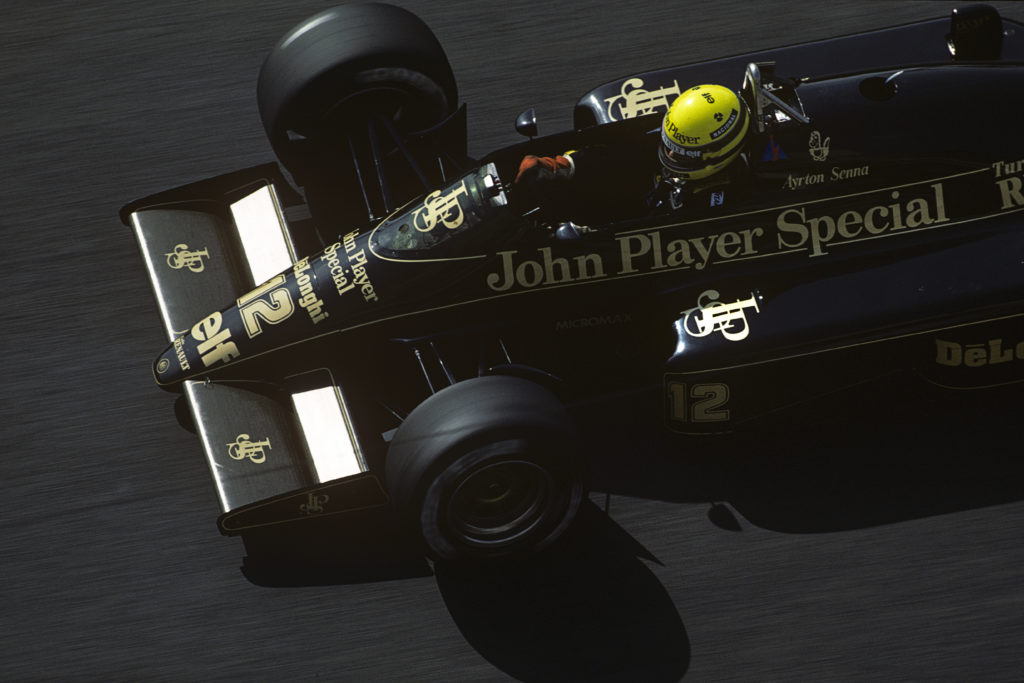
Ayrton Senna’s first race-winning F1 car was a Lotus
The Lotus 97T/2 was powered by a Renault Turbo V6, producing around 1,000 bhp and weighing just 585kg. It also adorned the classic ‘John Player Special’ livery which became synonymous with the team in the 70s and 80s.
It was a big switch for Senna, who had come from Toleman in 1984, having shown flashes of his brilliance in the wet during the Monaco Grand Prix that year.
The car featured no power steering, ABS, paddle shifts, or even pit-to-car radio like every driver on the current grid is used to having. In normal conditions, it was tough to handle. But in sodden conditions, it would be even more of a handful.
Estoril’s rain didn’t arrive until just before the start of the race. From there, Senna took off and quickly got himself into a rhythm from pole, experimenting with the wet lines.
Ayrton Senna’s former engineer says he ‘obliterated’ opposition on the way to first win in 1985
While drivers such as Alain Prost and Niki Lauda struggled to keep their cars on track in conditions that would likely be red-flagged and called off today, in just his second race for Lotus, Senna put in a masterclass.
“He did what all good racing drivers do – he looked for the grip,” said Hallam. “The grip in wet conditions isn’t always found on the dry line, so to speak. The tyres behave slightly differently.
“He was very good at adjusting his line, feeling the car and finding the grip. That, on a day when the rain was so heavy, coupled with the finesse that he had and was later to prove as a driver really obliterated everybody else.”
Senna had not only won the race by 1:02.978s from Alboreto, he also led every lap and set the fastest lap in the process.
When the fresh-faced Brazilian took off his belts and climbed out of the car, he pointed to the skies and thanked his god, as it would be the start of his incredible journey in F1.
Receive exclusive F1 news and updates twice a week to your mailbox


