Lando Norris
 McLaren
 Mercedes
 Red Bull
 Ferrari
 Williams
 Racing Bulls
 Aston Martin
 Haas
Haas Alpine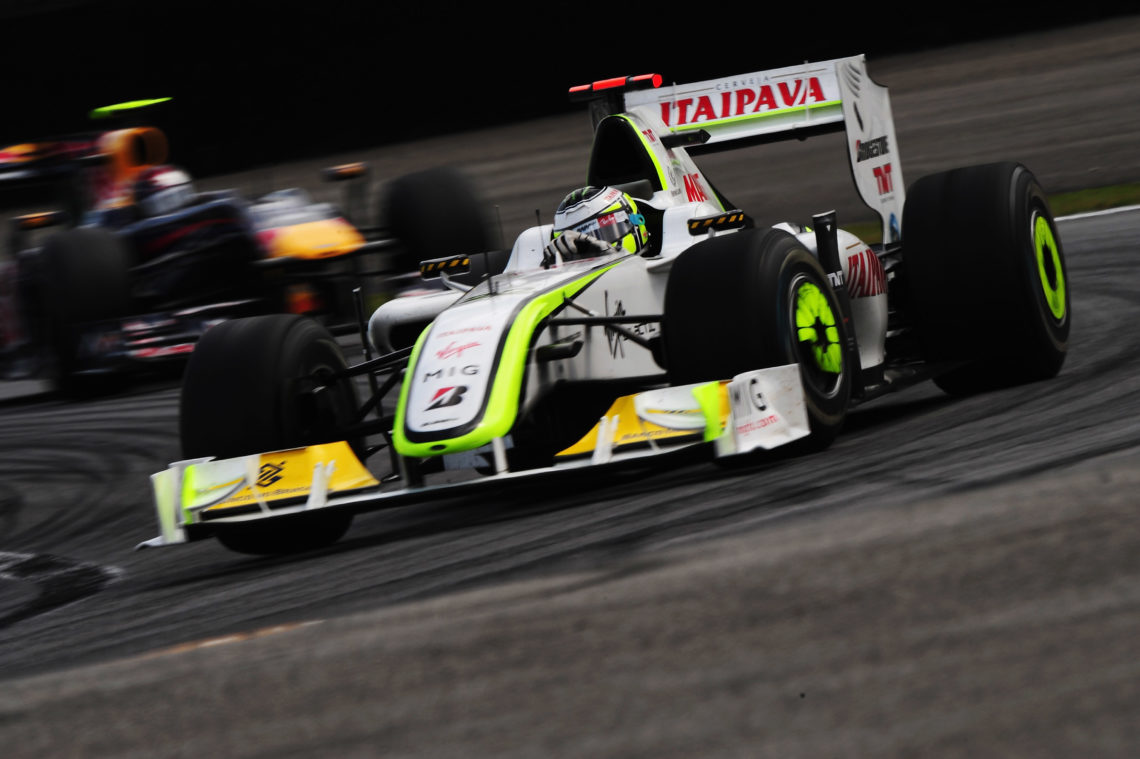


Brawn GP has gone down in history as one of the great underdog stories in sport, with the unlikely champions producing – statistically – one of the most successful cars of all time.
The saying ‘they came, they saw, they conquered’ is apt when describing the story of Brawn GP, because they effectively did that in 2009 with the BGP01.
The car was originally developed by Honda during the 2008 season, as the Japanese car maker put all of their resources into creating a car capable of finally challenging for the title. When the global financial crisis hit, Honda decided to cut their losses and pull out due to a lack of success in previous years.
This meant both the engine and chassis were no longer being developed, with the team eventually getting taken over by Ross Brawn and a consortium of investors. It might sound like a risky move, but Brawn knew the car was capable of producing victories and decided to take on the challenge.
When the car made its debut on track during pre-season testing, the BGP01 was around a second faster than anything else on track. So what changed? How did Brawn manage to pull off a car that was lightyears ahead of the competition in F1 terms?
The diffuser innovation that propelled Brawn GP to F1 glory
F1 was going through a brand new regulation cycle in 2009, introducing radical cars that were designed to make overtaking easier and racing closer. With simpler aero, a return of slick tyres, and the introduction of hybrid systems, it shook up the competitive order.
Title contenders from 2008, McLaren and Ferrari, were now at the back of the grid having focused most of their resources on the previous season. But another innovation caught them out, which would go on to define Brawn’s season.
Discussing how the teams approach the rulebook in Brawn: The Impossible F1 Story, former driver Martin Brundle noted how teams interpret the technical regulations laid out by the FIA: “Everyone in F1 reads the rulebook twice. Once to see what it says, and the second time to see how to get around it. That’s what they all do. And I love that about Formula 1. Just a genius solution that was better than others.”
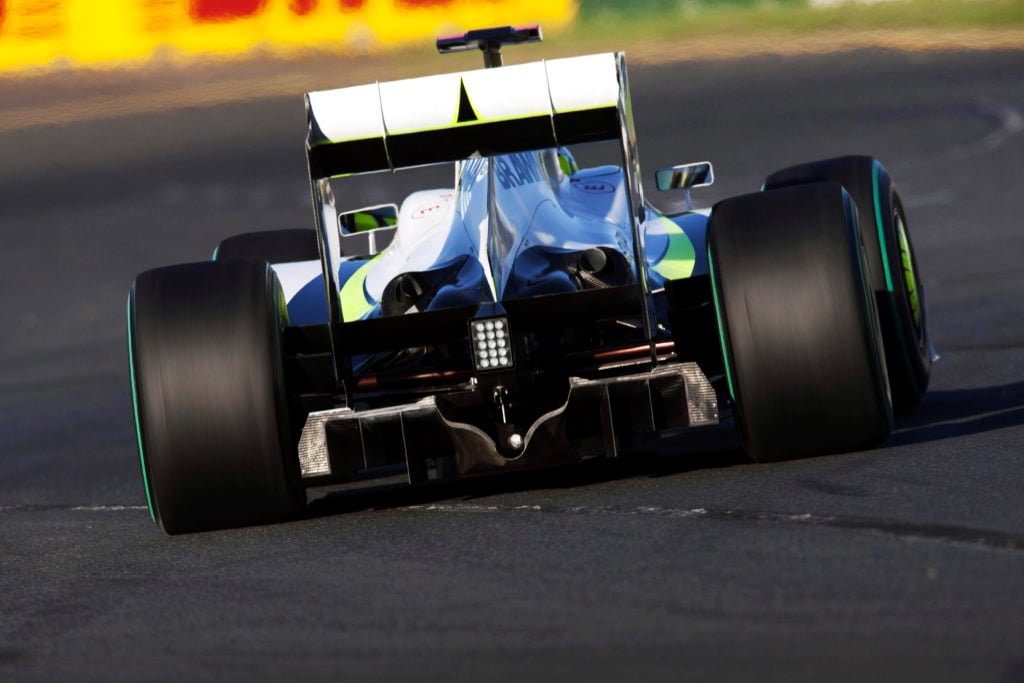
Brawn had found something in regulations that separated their car from the rest: the double diffuser. It was originally developed by an engineer at Honda who, according to former Brawn GP CEO Nick Fry in his book Survive. Drive. Win.
After reading the regulations in his second language, he interpreted the rules differently and suggested there was scope to develop the diffuser further than conventional means. Brawn elaborated on this when speaking in the documentary: “The issue was the wording of ‘bodywork facing the ground’. You’ve got surfaces that face the ground, but this vertical surface doesn’t face the ground. And this wasn’t controlled in the regulations.
“Suddenly there was this surface which you could do something with, so we opened up that surface. Our critics said they were holes, but we said those holes didn’t exist in the place that was controlled by the regulations.”
Ross Brawn lobbies on behalf of his team to make double diffusers legal
Before the 2009 regulations were implemented, all the teams had to agree on the specifics for them to be passed and commence building their cars.
Knowing that a key area could be exploited, Brawn set to work on lobbying the FIA to implement rules that are favourable to his team according to Adrian Newey.
“It was a lot of performance. It effectively allowed you to circumvent the diffuser regulation height restriction; instead of having a diffuser at the back of the car that was only 175mm tall, you could effectively make it 300mm tall,” wrote Newey in his book, How to Build a Car.
“Ross Brawn must have known about that for quite some time, because he had been lobbying in the latter stages of the firming up of the regulations to further restrict the diffuser. Instead of being 175mm tall, he wanted it restricted down to 125mm, knowing full well that with the double diffuser above it, it mattered much less how tall the diffuser underneath was.”

Brawn’s trick diffuser paid off and won them the title
When Brawn rocked up on the grid at the opening race at Melbourne, the team took a 1-2 victory with Jenson Button winning from teammate Rubens Barrichello.
Button would go on to sweep victories in six of the first seven races, with Red Bull claiming their inaugural win at the Chinese Grand Prix with Sebastian Vettel. It helped that Brawn’s innovation was not visible to the naked eye, but it didn’t stop teams from lodging a protest.
They had contested that Brawn had produced an illegal part with the double diffuser, but the FIA later ruled that it was legal and in the spirit of the regulations. At the time it was seen as a political decision by FIA President Max Mosley, with rival teams believing it was him trying to show them he was in charge of their destiny.
For Brawn, it was the go-ahead to continue working towards success, although it would not come simple. Brawn was cash-strapped and had no money to introduce developments at the same rate as rivals, and teams like Red Bull and McLaren soon caught up.
Before the era of streaming F1 used to release a season review DVD to commemorate the year, giving people extended highlights of each race to watch. They always contained odd titles, such as the 2016 one ‘They Did Their Best’ or the 2014 ‘It Was Fair’.
For the 2009 edition, it perhaps contained the most apt title: ‘Not in a Hurry’. Button only needed to consistently finish in the points to win the championship, which he did so for the remaining races where Brawn struggled to win.
A stunning drive into fifth at the Brazilian Grand Prix saw Button seal both titles for Brawn, and write the ending for a true F1 fairytale story.
Receive exclusive F1 news and updates twice a week to your mailbox