Lando Norris
 McLaren
 Mercedes
 Red Bull
 Ferrari
 Williams
 Racing Bulls
 Aston Martin
 Haas
Haas Alpine


Team radio in Formula 1 is one of the more unique aspects of the sport, enabling fans to get firsthand experience over what the drivers think about an incident on track.
Max Verstappen got himself into hot water last year with his messages directed to his Red Bull team during the Hungarian Grand Prix, when he got hot-headed and was swearing at his engineer, Gianpiero Lambiase.
Drivers will often vent their frustration over a strategy or if they have been caught up in a crash, as was the case with Sergio Perez when he collided with Liam Lawson during the Mexican Grand Prix.
Over the years, team radio has also been the source of some bizarre moments including Kimi Raikkonen’s famous ‘Leave me alone, I know what I’m doing’ remark made when he inherited the lead of the 2012 Abu Dhabi GP.
But one year the FIA decided to enforce a stricter version of Article 27.1 in the Sporting Regulations, which states that the driver must drive the car ‘alone and unaided’.
In 2016 an amendment was made to the regulations which stated that race engineers would no longer be allowed to tell drivers about technical fixes over team radio, as this would be classed as aiding the driver.
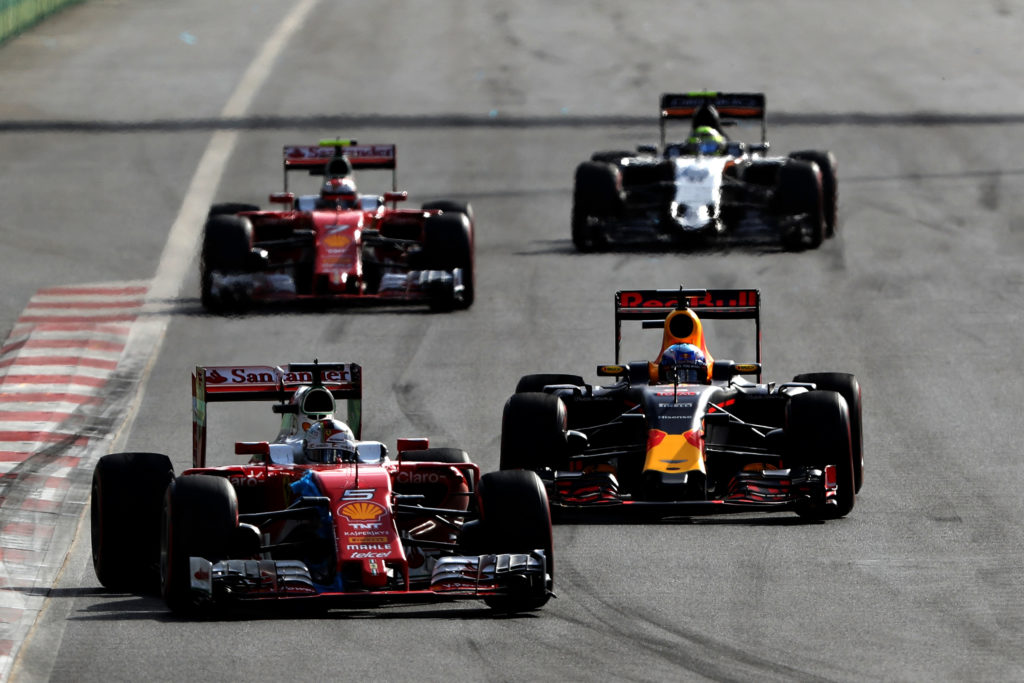
F1 teams banned from advising drivers on how to fix cars over team radio
Although the aim of the ban was born out of the desire to stop engineers from telling drivers where they are losing time to their teammates or to change one setting to go quicker, there were questions over the practicalities of the ban.
Given F1 cars are complex machines and can have anything go wrong while out on track. Drivers can be told how to deal with a critical technical issue or ‘fail’ a sensor to stop their car from losing power.
During the Azerbaijan Grand Prix that year, Kimi Raikkonen’s Ferrari started to develop a problem. What ensued was a rather bizarre conversation between the Finn and his engineer, Dave Greenwood, over how to resolve the problem.
| Driver | Engineer |
| Raikkonen: “If the handle is normal, it is the same like last race, let’s say?.” | |
| Greenwod: “I can’t answer Kimi, I can’t answer, I’m sorry.” | |
| Raikkonen: “For sure you can say yes or no.” | |
| Greenwood: “I can’t Kimi, I can’t.” |
Nico Rosberg had also fallen foul of the ban at the British GP in 2016, when his team defied the rules and told him how to fix a problem on his car. Mercedes argued that it was covered by the safety aspect of the rule, but the stewards did not agree and he was given a 10-second time penalty.
Drivers hit back over ‘strange’ F1 team radio rule
Several drivers were vocal on how they thought the rule was not thought out properly, including Fernando Alonso who branded it ‘strange’ because it would not make any difference to the racing.
Writing in his book, Lights Out, Full Throttle, former F1 driver Johnny Herbert outlined why it was a bizarre scenario to begin with: “Although I’m all for a radio ban, it’s obvious that the one that was enforced in 2016 hadn’t been discussed properly, either with the teams or, most importantly, with the drivers.
“Fernando’s point about having a spaceship with no information to the driver it really resonates, as does Charlie’s original comment that the point of the ban was to ensure the driver was driving the car on his own and was not being told how to do so. There’s definitely a common-sense solution to the problem, but F1 doesn’t always deal with common sense.”
The rule was eventually scrapped by the time the German Grand Prix came around, following a meeting with the FIA and Formula 1 Commission. Although a legacy of that rule still lives on today, as teams are now only restricted on the information they provide drivers during the formation lap.
Receive exclusive F1 news and updates twice a week to your mailbox