Lando Norris
 McLaren
 Mercedes
 Red Bull
 Ferrari
 Williams
 Racing Bulls
 Aston Martin
 Haas
Haas Alpine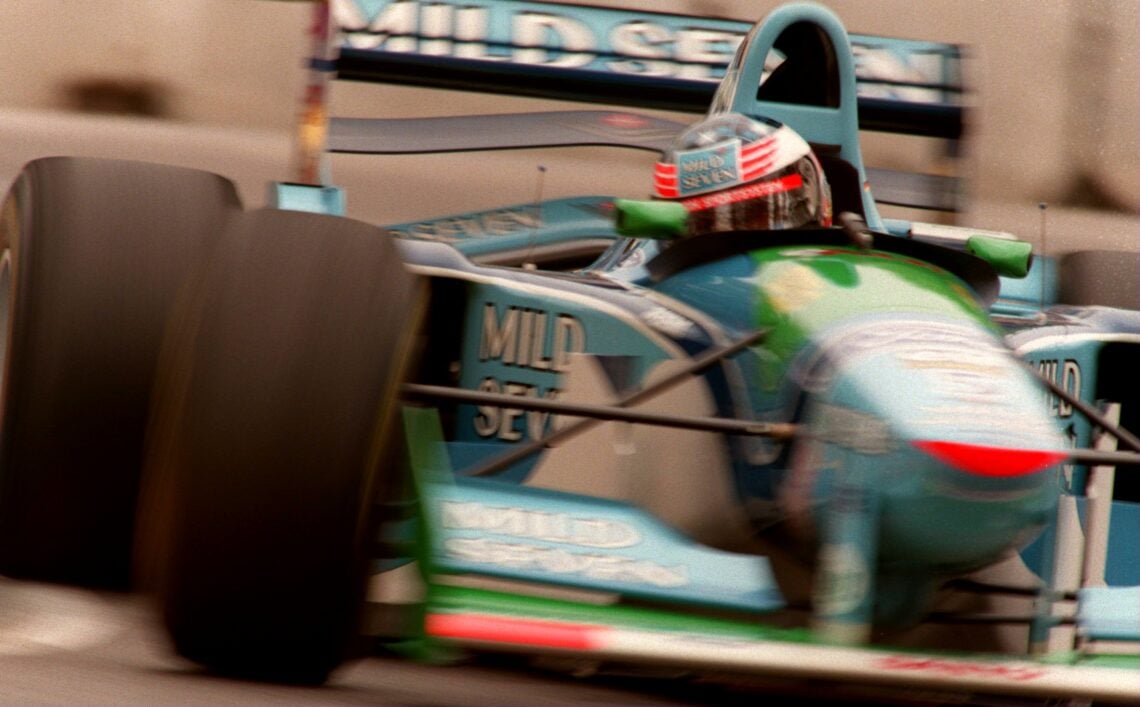


One of Formula 1’s most controversial seasons was won by Michael Schumacher in 1994 after a dramatic title showdown in Australia.
Thirty-one years ago, the Benetton driver saw one of his darkest races, which overshadowed his maiden championship victory.
Benetton faced multiple allegations of cheating over the course of the 1994 season, including the infamous scenes at the German Grand Prix at Hockenheim when a fireball engulfed the team’s other driver, Jos Verstappen.
What should have been a routine stop for the Dutchman turned into chaos as petrol spat out of the refuelling hose onto the hot car, causing it to ignite while the car was still running.
The scenes were captured live on TV at the time and a photo of a member of the Benetton pit crew was taken depicting them in the middle of the fiery episode as he made his escape. Five mechanics along with Verstappen suffered burns, although thankfully there were no life-threatening injuries.
As for Benetton and Michael Schumacher, it would add to the long list of controversies throughout the 1994 season.
FIA find shocking answer to Benetton’s fuel rig accident
The FIA conducted a full investigation into the fuel spillage that prompted the fireball. It was unusual for fuel to spill out at the rate that it did due to the various safety systems the rigs have onboard.
After disassembling the rig itself, the FIA found that Benetton had inserted a “foreign body” which was preventing a valve from closing properly.
Intertechnique, the company that manufactured the refuelling equipment for all the teams, believed that the “foreign body” was in the valve because of a filter. This was designed to prevent the possibility of spillage and it had been deliberately removed by Benetton in an attempt to increase the fuel flow rate.
The net gain would increase the fuel flow by 12.5%, giving Benetton a one-second advantage during their pit stops. The FIA would eventually drop the issue with the team, because it was decided that it had not been removed to gain a competitive advantage.
But there would be another controversial part of their car that would remain a part of F1 folklore for years to come.

Benetton’s illegal launch control and ‘Option 13’
The FIA outlawed launch control for the 1994 F1 season, but suspicions emerged after the Pacific Grand Prix that some teams were using illegal driver aids.
Ayrton Senna would later add to the speculation when he suffered an early exit from the Pacific GP, but instead of returning to the pits, he stayed out trackside.
According to Motorsport.com, Senna remained on the edge of the circuit to see if he could hear anything untoward with the Benetton car, which suggested a traction control being used.
He raised concerns over the team, and at the San Marino Grand Prix, the FIA requested teams that finished first, second and third to provide copies of their engine management system’s source code.
Later in the season, after further suspicions were made following Schumacher’s impressive launch off the start to win the French GP, an analysis of the black boxes found that a “launch control” system was in the software and included a hidden trigger system.
The investigation later exposed that it could be triggered by a PC through an option that was not ‘visible’ in the engine management settings known as ‘Option 13’. Benetton would admit the existence of the code but claimed it could not be activated by Schumacher, and as the FIA could not prove it was being used they could not take any further action.
Launch control and automatic gearboxes would be permitted in 2001, but later banned in 2004 with the teams now required to use standard ECU units, which prevents them from concealing traction control and other driver aids.
As if the fuel rig and traction control saga were not enough, at the 1994 Belgian GP Schumacher was disqualified for excessive wear on the regulation plank introduced earlier in the season.
It would be the first time a driver would get disqualified for this infraction, with George Russell later punished in 2024 at the same track for an identical violation. The FIA have been incredibly strict with the regulation in 2025, with both Ferraris and Nico Hulkenberg’s Sauber having already been disqualified for plank wear this year.
Schumacher wins his first title with controversial end to the season
Despite winning the 1994 drivers’ championship, Schumacher’s maiden victory was tainted with the many controversies of the season.
Heading into the final race of the year, the German was leading the championship over Damon Hill in the Williams. The pair had dominated the season, leading from third place Gerhard Berger by just under 60 points.
Schumacher went on to duel with Damon Hill for the title at the Australian GP, where the pair infamously collided 36 laps into the race. Schumacher ran off the track at East Terrace corner, hitting the concrete wall before pulling back on track.
Hill pulled alongside him and as the pair approached the next corner, the Williams went around the outside before Schumacher turned in, resulting in the two cars colliding.
The German was forced to retire on the spot and faced an anxious wait to see if Hill was able to stay in the race. The Brit made his way back to the pits with suspension damage but was ultimately forced to retire, handing Schumacher the championship.
The stewards investigated the accident but deemed it a racing incident, enabling Schumacher to win the first of his seven world titles – albeit under controversial circumstances.
Receive exclusive F1 news and updates twice a week to your mailbox