Lando Norris
 McLaren
 Mercedes
 Red Bull
 Ferrari
 Williams
 Racing Bulls
 Aston Martin
 Haas
Haas Alpine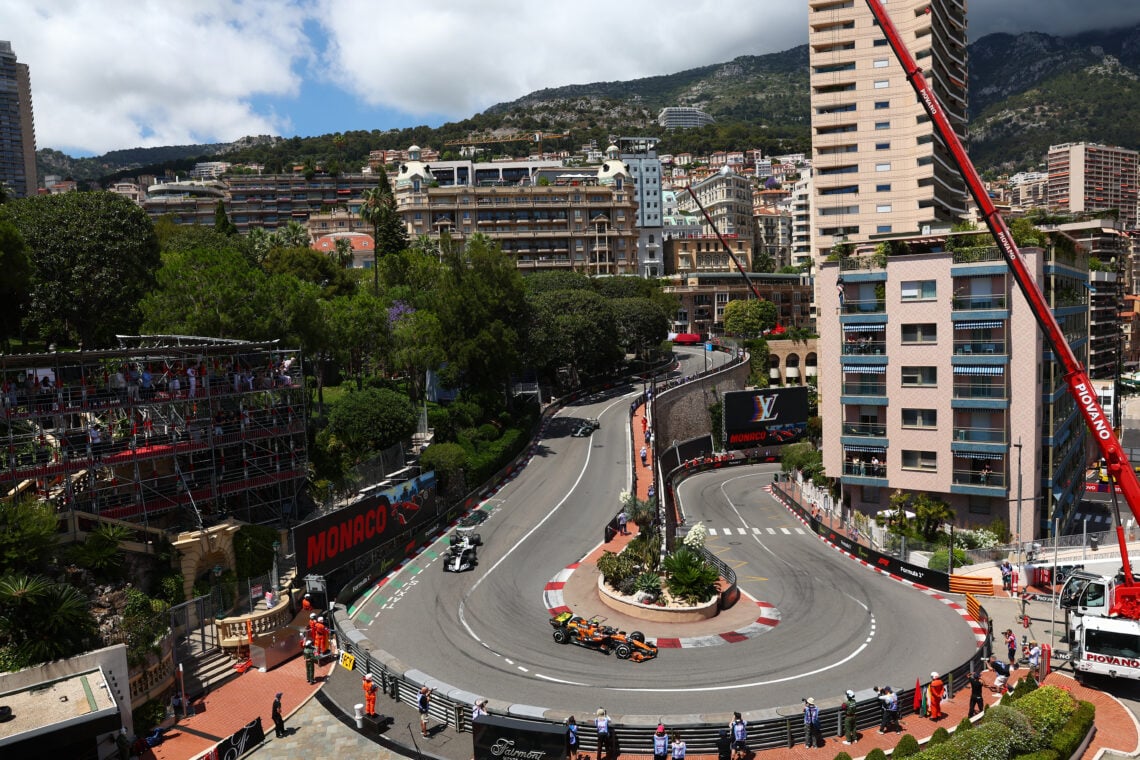


Each year, the Monaco Grand Prix renews a heated debate: Considering modern Formula 1 cars have outgrown the Monte Carlo street circuit, should this race still be considered part of the calendar?
It’s a valid question, but focusing on the size of contemporary F1 cars ignores a much more pressing issue: The Monaco Grand Prix violates one critical FIA rule every single year.
The FIA, Formula 1’s sanctioning body, requires that every single track hosting a Grand Prix meet a Grade One specification. As that name suggests, the FIA has a system with which it evaluates race tracks around the globe in order to determine the series that can safely race at those tracks.
Formula 1 venues require a Grade 1 classification, but there’s one key element of that Grade 1 regulatory set that Monaco violates, which should technically discount it from inclusion on the championship.
Will F1’s 2026 regulations deliver more overtakes in Monaco, or is the circuit past saving?
The FIA grading scale for Formula 1 circuits
The Fédération Internationale de l’Automobile, or FIA, has created a series of regulations and codes that dictate the safe and efficient function of international motorsport around the globe, including Formula 1. And Appendix O of the FIA’s International Sporting Code extensively details the features that any race circuit must have to qualify as an F1 track.
Those tracks are deemed ‘Grade One’ circuits, and as of 2026, there are 35 tracks around the world that are fit to host F1.
But how does a track earn a Grade One certification? In effect, it must satisfy the myriad criteria laid out in Appendix O of the ISC regarding track construction, layout, safety, and staffing. For example, a Grade One circuit must include high-quality medical centre facilities and trained staff, specific forms of safety barriers, a certain length for the pit lane, and a variety of other elements.
There are also countless rules dictating the ideal size and shape of a Grade One circuit; length, width, and corner angles are all specified at various points of the track. And it is this most basic requirement that the Monaco Grand Prix fails to satisfy.
How the Monaco Grand Prix violates FIA Grade One standards
FIA Grade One regulations state that a track must be at least 3.5 kilometers in length but no longer than 7.0 kilometers in length in order to be considered for Formula 1. The Monte Carlo street circuit on which the Monaco Grand Prix is held is a mere 3.337 km.
In theory, the Monaco Grand Prix should not be included on the F1 calendar due to the fact that it fails to satisfy that very basic track length requirement.
But even more than that, the Monaco Grand Prix also fails to adhere to the FIA’s typically mandated 305-km race distance. Instead, the 78-lap event will only run for a total of 260.286 km.
If a new track were to request FIA Grade One approval at just 3.337 km in length, it would be denied. If an existing Grand Prix were to schedule a race that featured a 260-km race distance, they would have their right to host their race revoked.
Yet Monaco persists.
So, why is the Monaco Grand Prix still on the F1 calendar?
There’s one simple reason the Monaco GP continues to persist on the Formula 1 schedule: It’s historic.
The FIA’s grading system creates a handful of provisions that allow for a more flexible interpretation of the ruleset, but only in very specific cases. For example, street circuits may violate some of the rules about track width in certain areas.
But Monaco earns a pass because it is an historical circuit, and because its location means it cannot be significantly altered.
The first Monaco Grand Prix ran back in 1929; over the near century that has elapsed since the inaugural event, there have only been minor tweaks to the circuit layout. That’s due simply to the fact that the track is composed of the narrow, twisty public roads of Monte Carlo; there isn’t much room for the track to grow, either in terms of length or width.
By contrast, circuits like Spa-Francorchamps, which debuted in 1921 at 14.982 km and has now been trimmed down to 7.004 km, were once composed of public roads, but given that those roads were located out in the country and not in the thick of a bustling metropolis, it has been much simpler to shorten the layout, widen the track, and add more safety features. Spa can conform to FIA Grade One standards in a way that Monaco simply cannot.
Monaco’s prestige and glamour also contribute to its ongoing place on the F1 calendar, despite its failure to comply with FIA regulations. It has long been considered the “crown jewel” of the Formula 1 calendar because its narrow, twisty confines have provided a unique challenge to drivers of all eras. That’s the reason why winning at Monaco is also considered part of the unofficial motorsport ‘Triple Crown,’ alongside victories at the Indianapolis 500 and the 24 Hours of Le Mans: Historically, victory at that track has meant more to drivers than victory anywhere else because it requires a unique skillset.
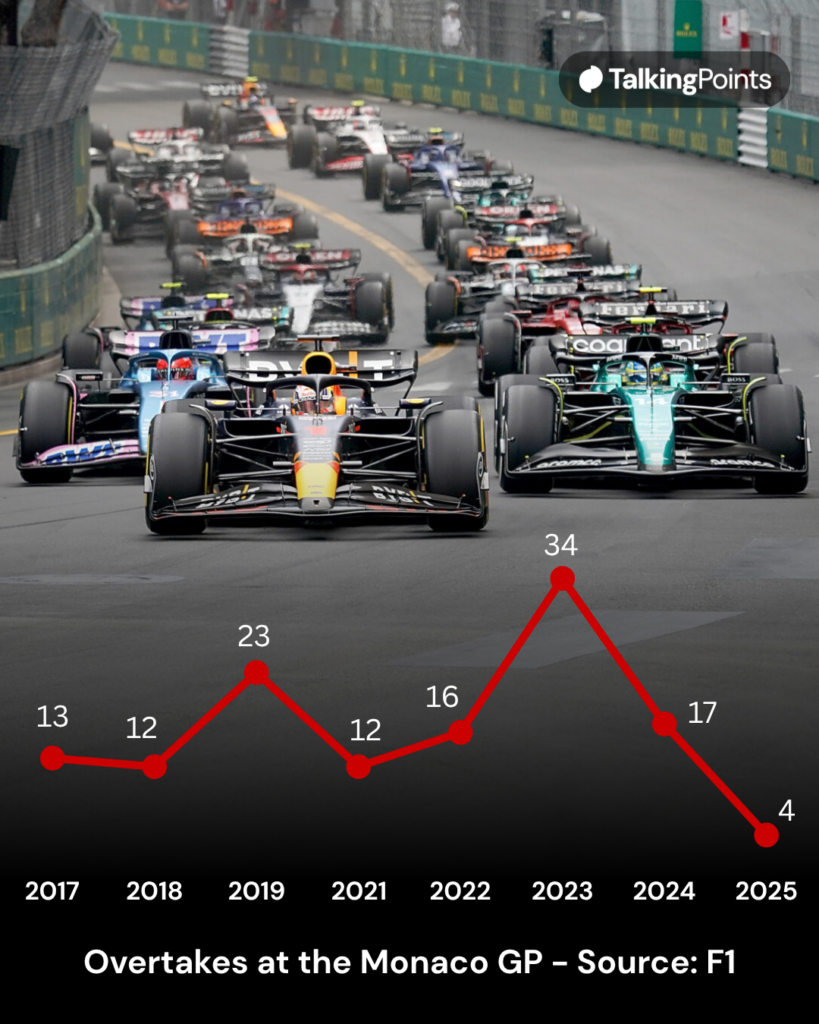
Should the Monaco Grand Prix continue to exist in F1? It’s a question asked by fans and pundits every year now that the cars have ‘outgrown’ the track. While qualifying remains a fascinating spectacle, the race itself is often a clumsy procession with little overtaking; there is simply not enough space for two modern F1 cars to race side by side, and it has resulted in the loss of Monaco’s magic.
Yet naysayers often neglect to mention the single most critical element that should discount the Monaco Grand Prix from the F1 schedule: Its failure to comply with FIA rules.
Receive exclusive F1 news and updates twice a week to your mailbox