Lando Norris
 McLaren
 Mercedes
 Red Bull
 Ferrari
 Williams
 Racing Bulls
 Aston Martin
 Haas
Haas Alpine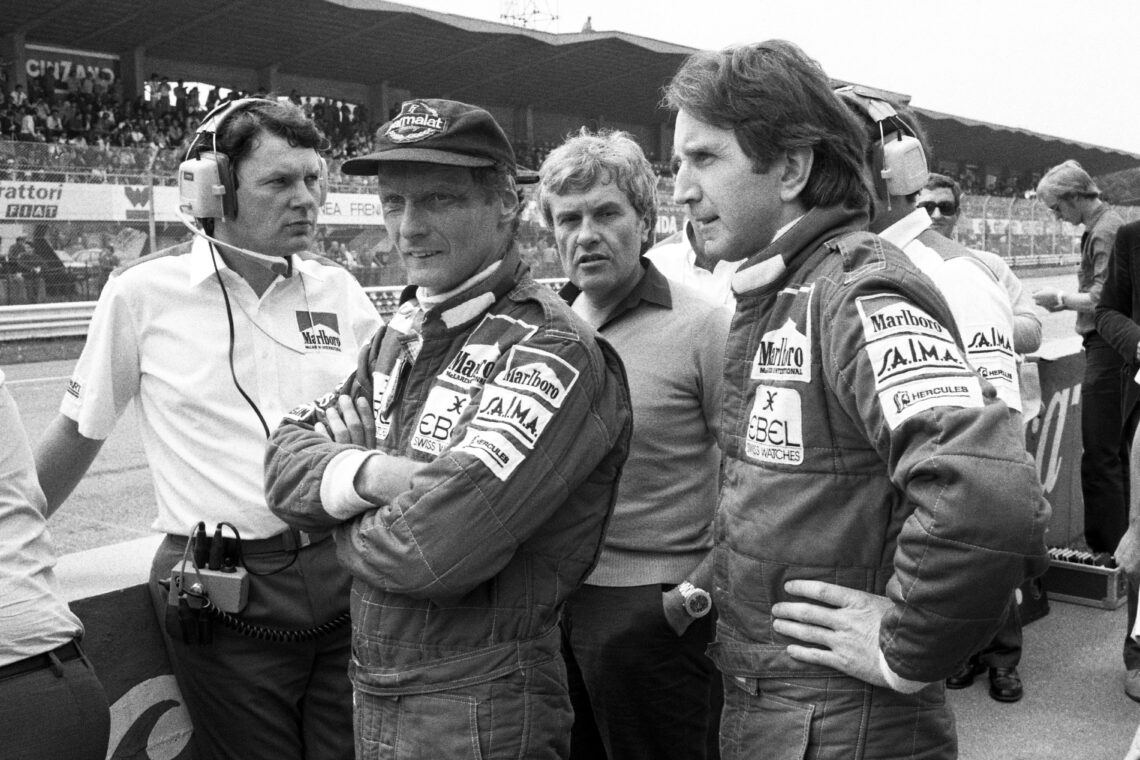


There are many drivers who are considered legends in Formula 1, and there are those who were on the cusp of that title.
The likes of Lewis Hamilton, Max Verstappen and Fernando Alonso have already established themselves in Formula 1 folklore for the rest of time for their achievements.
Niki Lauda is another driver who will be considered among the pantheon of the sport’s greatest racers.
Not only was Lauda a three-time drivers’ championship winner, but he returned from one of the sport’s biggest crashes at the Nurburgring in 1976 to continue racing and winning.
Lauda’s rivalry with James Hunt has been discussed widely due to their title fights in the late 1970s, but there was another driver who believed the Austrian was his biggest rival.
John Watson made his debut in Formula 1 in 1973 and competed in the sport on more than 150 occasions.
The Northern Irish-born racer only won five Grand Prix, but that might not be a fair reflection of his immense talent.
READ MORE: He is the driver who did not qualify, retired and was disqualified from his only ever Formula 1 race
Why John Watson considered Niki Lauda to be his Formula 1 rival
Watson was born in Belfast on May 4th 1946, and started racing in European Formula Two in 1969 for Team Ireland, before being an independent entrant for the following three campaigns.
A spell in the World Sportscar Championship followed before making his Formula 1 debut for Brabham in 1973, taking part in two races but failing to finish on both occasions.
He did enough to earn a full-time race seat in 1974, scoring six points, but he had to wait for another two seasons before he recorded his first victory.
Penske are one of the most famous names in American motorsport, but Watson won their only F1 race at the Austrian Grand Prix, before he was up against Lauda back at Brabham in 1978.
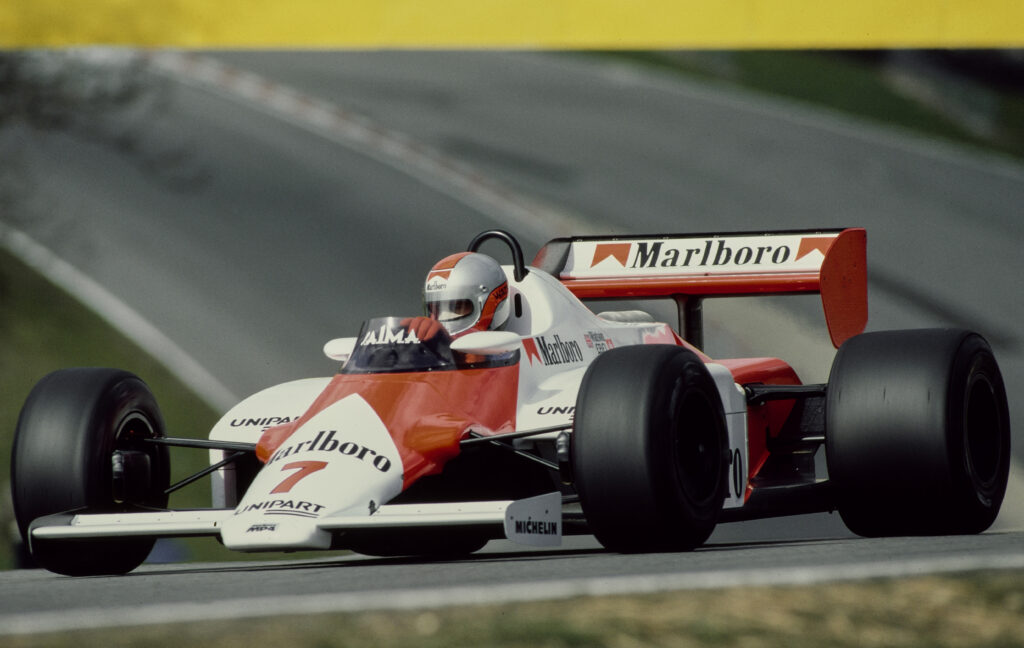
The pair fought again as teammates at McLaren in 1982 and 1983, and Lauda dominated their year together at Brabham.
However, Watson finished above Lauda during both seasons at McLaren, with the Austrian generally qualifying better, but suffering far more reliability issues.
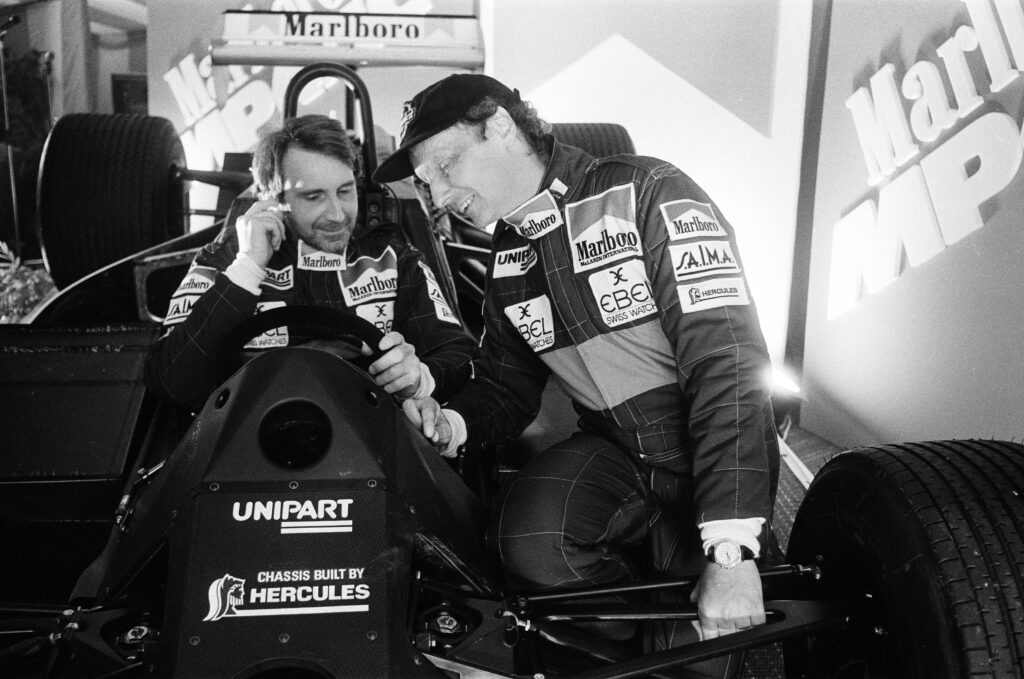
Speaking to Motorsport Magazine after the great Austrian’s death, Watson explained: “My rivalry with Niki at Brabham in 1978 and McLaren in 1982 to ’83 was not so much about the racing, more how adroit he was within the team, his ability to swing the lead in his favour.
“I always knew I was as fast as him, and more creative as a racer, but he was very good at getting people around him.
“I believed the sport was about two guys going toe to toe, the quickest being number one, but Formula 1 is far more complex than that, and Niki was there to race for himself.
“He was clever in the way he went about his business – races are often won before the cars get to the grid.
“At Monaco in ‘78, I qualified second, using three sets of tyres, but Niki had used four and was held up by traffic on his last run, so Bernie [Ecclestone] told the guys to put my fourth set on Niki’s car.
“He qualified third and finished second, so the dynamic in the team had changed.”
| Grand Prix starts | 152 |
| Pole positions | 2 |
| Wins | 5 |
| Podiums | 20 |
| Fastest laps | 5 |
| Points | 169 |
| Best championship result | 3rd (1982) |
How John Watson set the record for the Grand Prix win from the lowest ever grid position
Watson’s five victories were all very special, but the 1983 United States Grand Prix West stands out among them.
McLaren had a tricky time setting up their cars at an extremely bumpy track in Long Beach, California.
After qualifying, Watson lined up in 22nd and Lauda was 23rd, with Ferrari’s Patrick Tambay on pole position.
Thirteen of the 26 starters didn’t finish the race, and only three drivers finished on the lead lap: Watson, Lauda and Tambay’s teammate, Rene Arnoux.
| RANK | DRIVER | TEAM | GRID | POINTS |
| 1 | John Watson | McLaren | 22 | 9 |
| 2 | Niki Lauda | McLaren | 23 | 6 |
| 3 | Rene Arnoux | Ferrari | 2 | 4 |
| 4 | Jacques Laffite | Williams | 4 | 3 |
| 5 | Marc Surer | Arrows | 16 | 2 |
| 6 | Johnny Cecotto | Theodore | 17 | 1 |
Speaking to McLaren’s official website about his triumph, Watson said: “The most important aspect of those races was to catch, execute and move on as quickly as you could.
“The longer you stayed behind a driver, the longer you gave that competitor in front strength.
“I had a fluorescent red helmet in my McLaren – so people knew that it was me. I would out-brake people, compromise my position, but it didn’t matter as I made sure I f—– up the other guy too!”
It didn’t even take the full race distance for Watson and Lauda to carve their way through the pack to start running first and second, with an improved tyre life and avoiding the several collisions that happened ahead of them, the way to their success.
It should be noted that Watson had a knack for this sort of drive, winning the 1982 Detroit Grand Prix from 17th on the grid and the 1982 Belgian Grand Prix from 12th.
Next season, the arrival of Cadillac will mean that there are enough drivers on the grid for someone to match Watson’s record.
However, it’s a feat that’s easier said than done, as he will attest to.
Receive exclusive F1 news and updates twice a week to your mailbox