Lando Norris
 McLaren
 Mercedes
 Red Bull
 Ferrari
 Williams
 Racing Bulls
 Aston Martin
 Haas
Haas Alpine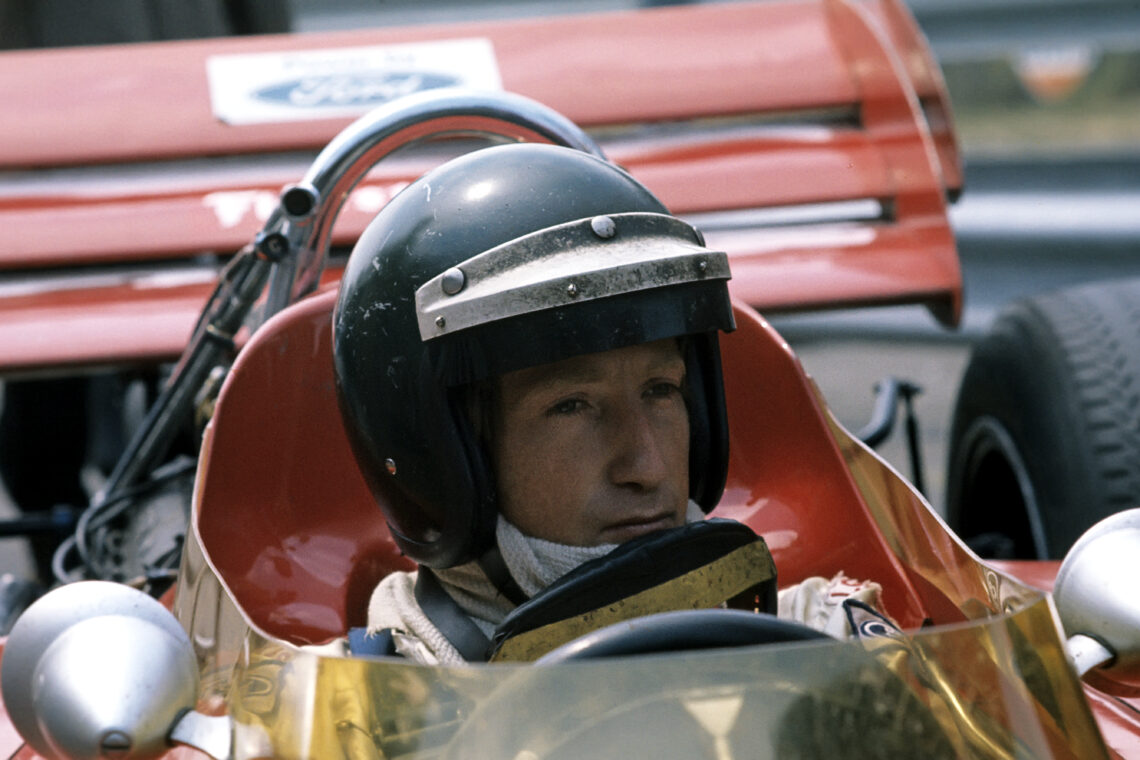

Over the course of Formula 1’s storied history, there have been countless tragedies that have claimed the lives of some of the most talented drivers to have ever gotten behind the wheel of a single-seater racing car.
Due to the severe lack of safety precautions and protective measures that were employed during the first 50 years of F1’s existence, death was only around the corner for a number of the brave souls who donned their overalls and fastened their helmets ahead of a Grand Prix.
Ayrton Senna’s death at Imola in 1994 is arguably the most well-reported fatality to have occurred in a Grand Prix, given his stature as a three-time F1 world champion.
Jim Clark, too, whose love for motor racing transcended that of just Formula 1, won two world championships before his tragic demise during a 1968 Formula 2 race in Hockenheim.
However, out of the shiveringly large number of drivers who have met their maker during an F1 race, only one would go on to win the championship in the months following their death.
What is your favourite F1 race EVER?
Who is F1’s only posthumous world champion, Jochen Rindt?
Karl Jochen Rindt was born to an Austrian mother and German father in Mainz on 18 April 1942.
Under an Austrian licence, Rindt began his journey in motorsports at the wheel of his grandma’s car, which he used to enter his first race in 1961.
The 19-year-old would be black-flagged due to his dangerous driving style, but would go on to enter several rallies in the ensuing months.
After switching to open-wheel single-seaters in 1963, his talent started to shine. However, notoriety for his questionable antics at the wheel of a race car also bled through.
His debut in Formula 1 came one year later, at his home race at the Zeltweg Airfield. Like so many others who made their debut in those years, it came to an abrupt end when his steering failed on lap 58.
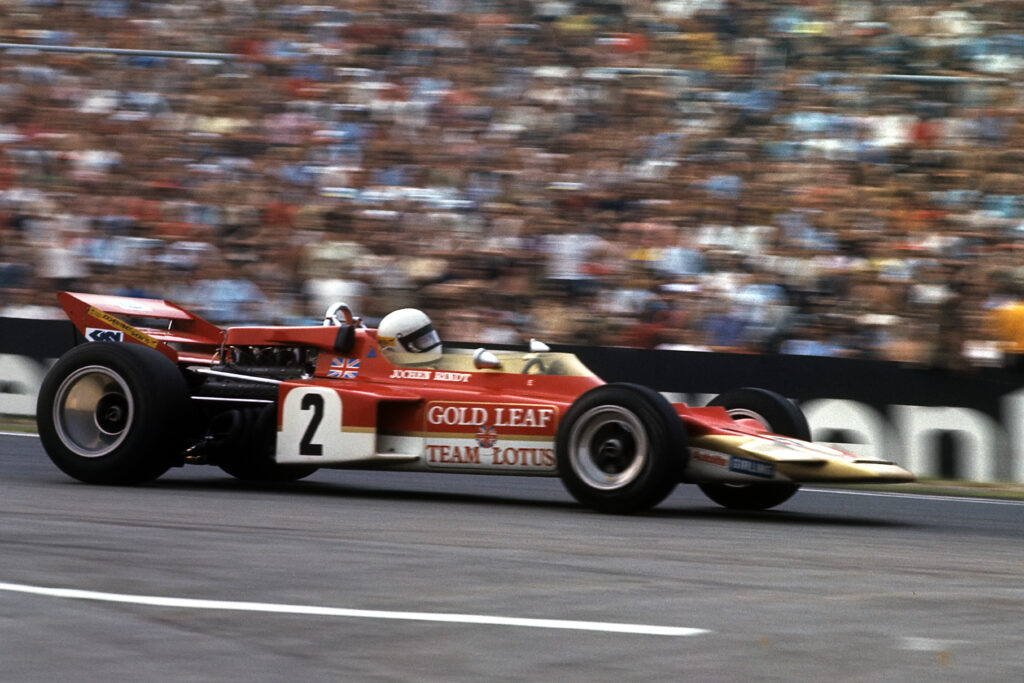
A few stints with several different teams saw him cement himself as a genuine talent in the sport, and he got his first chance at a title in 1970, with the iconic Gold Leaf Team Lotus.
After finishing 13th in the first round of the season in South Africa, his pace was unmatchable. He would win five out of the next eight races until the fateful weekend of the 1970 Italian Grand Prix.
Lotus opted to remove their rear wings for that year’s race weekend in Monza, in order to reduce drag and increase top speeds. The top speed of Rindt’s Lotus that weekend was reported to have been around 205mph.
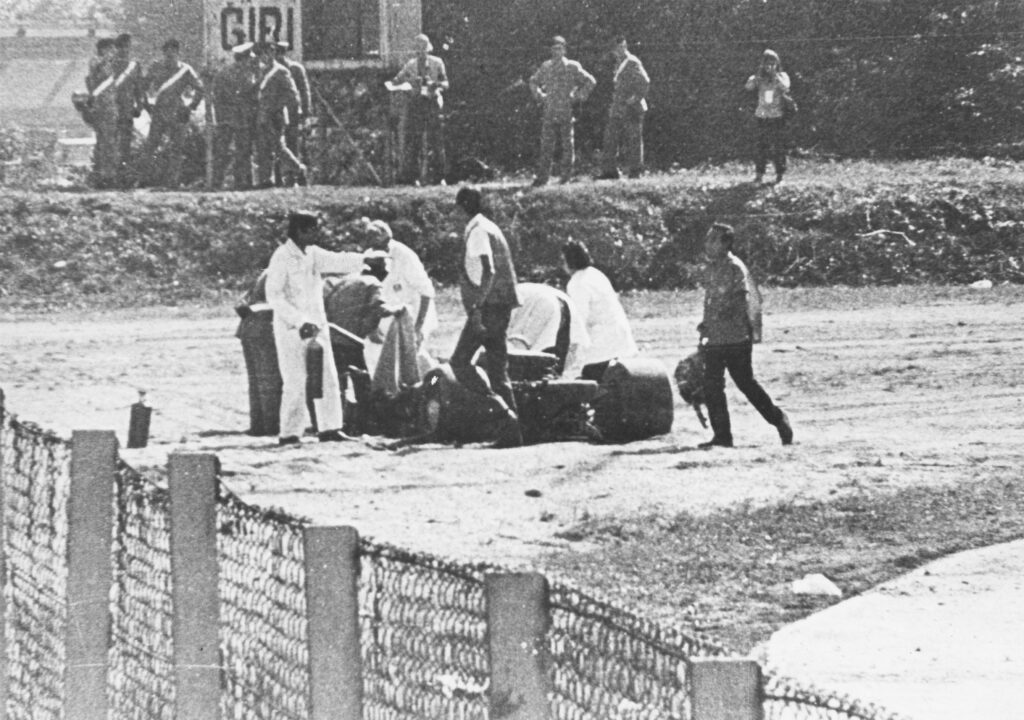
However, during practice on the second day of the weekend, Rindt suffered a high-speed crash at Parabolica and the Austrian was pronounced dead on the way to the hospital.
Despite Jacky Ickx putting up a fight for the title in the remaining four rounds of racing, including that weekend’s Italian GP, Rindt’s tally of 45 points that he had already accrued was enough for him to be crowned as the world champion.
The drivers’ championship trophy was later awarded to his widow by Jackie Stewart in Paris.
- READ MORE: He is the driver who replaced Alain Prost at Ferrari to race the ‘worst car’ of his Formula 1 career
Helmut Marko saw signs of Jochen Rindt in Max Verstappen before he signed him to Red Bull
Helmut Marko was a close friend of Rindt’s at the time, with both Austrians climbing through the single-seater ladder at a similar sort of time.
The 1970 world champion still lives in the memory of his compatriot to this day, with Marko’s decision to sign Max Verstappen to Red Bull in 2014 being encouraged by the Rindt-like impression he got from the Dutchman.
F1 journalist Ralf Bach detailed it in a recent episode of the F1 Insider podcast, saying, “Even though no one really knew where it was going with Max, Marco knew. He saw him, fell in love with him immediately.
“He immediately said, ‘I’ve discovered a new channel,’ and he then got a s—storm without end. Today, one must say, he was right.
“But who he really saw was Jochen Rindt. He was Jochen Rindt 2.0, that was Max Verstappen. Even if he only said it to himself, for sure.”
Bach also added, “Helmut saw that in the rain, he was driving circles around everyone. Really in his own league, just like today in Formula 1, one could say.
“He immediately saw the potential. He’s cool, he has this natural talent, but also the will and the strong character, a real warrior in the positive sense.
“Just like Jochen Rindt in the 70s, he fears neither death nor the devil, gives everything for the sport, and also has the talent.”
Receive exclusive F1 news and updates twice a week to your mailbox