Lando Norris
 McLaren
 Mercedes
 Red Bull
 Ferrari
 Williams
 Racing Bulls
 Aston Martin
 Haas
Haas Alpine


Formula 1 is more financially healthy than ever before. The introduction of the cost cap has helped teams operate sustainably, and choose drivers for the right reasons.
The latest F1 team valuations, released last year, rate six of the 10 above the £1bn mark. The other four are all close to the 10-figure threshold.
In this landscape, the age of the pay-driver may be at an end. The term, often used in a derogatory manager, refers to those who buy their way onto the grid, rather than earning a place on merit.
Zhou Guanyu was arguably a pay driver, but he lost his Sauber seat at the end of the season. Now Ferrari’s reserve driver, he hopes to return for 2026.
Meanwhile, Franco Colapinto can offer teams around £25m through his sponsors. That no doubt contributed to Alpine’s long-term loan move for the Williams product.
Teams will often benefit from lucrative commercial ties when they sign a driver. But crucially, F1 has reached a point where even those with heavy backing have done enough in the junior categories to justify their place.
Vitaly Petrov was denounced as a pay driver, but he played huge role in F1 history
As recently as 2010, the climate was very different. Even a manufacturer team like Renault, one that had won world championships as recently as 2005 and 2006, hired an alleged ‘pay driver’.
This was Vitaly Petrov, who brought between £7.8m and £11.6m from his Russian homeland. Having finished runner-up in the GP2 series in 2009, he firmly rejected the tag.
Speaking to The Independent, he said: “If someone says this, I say, ‘Shut up – I don’t want to listen to this!’ There are a lot of lies written about me. I never read them.
“I know what I am doing and I know that it was difficult for people to believe in me, but my team believed. I don’t want people to think that we are here just because of money.”
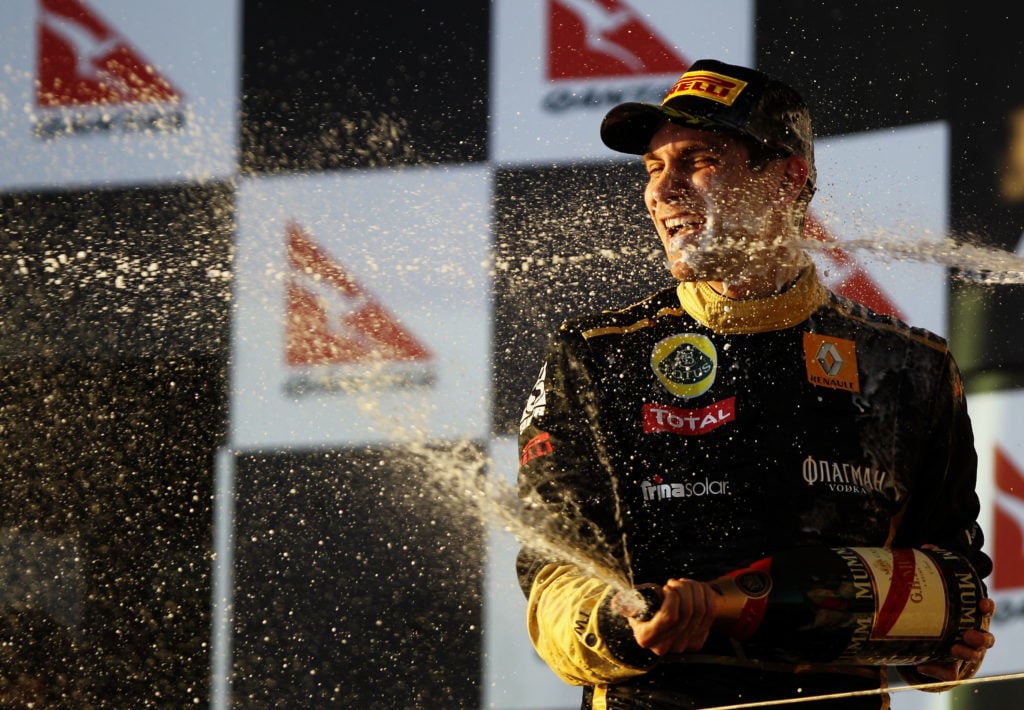
Petrov was paired with Robert Kubica, one of the highest-rated drivers on the grid, for his rookie season. Kubica outscored him by 136 points to 27, which no doubt intensified the allegations.
But a defiant Petrov told Italian newspaper La Stampa that, if he was a pay driver, Ferrari’s Fernando Alonso should be placed in the same bracket.
“I do not think there is a difference between me and Alonso,” he said. “Everyone knows that he is funded by money from the Banco di Santander. Anyway, you get into Formula 1 with talent.”
Alonso went up against Red Bull duo Sebastian Vettel and Mark Webber for the title that year, with the battle going all the way to the final race in Abu Dhabi. In the pre-DRS age, the Spaniard got stuck behind Petrov for 39 laps.
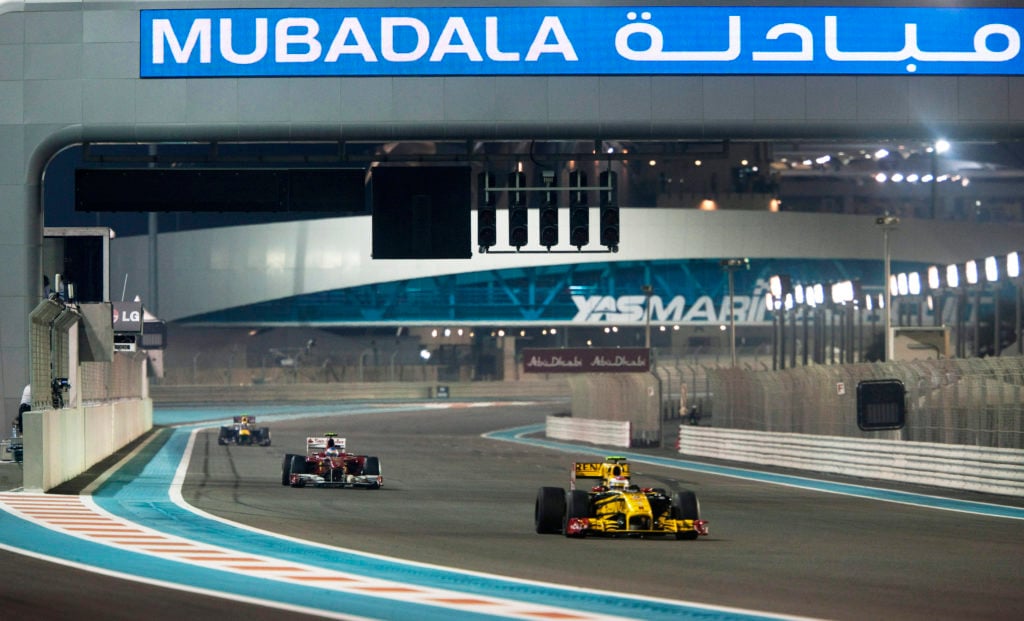
With the Renault man scoring one of his best results in P6, Alonso crossed the line seventh, which allowed race-winner Vettel to snatch the title. Thus, it can be said that Petrov was Red Bull’s unlikely hero.
What happened to Vitaly Petrov after infamous Fernando Alonso battle?
At round one of the 2011 season, Petrov scored his first and only podium, finishing behind Vettel and Lewis Hamilton at the Australian Grand Prix. He stacked up well against teammate Nick Heidfeld, one of the sport’s most experienced drivers, but both were gone by the end of the season.
There was a brief stint in the car for Bruno Senna, nephew of the legendary Ayrton, at Heidfeld’s expense. And as the team became Lotus, a brand-new driver line-up of Kimi Raikkonen and Romain Grosjean arrived.
Petrov stayed in F1 for one more season, representing the lowly Caterham team. He didn’t manage to score a point, but his 11th-place finish in the season-ending Brazilian Grand Prix secured P10 in the constructors’, which meant vital prize money.
While that wasn’t enough to save his seat, he achieved success post-F1 by scoring a podium at the Le Mans 24 Hours in 2016.
Receive exclusive F1 news and updates twice a week to your mailbox