

 Lando Norris
 McLaren
 Mercedes
 Red Bull
 Ferrari
 Williams
 Racing Bulls
 Aston Martin
 Haas
Haas Alpine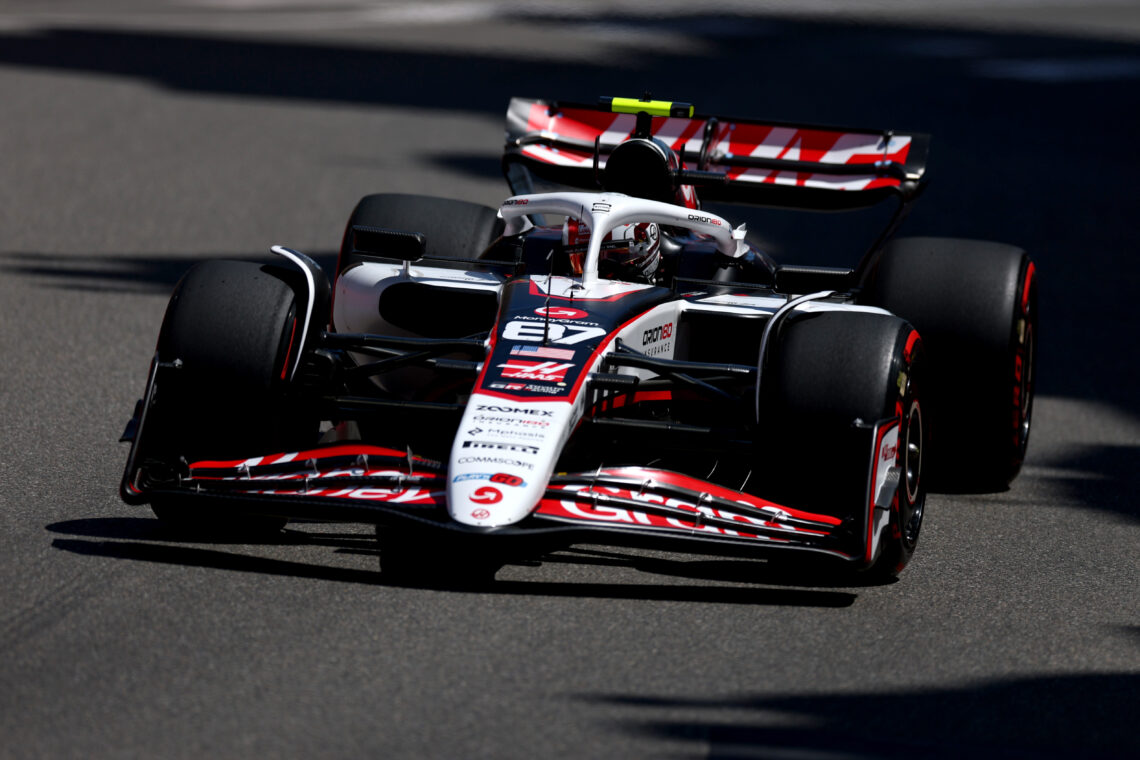

Oliver Bearman is at risk of becoming only the second Formula 1 driver in history to be given a full race ban for exceeding the penalty point limit on his FIA superlicence.
The FIA introduced the penalty points system to F1 in 2014, as a means for its race stewards to further penalise any incidents that occur during a race weekend above the standard in-session penalties.
Any penalty points issued remain on a driver’s superlicence for the 12 months following the stewards’ ruling. And once a driver receives 12 penalty points on their F1 superlicence, they receive an automatic one-race ban.
Bearman is the driver most at risk of receiving a race ban among the current F1 grid, which would see the Briton follow in the footsteps of his Haas predecessor, Kevin Magnussen.
Magnussen became the first, and to date only, driver in Formula 1 history to receive a penalty point-related race ban. The Dane’s ban saw him miss the 2024 Azerbaijan Grand Prix, which allowed Haas to give Bearman his second career F1 outing.
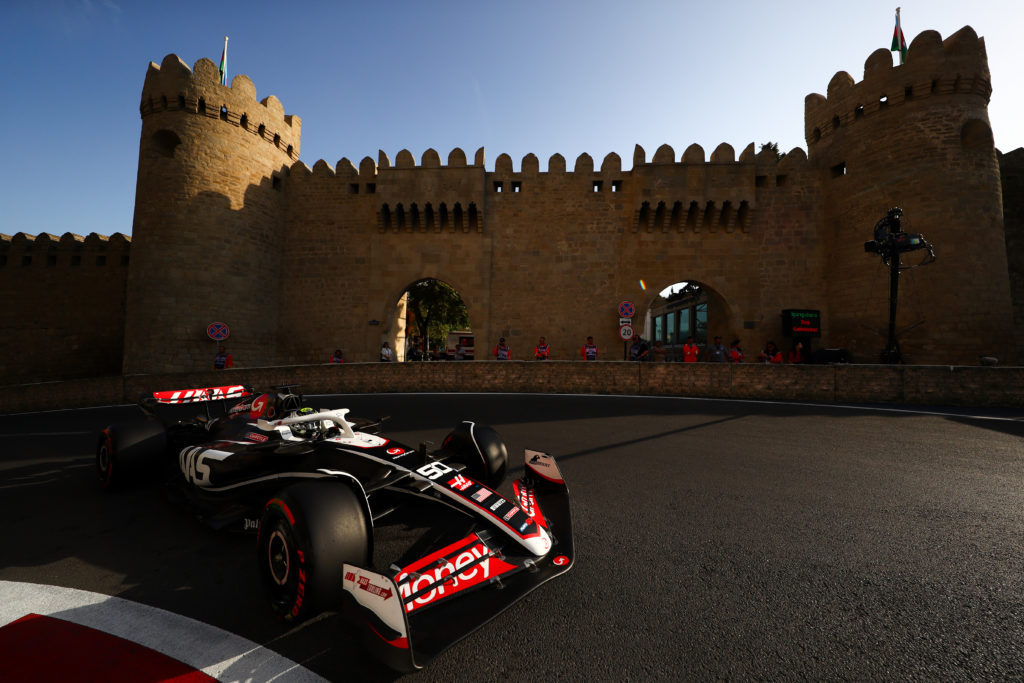
Speaking ahead of the 2025 Azerbaijan GP, Bearman said: “It’s definitely something that I have to take into account. It’s a shame to be at this point, but I just have to have a few clean races for the next few.”
Alongside the penalty point system, F1 drivers can be given a race ban by the FIA if any incident is deemed serious enough to merit a suspension.
With that in mind, F1 Oversteer has taken a look at every time that a Formula 1 driver has received a race ban to date…
Formula 1 drivers who have received a race ban
To date, eight Formula 1 drivers have received a race ban since the beginning of the championship back in 1950.
| Driver | Race(s) missed | Reason |
| Ricciardo Patrese | 1978 United States Grand Prix | Causing a multi-car accident at the 1978 Italian Grand Prix |
| Nigel Mansell | 1989 Spanish Grand Prix | Driving under a black flag + crashing out championship-contender Ayrton Senna |
| Eddie Irvine | 1994 Pacific, San Marino & Monaco Grands Prix | Handed a one-race ban after causing a multi-car collision – appeal resulted in a three-race ban |
| Mika Hakkinen | 1994 Hungarian Grand Prix | Last lap collision at the British GP, followed by a multi-car collision at the following German GP. |
| Michael Schumacher | 1994 Italian & Portuguese Grands Prix | Overtaking Damon Hill on the formation lap at Silverstone & ignoring a black flag |
| Jacques Villeneuve | 1997 Japanese Grand Prix | Failing to slow under yellow flag conditions |
| Romain Grosjean | 2012 Italian Grand Prix | Causing a multi-car crash at the Belgian Grand Prix, with two championship-contenders taken out of the race |
| Kevin Magnussen | 2024 Azerbaijan Grand Prix | Accumulating 12 penalty points on his superlicence |
Kevin Magnussen – 2024 Azerbaijan Grand Prix
Magnussen was the first Formula 1 driver to be given a race ban for collecting the maximum 12 points on his superlicence during the 2024 season.
The Haas driver’s final two points were awarded at the 2024 Italian Grand Prix for causing a collision with Pierre Gasly at Turn 4. The Dane attempted to overtake the Frenchman down the inside, but a lock-up saw him collide into the side of the Alpine racer.
Magnussen was found ‘wholly to blame’ for the incident by stewards and handed a 10-second penalty and two penalty points. Before his race ban was confirmed, he said the punishment “makes zero sense” as neither car was actually damaged.
Several drivers were quick to defend the Haas driver, with Gasly himself deeming the punishment “unfair”, whilst saying he believed it was ‘a bit of wheel-to-wheel’ racing.
Although Grand Prix Drivers’ Association (GPDA) director George Russell explained why Magnussen deserved his race ban, saying that some of his earlier punishments hadn’t been “harsh enough”.
| Penalty points | Race | Reason |
| 3 | 2024 Saudi Arabian Grand Prix | Causing a collision with Alex Albon |
| 2 | 2024 Chinese Grand Prix | Causing a collision with Yuki Tusnoda |
| 3 | 2024 Miami Grand Prix Sprint | Leaving the track multiple times whilst racing Lewis Hamilton |
| 2 | 2024 Miami Grand Prix | Causing a collision with Logan Sargeant |
| 2 | 2024 Italian Grand Prix | Causing a collision with Pierre Gasly |
Romain Grosjean – 2012 Italian Grand Prix
Romain Grosjean was handed a one-race ban for causing a collision at the start of the 2012 Belgian Grand Prix, alongside a £40,000 fine.
When the lights went out, the then Lotus driver moved across on Lewis Hamilton in the McLaren and forced him onto the grass heading into Turn 1.
Grosjean and Hamilton made contact before crashing into Fernando Alonso in the Ferrari, and the Sauber duo of Sergio Perez and Kamui Kobayashi when the cars arrived at La Source.
The crash sent Grosjean flying over the top of Alonso, which also launched the Ferrari ace and Hamilton into the air.

Pastor Maldonado was also clipped by the Lotus driver, sending him spinning in front of Perez. Maldonado and Kobayashi were the only two cars to initially survive the crash, with the former ultimately retiring on Lap 5.
The multi-car collision was deemed to be Grosjean’s fault, with the stewards also noting that it “eliminated leading championship contenders from the race”.
The race stewards said the French driver’s actions were “a serious breach of the regulations” and handed him a ban for the following Italian Grand Prix.
Jacques Villeneuve – 1997 Japanese Grand Prix
The 1997 F1 champion, Jacques Villeneuve, actually received a race ban during his fight for the driver’s title against Michael Schumacher, who was eventually disqualified from the season.
At the penultimate round of the 1997 season, Villeneuve’s championship hopes were jeopardised when he was given a ban for that year’s Japanese Grand Prix.
The Canadian needed to score just one point more than Schumacher at Suzuka to take the title victory, with all eyes on the two drivers heading into the final couple of races.
During Saturday’s practice session, Villeneuve was accelerating out of the Spoon Curve and had failed to spot the yellow flags.
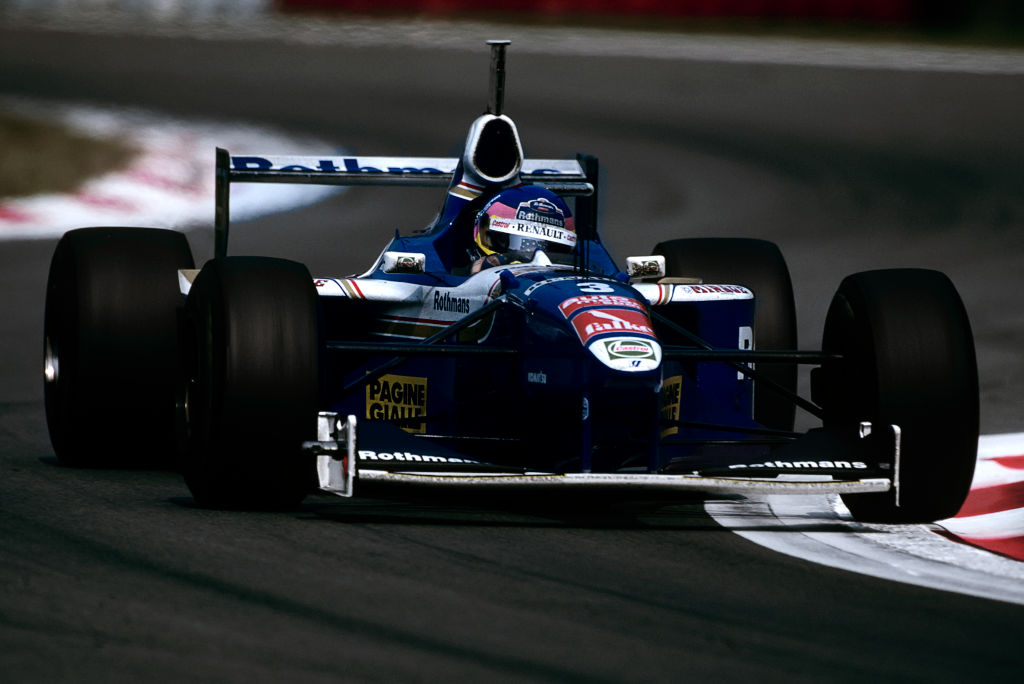
The Williams driver failed to slow when passing the stranded Jos Verstappen, but was one of five drivers who had been found guilty of the offence, alongside Schumacher, Rubens Barrichello, Johnny Herbert and Ukyo Katayama.
The other four drivers were handed suspended one-race bans. But as Villeneuve had previously committed the offence on three other occasions, he was given an immediate race ban for that weekend’s grand prix.
Williams lodged an appeal against the decision, and with no time to organise a hearing, Villeneuve was allowed to participate in the race.
The Canadian qualified in pole position but finished fifth at the end of the race, However, the FIA rejected Williams’ appeal over a week later, and Villeneuve lost his two championship points.
Michael Schumacher – 1994 Italian & Portuguese Grands Prix
Schumacher was one of three drivers to be awarded a race ban during the 1994 season.
The then two-time world champion complained that polesitter Damon Hill was driving too slowly during the formation lap at the British Grand Prix. So, he decided to overtake him on the way round to the grid and then once again during an aborted start.
Under that year’s regulations, the German should have been ordered to start the race from the back of the grid, but race officials were unaware and later gave him a five-second penalty.
Further confusion ensued as Benetton did not call their driver in to pit as the penalty did not initially specify it was a stop/go punishment.
Benetton told Schumacher to ignore the penalty whilst the team launched an appeal. But with the 1994 regulations stating that any penalty before the final 12 laps needed to be served in the pit lane, he was shown a black flag, which signalled disqualification.
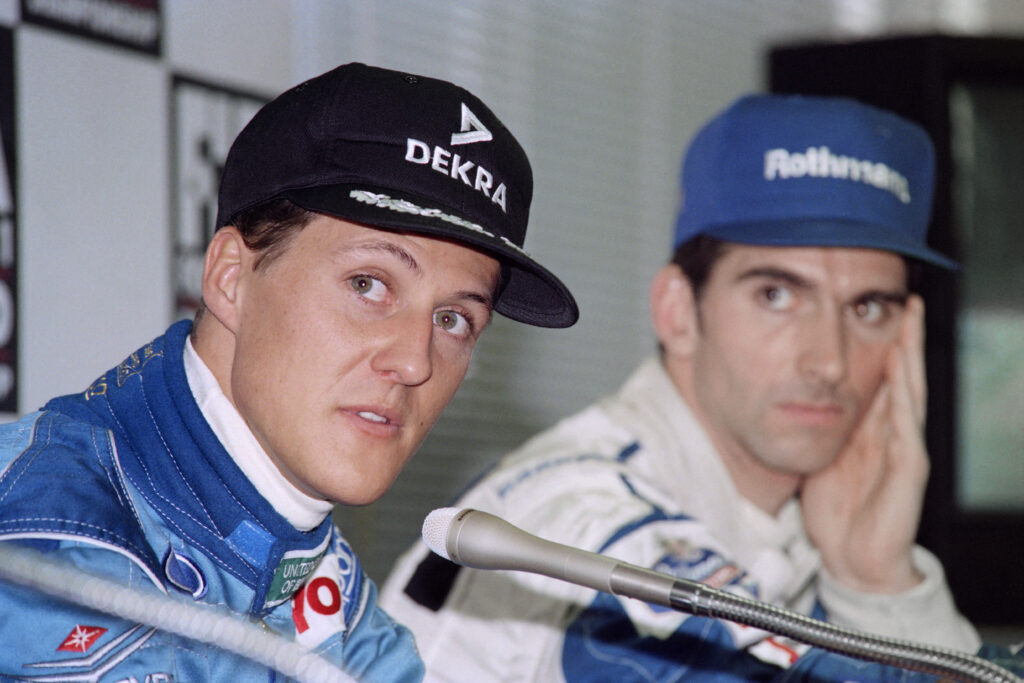
Despite the ongoing negotiations, Schumacher was told by his team to serve the five-second penalty before rejoining the race. But because he had ignored the black flag, he was handed a further two-race ban.
Benetton again appealed the punishment, so Schumacher was allowed to compete in the following three races in Germany, Hungary and Belgium before the FIA decided he would serve the penalty for the next two races in Italy and Portugal.
Mika Hakkinen – 1994 Hungarian Grand Prix
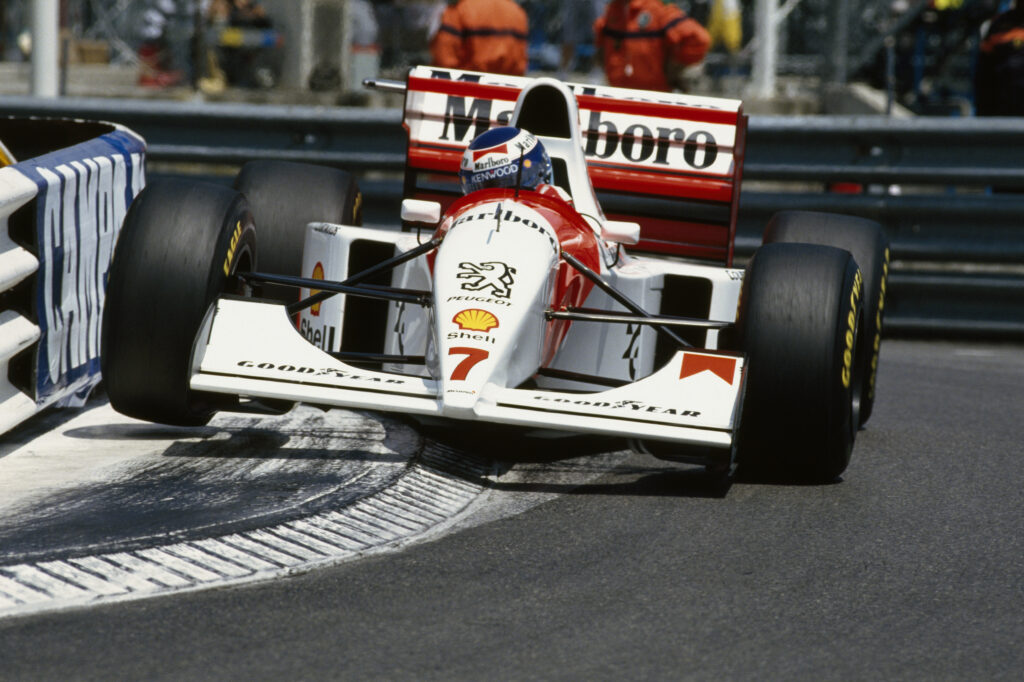
Mika Hakkinen faced a difficult 1994 season, having retired from six races before the eighth round in Great Britain.
The Finn was handed a one-race ban suspended for three grands prix for a last-lap collision with Rubens Barrichello at the British Grand Prix, as the pair battled for fourth place.
However, the ban was quickly enforced following the next race in Germany after Hakkinen collided with David Coulthard in the Williams, sending both cars spinning across the track.
The incident collected a number of cars, with 11 retirements during the first lap of the race.
Eddie Irvine – 1994 Pacific, San Marino & Monaco Grands Prix
Eddie Irvine had a difficult rookie season after being handed a one-race ban during the first race of the 1994 season in Brazil.
The Irishman swerved suddenly to avoid Martin Brundle, whose McLaren suffered an engine failure, resulting in a four-car collision with Jos Verstappen and Eric Bernard.
Irvine’s avoiding action forced Verstappen’s Benetton onto the grass, with the Dutch driver ultimately losing control of his car, spinning into Bernard and going airborne over the top of the McLaren, damaging Brundle’s helmet.
Fortunately, despite the dramatic crash, no one was injured.
Jordan appealed the one-race ban, which was rejected by the FIA and instead extended to a three-race ban for the following grands prix.
It was hoped that the punishment would deter teams from appealing stewards’ decisions during the remainder of the season.
Nigel Mansell – 1989 Spanish Grand Prix
Nigel Mansell was forced to miss the 1989 Spanish Grand Prix after failing to comply with regulations at the previous round in Portugal.
The Ferrari driver was leading the race when he came into the pit lane for a tyre change on lap 40. The Brit suffered a lock-up and overshot his pit box by a full car’s length before deciding to reverse into his marks, which was an illegal move.

Mansell was shown a black flag for the manoeuvre when he rejoined the track, but ignored the disqualification and continued to race with the McLaren of Ayrton Senna.
He later claimed he had not seen the black flag or Ferrari’s pitboard and that his engine was so loud, he had also missed the radio messages.
On Lap 48, Mansell attempted a lunge on Senna into Turn 1, with a crash taking both cars out of the race.
Stewards deemed that because Mansell had been racing under a black flag and had taken out a championship contender, he should be punished with a one-race ban.
Riccardo Patrese – 1978 United States Grand Prix
Riccardo Patrese was known for his aggressive driving style during his 16 seasons in Formula 1. The Italian saw 147 retirements from 256 starts, tying him for most retirements with Andrea de Cesaris.
Patrese especially angered many drivers on the grid with his driving style during the first 13 races of 1978, with a multi-car collision at that year’s Italian Grand Prix seeing the Arrows driver handed a full race ban.
On the opening lap, Patrese attempted to overtake James Hunt in the McLaren, with the latter sent veering into the Lotus of Ronnie Peterson. The Lotus driver was sent flying into the barriers, collecting seven other cars before his burst into flames.
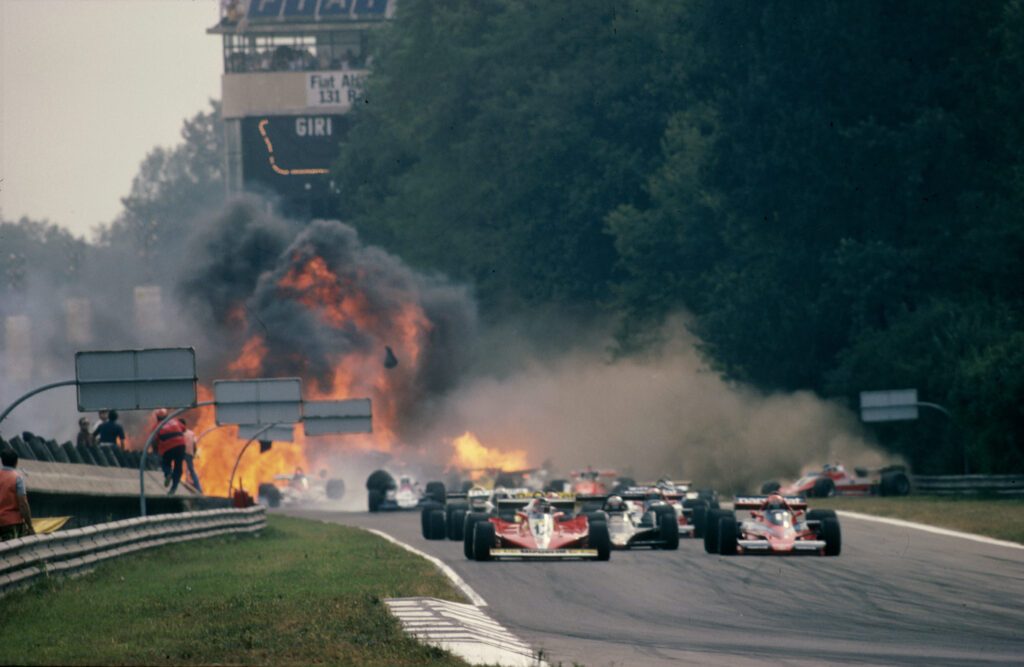
Peterson suffered severe injuries to his legs and feet, with 27 fractures from the incident, before he was rescued from his burning car by Hunt, Clay Regazzoni and Patrick Depailler. Although he survived his injuries, the Swede was diagnosed with an embolism and passed away the next day.
Ahead of the following United States Grand Prix, several drivers including Hunt, Niki Lauda, Mario Andretti, Emerson Fittipaldi and Jody Scheckter told organisers that they would withdraw from the race if Patrese was not banned.
Bernie Ecclestone informed the then-24-year-old that he would not be taking part in the race. And, despite Arrows seeking the opinion of a judge, the team eventually withdrew him from starting the race.
Receive exclusive F1 news and updates twice a week to your mailbox


