Lando Norris
 McLaren
 Mercedes
 Red Bull
 Ferrari
 Williams
 Racing Bulls
 Aston Martin
 Haas
Haas Alpine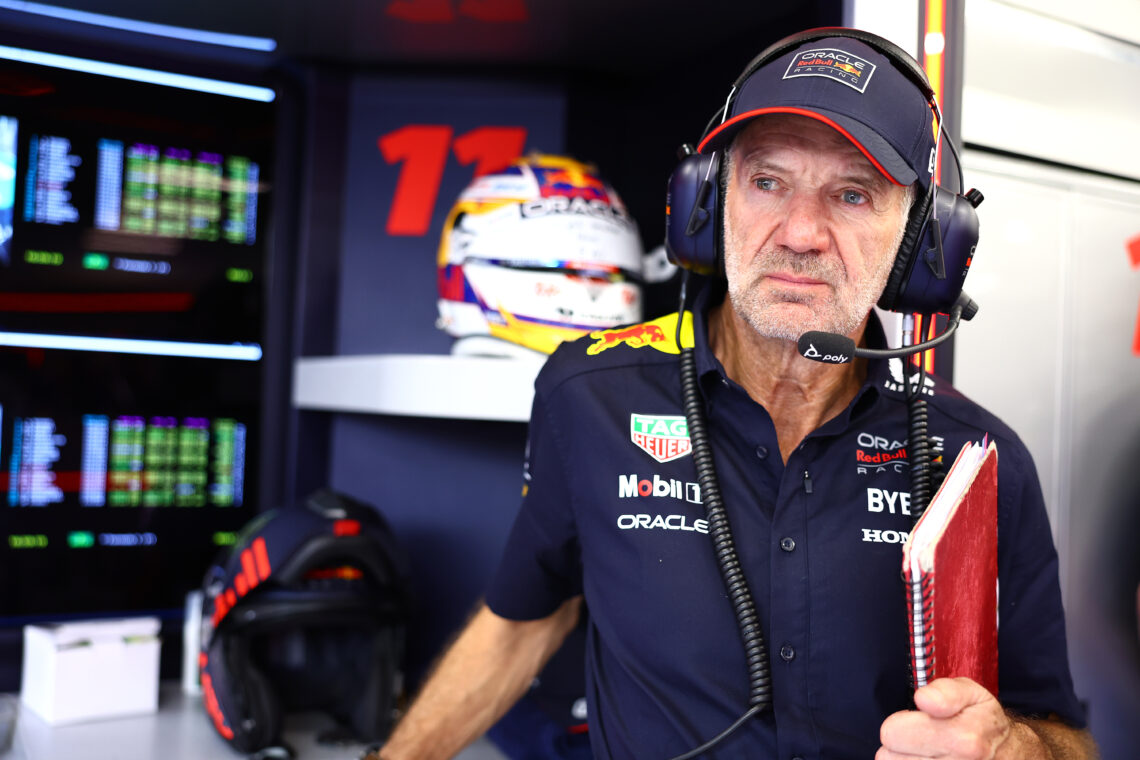

Adrian Newey is widely regarded as one of Formula 1’s greatest designers, having created some of the sport’s most iconic cars over the past four decades.
After joining Aston Martin at the start of the 2025 season, it was announced that Newey would step up to become team principal of the Silverstone-based squad ahead of the 2026 regulation changes.
However, his time at the helm proved short-lived. After just two races, Newey stepped down from the role, returning to a technical leadership position following ongoing issues with the AMR26. The car has suffered from significant vibration problems, leading to disappointing results for both drivers in the opening three races of the season.
Newey had been seen as the ideal figure to lead Aston Martin, bringing nearly 40 years of Formula 1 experience from his role as technical director.
Since joining March Engineering in 1988, he has enjoyed remarkable success, contributing to 12 Constructors’ Championship-winning cars and 14 Drivers’ titles, including playing a key role in Red Bull’s most recent era of dominance.
Every constructors’ championship winning car designed by Adrian Newey
1992 – Williams FW14B
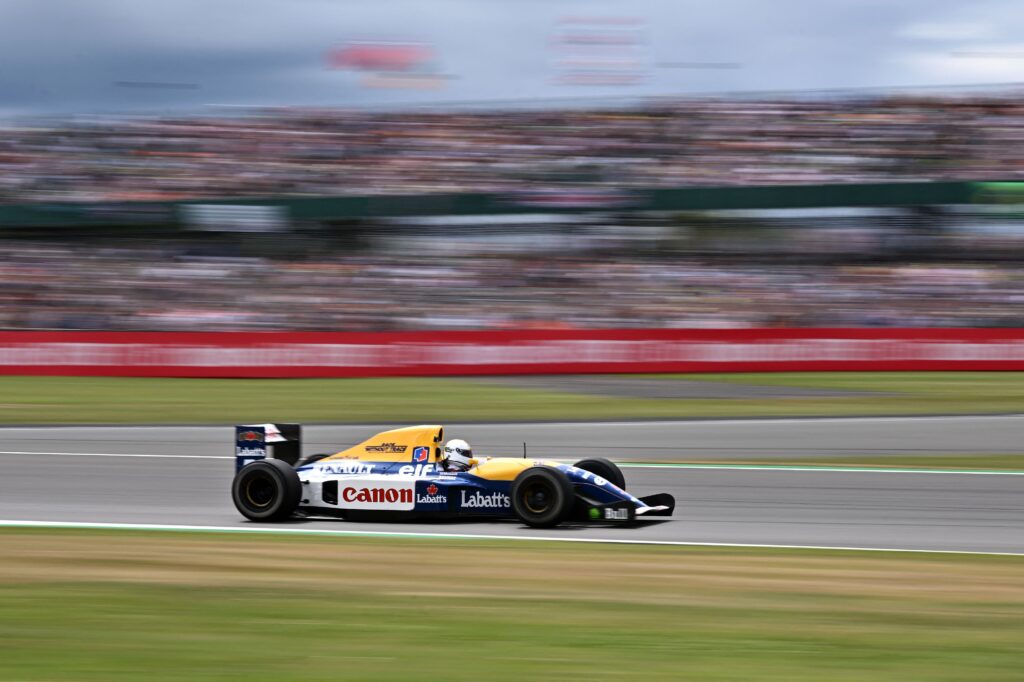
After his departure from Leyton House in 1990, Newey joined Williams, where his influence quickly became apparent. Although the team struggled with reliability in the early stages of the 1991 season, those issues were soon overcome, laying the groundwork for what would become one of the most dominant eras in Formula 1 history, surpassed only later by Michael Schumacher’s reign at Ferrari.
Newey’s first championship success came with the Williams-Renault FW14B, driven by Nigel Mansell and Riccardo Patrese. The car proved virtually untouchable throughout the 1992 season, securing 10 wins from 16 races and setting the fastest lap at every Grand Prix. Mansell cruised to his only world title, underlining the sheer superiority of the package.
As chief designer, Newey worked closely with technical director Patrick Head, forming one of the most iconic engineering partnerships of the 1990s. Together, they produced a car that combined advanced aerodynamics with groundbreaking technology.
Originally conceived as an interim design, the FW14B evolved into a season-defining machine following the introduction of its sophisticated active suspension system. Its aerodynamic efficiency and technical innovation placed it years ahead of its rivals, a fact reflected not only in its 1992 dominance, but also in Williams’ continued success throughout the decade.
1993 – Williams FW15C
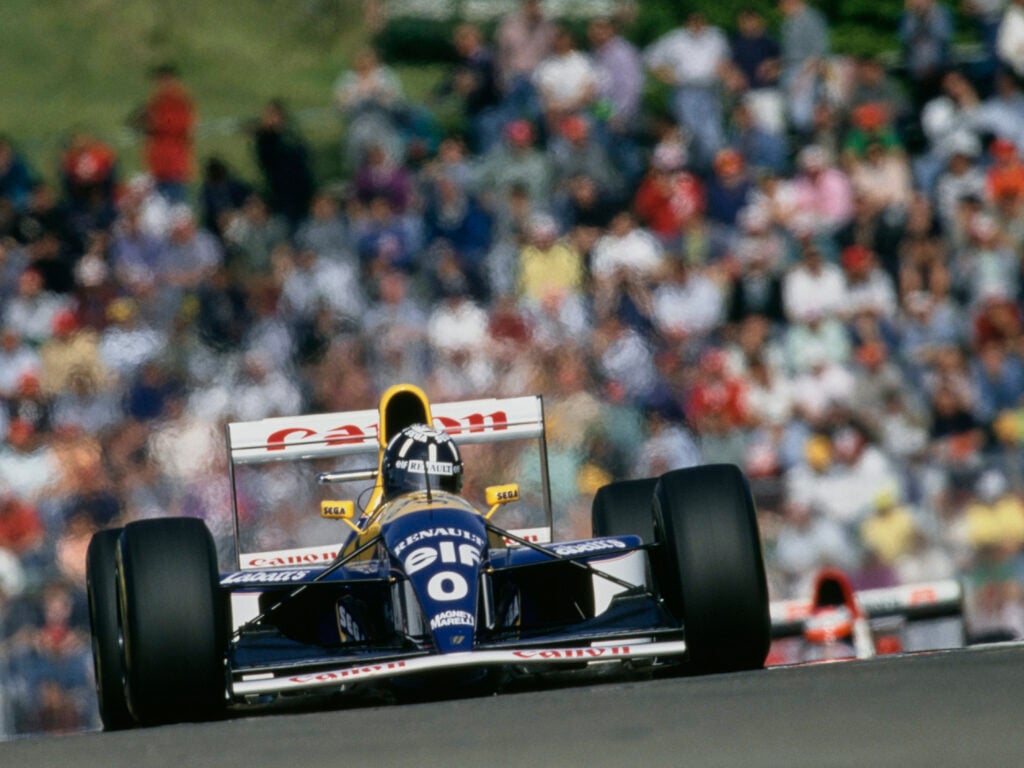
Following the remarkable success of the FW14B, development of its successor, the FW15, was pushed back from an intended mid-1992 debut to the start of the 1993 season. Rather than rushing its introduction, Williams opted to further refine what was already a dominant concept. The resulting FW15C built upon its predecessor’s strengths, with significant advancements in both active suspension and aerodynamic performance.
Despite regulation changes aimed at reducing performance across the grid for 1993, the ingenuity of Adrian Newey and Patrick Head ensured that the FW15C was even faster than the FW14B. The team’s evolution of the active suspension system, now fully electronically controlled, allowed for unprecedented precision, delivering exceptional stability and remarkable levels of downforce.
Driven by Alain Prost and Damon Hill, the FW15C once again established Williams as the benchmark in Formula 1. The pair combined to take 10 victories from 16 races, underlining the car’s superiority. Only Ayrton Senna, in the McLaren MP4/8, was able to mount any consistent challenge, claiming five wins over the course of the season.
1994 – Williams FW16
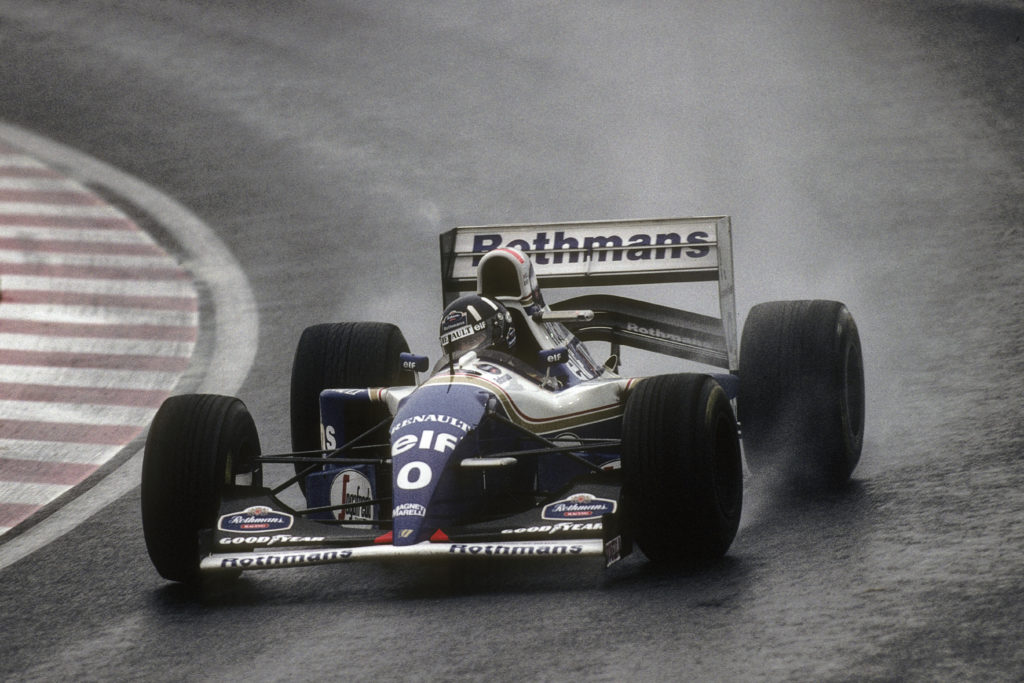
After securing back-to-back titles in 1992 and 1993, Adrian Newey and Patrick Head continued to refine their highly successful design philosophy. For 1994, Williams introduced the FW16, an evolution of the FW15C, adapted to comply with sweeping regulation changes.
However, the season began under difficult circumstances. The FIA’s ban on active suspension, introduced as part of cost-cutting measures, fundamentally altered the car’s behaviour and left both Ayrton Senna and Damon Hill struggling to extract consistent performance in the early races. Tragedy struck at the San Marino Grand Prix, where Senna lost his life just three races into the season, casting a long shadow over the campaign.
Despite these challenges, Williams regrouped and continued to develop the FW16. Midway through the season, the team introduced a series of significant updates, including revised bodywork aimed at resolving persistent stalling issues at race starts. Newey and Head also redesigned the sidepods, shortening them to address a critical aerodynamic flaw in the original concept. The earlier design had caused airflow separation, which in turn disrupted the diffuser and reduced overall downforce.
These improvements stabilised the car’s performance, allowing Williams to remain competitive throughout the year and ultimately secure the Constructors’ Championship once again.
1996 – Williams FW18
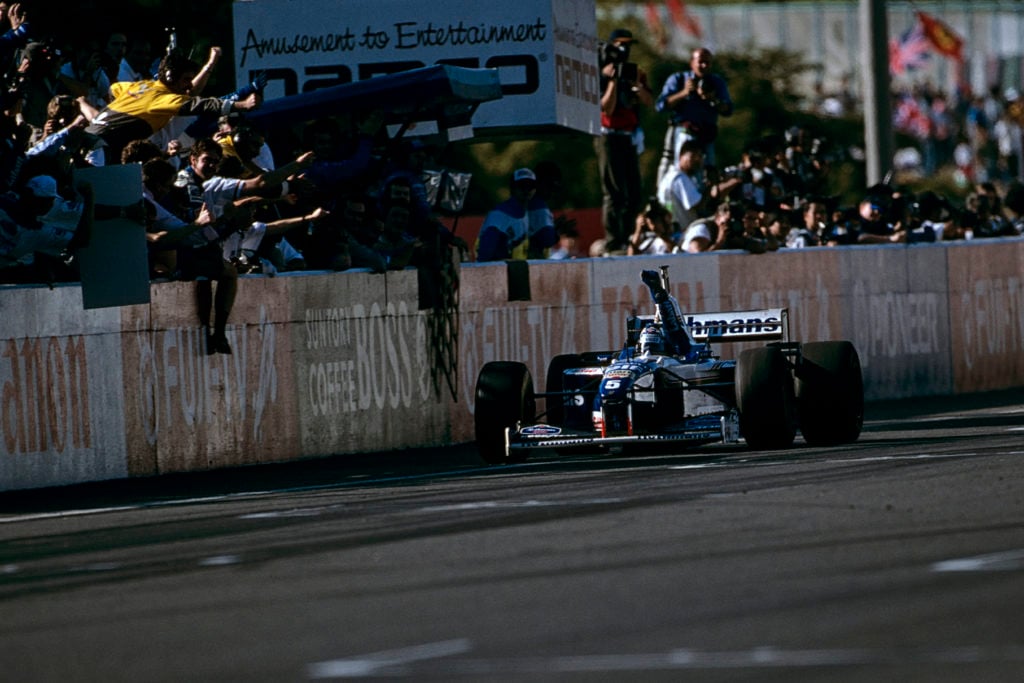
After a 1995 season dominated by Michael Schumacher and Benetton, where Williams finished second in both championships, the team returned to the front in emphatic fashion the following year.
Heading into their fourth season together, Damon Hill continued to struggle with cockpit ergonomics, prompting Adrian Newey to rethink fundamental aspects of driver positioning. His solution would prove revolutionary. By adopting a more reclined seating position and lowering the driver further within the chassis, Newey not only improved driver comfort but also enhanced the car’s aerodynamic efficiency—an innovation that would influence Formula 1 design for years to come.
Demonstrating his trademark ability to exploit the nuances of the regulations, Newey also reinterpreted the rules surrounding raised cockpit sides. While rival teams extended the higher bodywork along the full length of the cockpit, Newey applied the requirement more selectively—raising the chassis only around the driver’s helmet. This approach delivered the necessary compliance while minimising aerodynamic compromise.
Alongside these innovations, Newey continued to refine the team’s already effective sidepod concept. The further development of the shorter sidepods contributed to a significant increase in downforce, helping Williams re-establish themselves as the benchmark on the grid.
1997 – Williams FW19
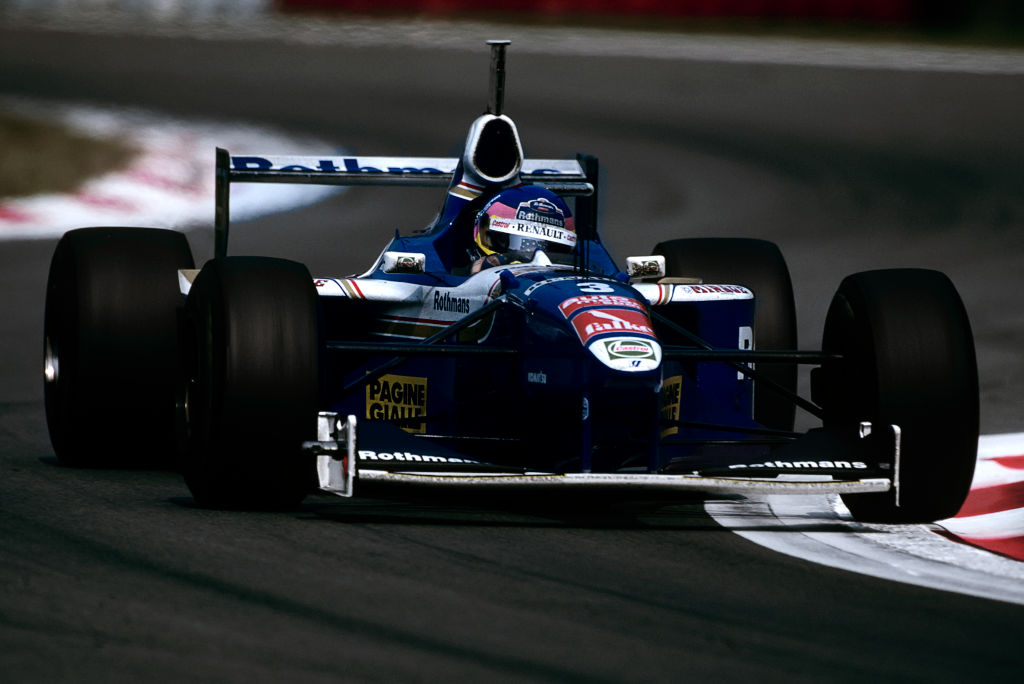
Although Adrian Newey departed Williams for McLaren at the end of the 1996 season, his influence remained evident in the team’s continued success in 1997. Having played a key role in the early development of the FW19, Newey’s design legacy carried over into what would become another championship-winning car.
The FW19 was an evolution of its highly successful predecessor, incorporating a number of subtle yet effective refinements. Among the most notable was a revised airbox design, conceived by Newey prior to his departure. Inspired by observations of a propeller aircraft engine, the design featured a raised air intake with a distinctive cut-out separating it from the headrest below, an innovation that improved airflow efficiency.
Despite Newey’s absence during the season itself, the strength of his groundwork was clear. Williams went on to secure both the Constructors’ and Drivers’ Championships, with Jacques Villeneuve claiming the only title of his career.
1998 – McLaren MP4/13
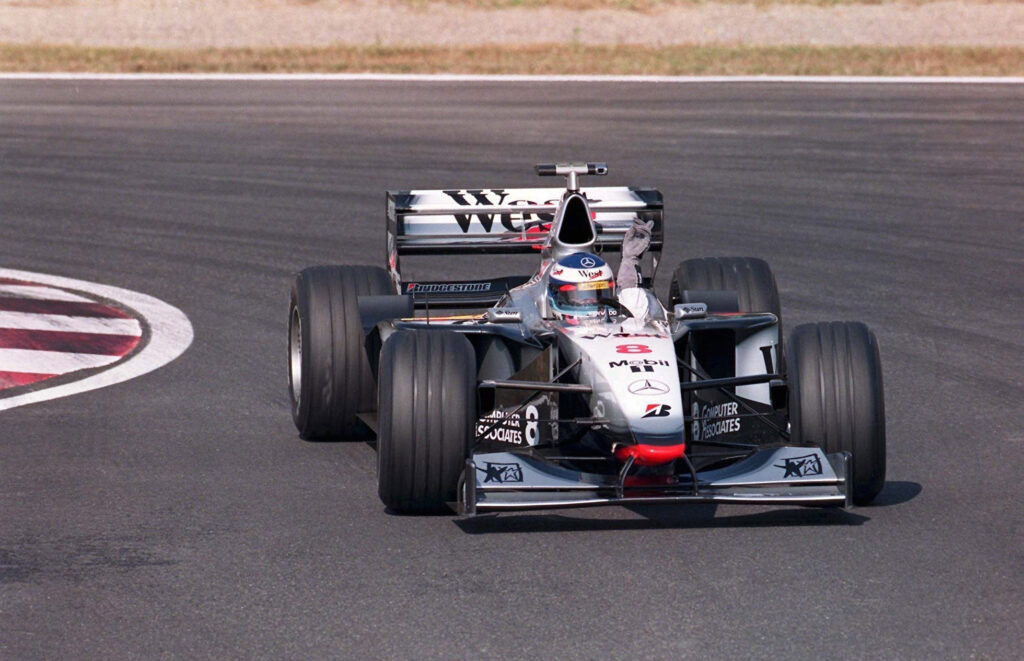
After dominating much of the 1990s with Williams, Adrian Newey’s final victory of the decade came just a year after his move to McLaren. Despite only joining the team in August 1997, he made an immediate impact, quickly turning his attention to the design of the 1998 challenger, the McLaren MP4/13.
Newey introduced several key innovations to the car, most notably a longer wheelbase, which altered the way load was distributed through the tyres in corners, particularly the inside front and outside rear. This approach improved balance and consistency, giving McLaren a significant performance advantage. The concept was unique at the time, and rival teams soon began adopting similar ideas in response.
The MP4/13 proved to be the class of the field. Mika Häkkinen secured the Drivers’ Championship, while McLaren claimed the Constructors’ title, overcoming strong competition from Michael Schumacher and Ferrari.
2010 – Red Bull RB6
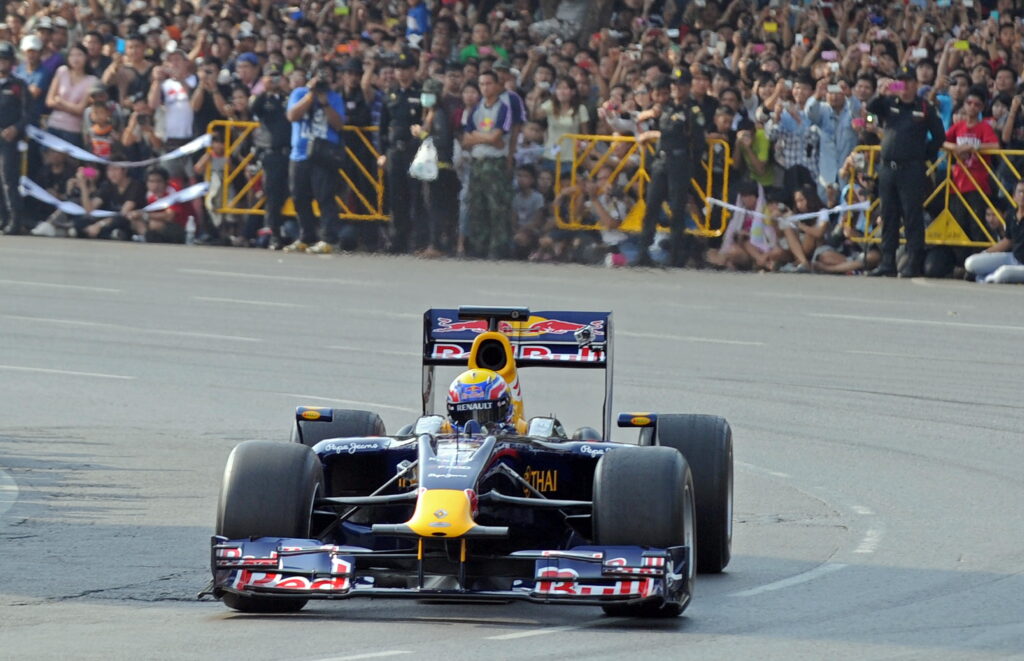
It took Adrian Newey 12 years to return to championship-winning form after joining Red Bull in 2006. The intervening period saw Formula 1’s competitive landscape shift, with Ferrari’s early dominance giving way to title-winning campaigns from Renault, Brawn GP and McLaren.
By 2009, Red Bull had emerged as a genuine contender, with Sebastian Vettel finishing runner-up in the Drivers’ Championship. That progress laid the foundation for a breakthrough season in 2010.
At the heart of Red Bull’s success was the RB6, a car that showcased Newey’s aerodynamic mastery. A revised rear suspension design allowed for a longer rear end, optimising the effectiveness of the controversial double diffuser concept that had defined the previous season. Combined with a tightly packaged gearbox and an aggressive high-rake philosophy, the RB6 delivered exceptional aerodynamic performance.
The car’s pace, and particularly its rear-end grip, sparked suspicion among rival teams, with accusations of rule-bending emerging throughout the season. However, Red Bull’s design passed the FIA’s stringent load tests, confirming its legality.
With a dominant car at his disposal, Vettel secured his first Drivers’ Championship, while Red Bull claimed the Constructors’ title, marking the beginning of a new era of dominance for both team and designer.
2011 – Red Bull RB7
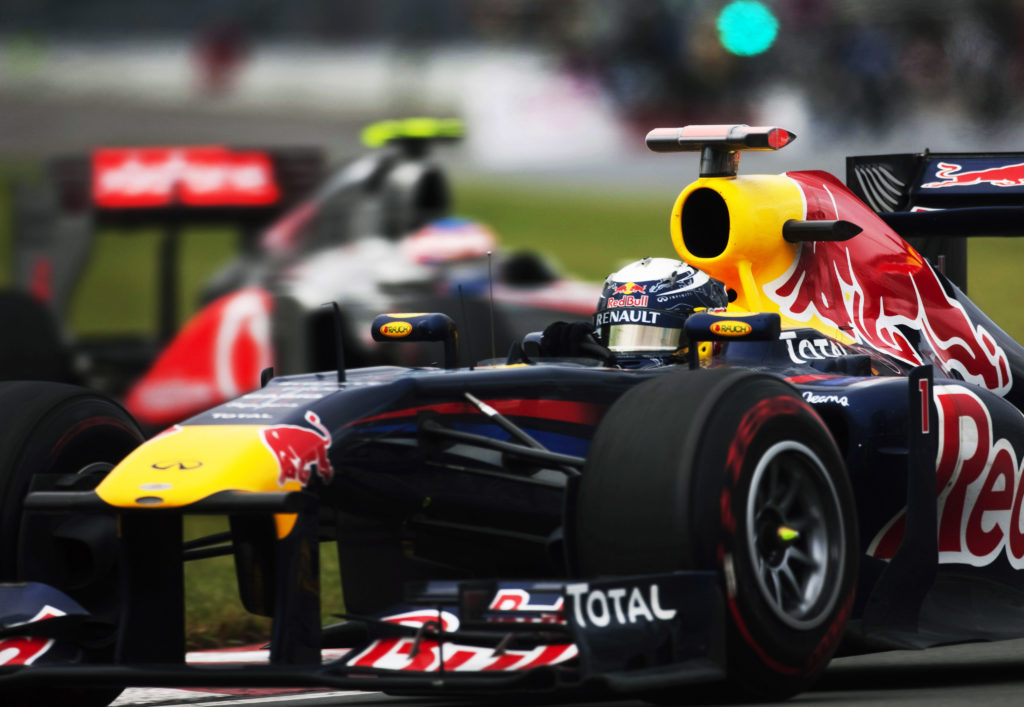
The 2011 season proved even more dominant for Red Bull, with the RB7 powering Sebastian Vettel to a commanding title victory, finishing 122 points clear of runner-up Jenson Button. It was arguably the team’s most complete car of the era, combining aerodynamic sophistication with exceptional balance and drivability.
Central to its performance was an innovative exhaust concept introduced by Adrian Newey before pre-season testing had even concluded. The design positioned the exhaust outlets lower, near the inside of the rear tyres, and allowed for greater control over airflow, whether directing hot or cold gases. This significantly enhanced rear stability, particularly under braking, and improved overall cornering performance.
Newey also reworked the car’s internal packaging to accommodate the return of the kinetic energy recovery system (KERS). By relocating the battery from beneath the fuel cell into the gearbox bellhousing, he achieved a more efficient weight distribution. Although reliability concerns meant KERS was not consistently used during races due to overheating risks, it provided a clear advantage in qualifying and at race starts for both Vettel and Mark Webber.
The result was a car that not only dominated on track but also showcased Newey’s continued ability to innovate within evolving technical regulations.
2012 – Red Bull RB8
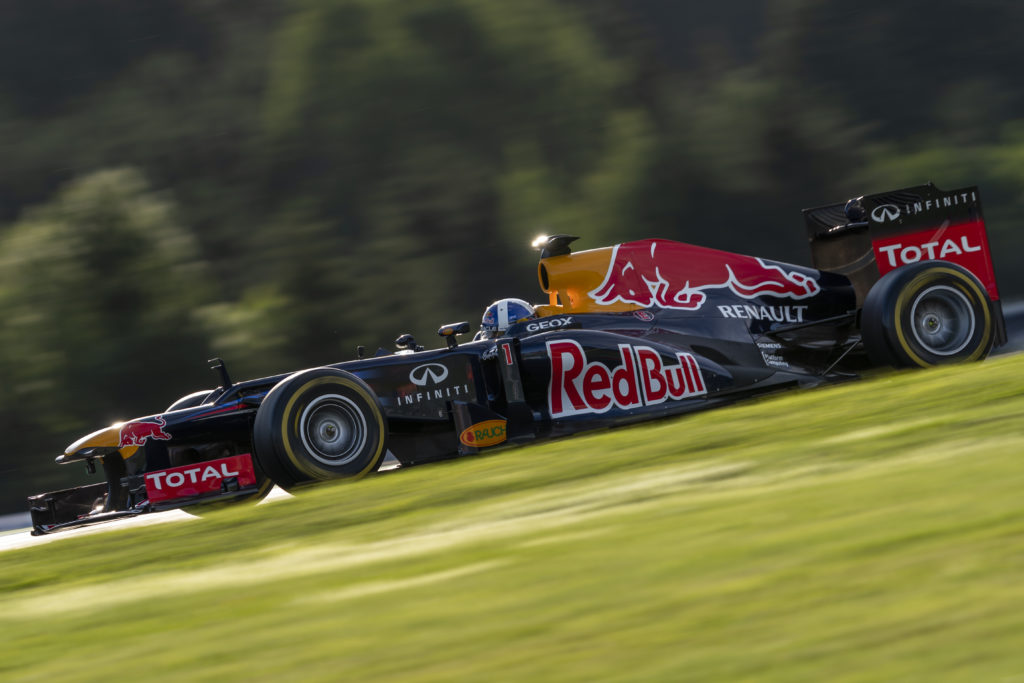
Following their dominance in 2011, Red Bull secured a third consecutive title in 2012, despite significant regulation changes that threatened to disrupt their advantage. One of the key adjustments mandated by the FIA concerned exhaust positioning, requiring outlets to be placed 330mm behind the rear wheel rather than inboard near the tyres.
At the same time, the banning of the double diffuser forced Adrian Newey to rethink the car’s aerodynamic concept. In response, Red Bull developed a Coandă-effect exhaust system, trialled on the RB8 during pre-season testing. This design featured inlet tunnels at the base of the sidepods, directing airflow more effectively towards the diffuser and helping recover lost downforce.
The RB8 did not immediately match the dominance of its predecessor, and the early part of the season proved more competitive. Sebastian Vettel claimed victory in the fourth race of the year, while Mark Webber added wins in Monaco and at the British Grand Prix. However, it was only in the latter stages of the season that Newey and his team fully unlocked the car’s potential.
With a series of refinements improving consistency and performance, Vettel surged in the closing races to secure his third consecutive Drivers’ Championship, ensuring Red Bull remained at the pinnacle of Formula 1.
2013 – Red Bull RB9
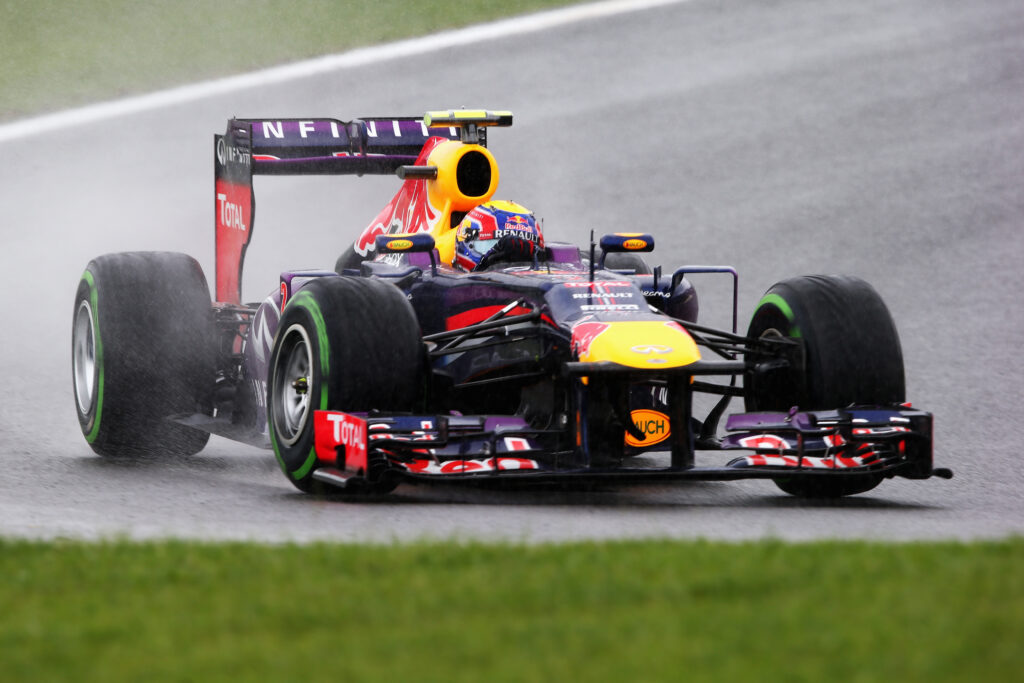
The RB9, introduced in 2013, marked the final evolution of the regulation era that began in 2009, before Formula 1’s transition to V6 turbo-hybrid power units the following year. It proved to be the ultimate expression of Adrian Newey’s philosophy under those rules, delivering one of the most dominant seasons in the sport’s history.
Sebastian Vettel won 13 of the 19 races, including a then-record streak of nine consecutive victories to close out the championship. The RB9’s superiority was built on refinement rather than reinvention. As Newey himself explained, “all the architecture of the car was the same [as the RB8], with various aerodynamic tidy-ups and evolutions.”
The car retained key concepts such as the Coandă-effect exhaust, which directed airflow towards the brake ducts and diffuser edges to maximise downforce, alongside Red Bull’s signature high-rake design. These elements combined to produce exceptional aerodynamic efficiency and rear-end stability.
Such was the level of downforce generated by the RB9 that the team could afford to trim it back at certain circuits in favour of improved straight-line speed. This approach was particularly evident in the latter half of the season at high-speed tracks such as Monza, Spa and Yeongam, where Red Bull balanced its aerodynamic advantage with competitive top-end performance.
2022 – Red Bull RB18
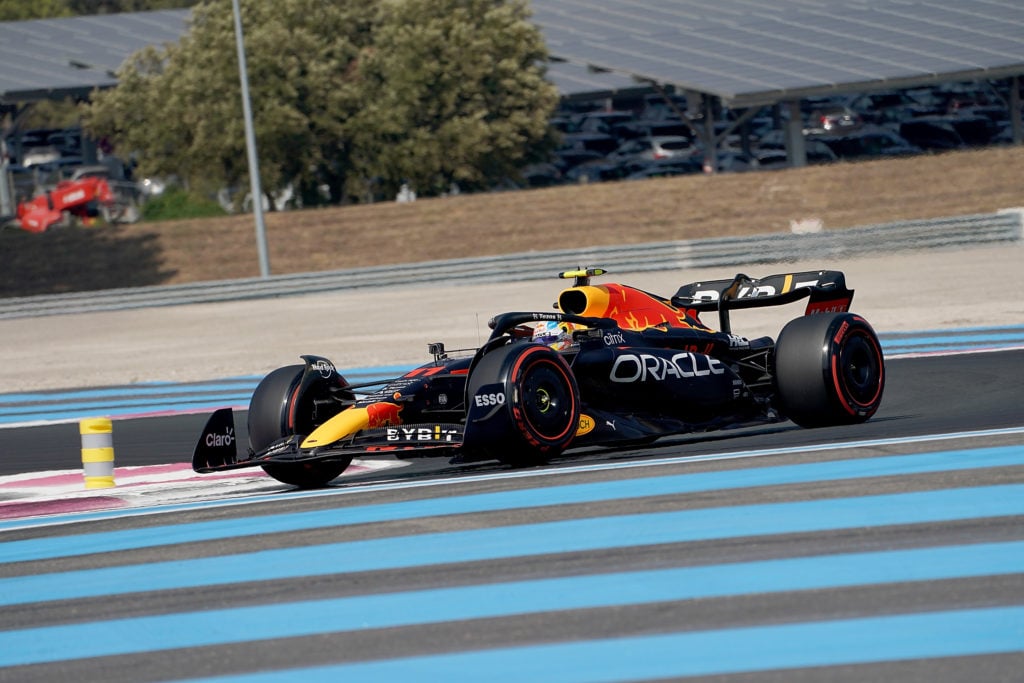
The 2022 season marked the beginning of Formula 1’s ground-effect era, one of the most significant regulatory overhauls in the sport’s history. Unsurprisingly, Adrian Newey once again proved adept at mastering sweeping technical changes.
Red Bull’s campaign got off to a difficult start in Bahrain, where reliability issues left Sergio Perez and Max Verstappen down in P18 and P19 respectively. However, the team responded quickly, transforming early setbacks into sustained dominance. Verstappen went on to win 15 of the 22 races, along with two additional podium finishes, in a commanding championship-winning season.
While the RB18 was not always the fastest car over a single lap, it truly excelled on race day. Its exceptional straight-line speed, combined with strong tyre management, made it particularly effective across race distances.
Newey placed significant emphasis on both front and rear suspension design, ensuring a stable aerodynamic platform under the new ground-effect regulations. Crucially, this approach helped Red Bull avoid the severe porpoising issues that plagued several rivals, most notably Mercedes.
As the season progressed, Newey and his team continued to refine the RB18. Weight reduction became a key focus, along with shifting mass rearwards to improve balance and reduce understeer. These developments further enhanced the car’s consistency and performance, cementing Red Bull’s return to the top of Formula 1.
2023 – Red Bull RB19

Red Bull’s most recent Constructors’ Championship came during one of the most dominant individual seasons in Formula 1 history, with Max Verstappen claiming an extraordinary 19 victories from 22 races. The team was beaten just once all year, in Singapore, a circuit that exposed the few remaining weaknesses of the RB19.
A key factor in the car’s consistency was Newey’s sophisticated suspension philosophy. The incorporation of anti-dive geometry at the front and anti-squat characteristics at the rear allowed the RB19 to maintain exceptional stability under braking and acceleration. This gave the car remarkable adaptability across a wide range of circuits, speeds and cornering demands.
Fans were given a rare insight into the RB19’s intricate design during qualifying for the Monaco Grand Prix, when Sergio Perez’s crash exposed the car’s floor. One of the most striking features was its complex “topography”, a highly sculpted surface engineered to precisely manage airflow and maximise aerodynamic efficiency.
Together, these innovations underpinned a season of near-total dominance, further cementing Newey’s legacy as one of Formula 1’s greatest designers.
Receive exclusive F1 news and updates twice a week to your mailbox