Lando Norris
 McLaren
 Mercedes
 Red Bull
 Ferrari
 Williams
 Racing Bulls
 Aston Martin
 Haas
Haas Alpine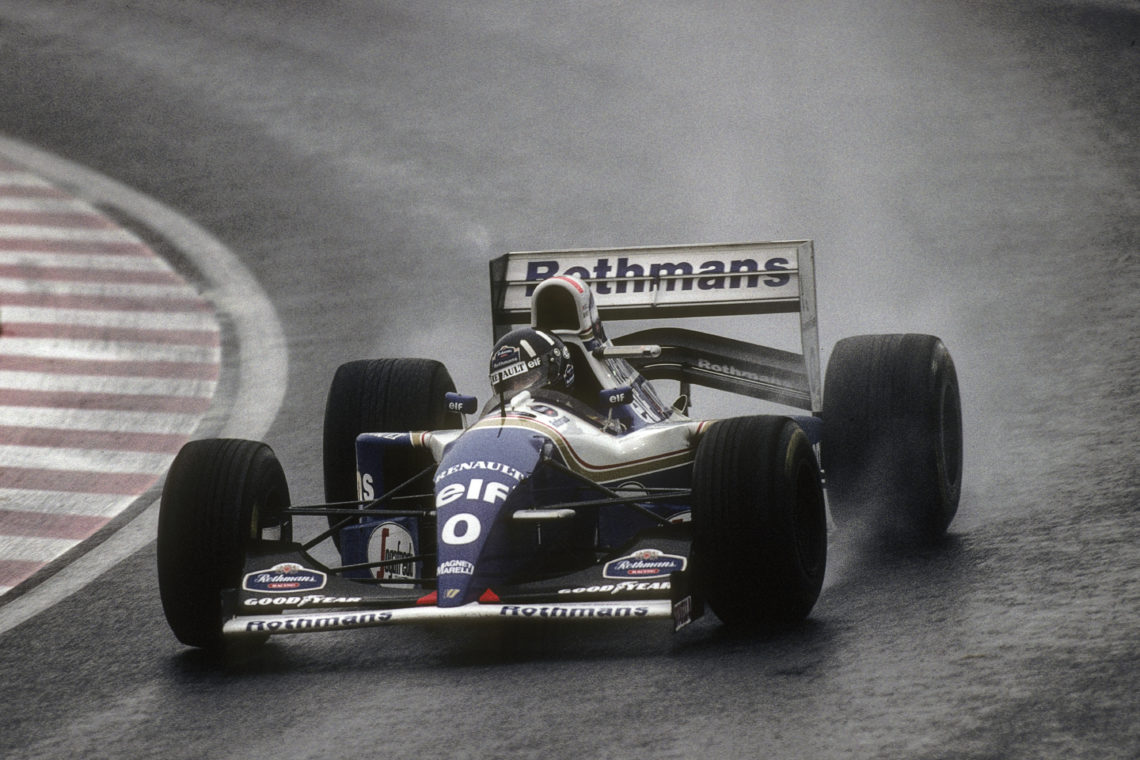


Formula 1 visits some of the most iconic race tracks around the world including Silverstone, Spa Francorchamps, Monza, and Monaco.
It is a testament that most of the circuits on the current calendar have been mainstays throughout F1’s 75-year history, with only a few new venues added as F1’s global popularity has expended.
Oscar Piastri says the best track is Spa Francorchamps on the current F1 calendar, while both Jenson Button and Lewis Hamilton agree that their favourite is Silverstone.
As F1 cars have got faster, so has the safety of these tracks. Spa Francorchamps spent millions on upgrades, while Hungary is also upgrading its facilities along with Monza as part of its contract extension through to 2031.
A lot of the tracks had implemented safety measures after Ayrton Senna’s death in 1994, but some circuits still scared drivers. When discussing which track he feared when racing in the book Lights Out, Full Throttle, former F1 driver Damon Hill named on circuit that he claims put the ‘fear of God’ in him every time.
Damon Hill says Suzuka used to put ‘fear of God’ into him
Suzuka is known for being a circuit that is like Monaco without the walls, simply because of how narrow the tarmac is and how easy it can be to have a crash. Hill says it was one of the scariest tracks he ever raced on, and had to train his brain to accept the danger.
“The only track that used to put the fear of God into me was Suzuka, which is where I had one of my best Formula 1 wins in 1994. Mark my words, you do not want to go off at Suzuka, and when I first arrived at the circuit I was, for want of a slightly less crude phrase, crapping myself,” said Hill.
“Wow, I thought. This is a bit manly. A bit butch. It was always known as being a very technical track and quite difficult, but what I hadn’t appreciated was just how fast and scary it was.
“Half of my brain was saying, this is going to kill you, Damon, and when your brain tells you there’s danger ahead, the natural response is to attempt to remove yourself from the situation. The other half of my brain was saying go for it, so I had a kind of mental conundrum to contend with. I had to try and ignore the sensible half of my brain as best I could.”
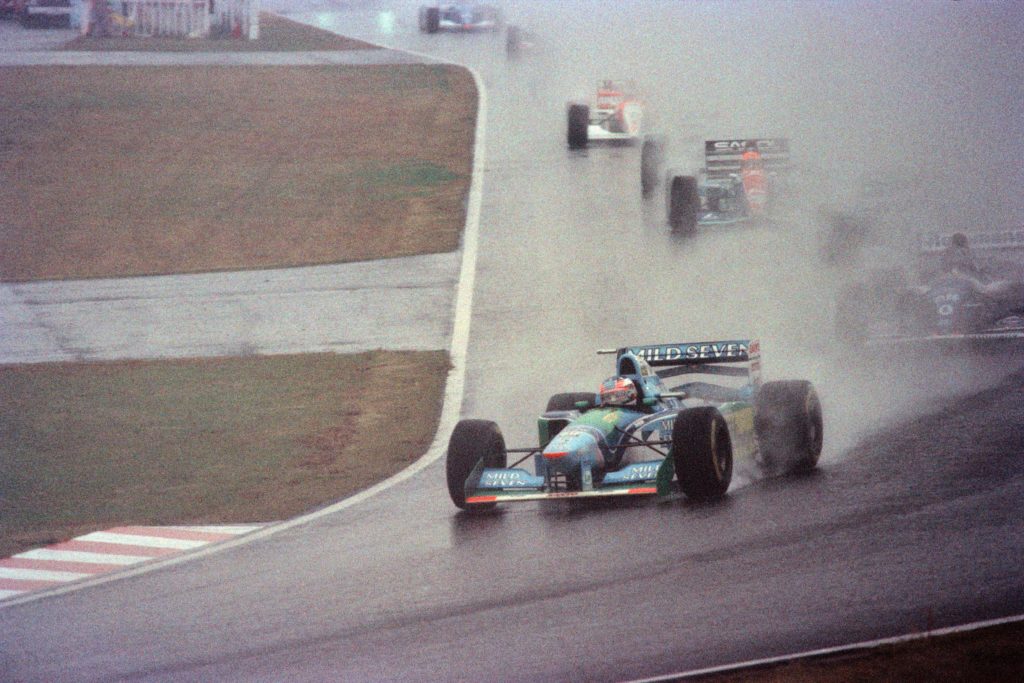
The last time an F1 race was won on aggregate time
Hill’s win at the 1994 Japanese Grand Prix was at the height of his title battle with Michael Schumacher and presented one of the first opportunities it could be decided.
Schumacher was already leading the championship by five points from Hill, which meant second was enough for the latter the clinch the title.
The race took place in sodden conditions, with it taking just 15 laps before it was red-flagged due to a big crash involving Gianni Morbidelli. When the rain eased, it was decided by the stewards to run the remainder of the race on aggregate corrected time.
Schumacher had led by 6.8 seconds when the red flag was shown, but Hill had a bigger lead at the chequered flag (10.1 seconds). This means he took the win by 3.3 seconds on aggregate, as the stewards took the results based on the gaps before the stoppage and the gaps at the end of the race.
It remains the last time that an F1 race has been decided on aggregate time, after it was decided to scrap it for the 1995 season and beyond.
Receive exclusive F1 news and updates twice a week to your mailbox