Lando Norris
 McLaren
 Mercedes
 Red Bull
 Ferrari
 Williams
 Racing Bulls
 Aston Martin
 Haas
Haas Alpine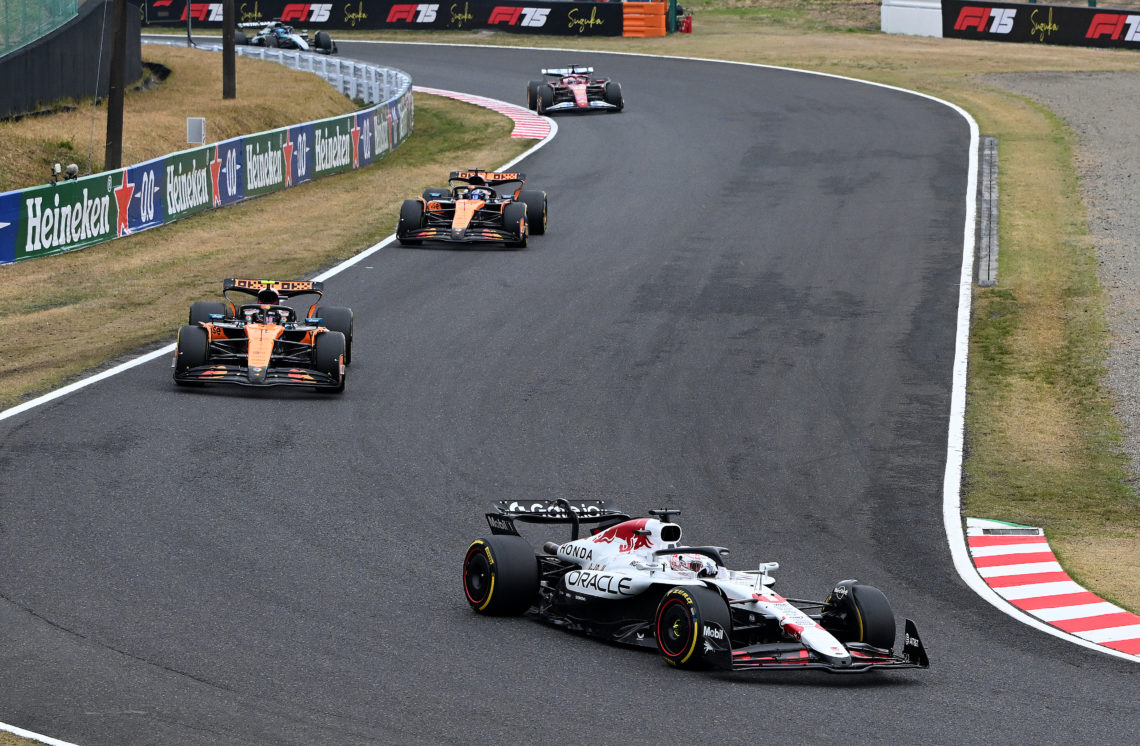


The 2025 Formula 1 season has provided plenty of talking points after the first few race weekends, but many of them have been due to events taking place away from the track.
The Japanese Grand Prix proved not to be an exception in this case, with only one overtake taking place between the drivers who started in the top 10 on Sunday.
That was Lewis Hamilton finding a way past Isack Hadjar in the early stages of the race, while the under pressure Jack Doohan moved up the most places by advancing from P19 on the grid to 15th by the time he reached the chequered flag.
Max Verstappen put in an incredible performance to win the race at Suzuka, with both Lando Norris and Oscar Piastri finishing just a few seconds behind him.
However, this has only highlighted a problem that’s existed for some time during this set of regulations, and something that Ted Kravitz couldn’t help but bring up during Sunday’s race.
READ MORE: Red Bull driver Max Verstappen’s life outside F1 from net worth to girlfriend
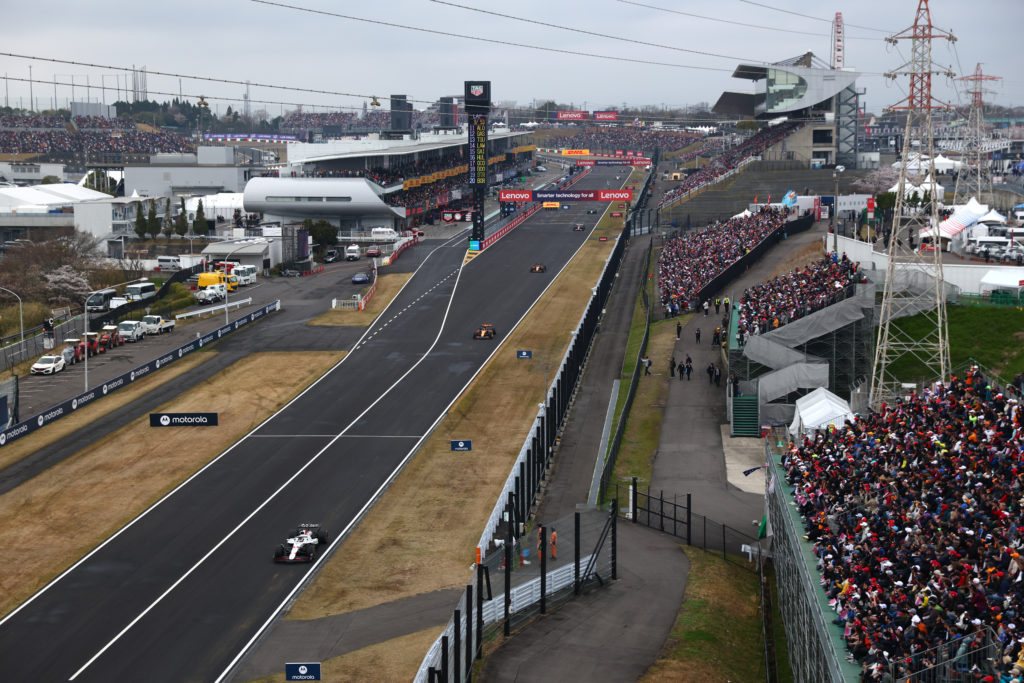
Ted Kravitz highlights Formula 1’s ‘clean air’ problem after Max Verstappen wins the Japanese Grand Prix
Lando Norris was sent a message over his team radio as he tried to chase down Verstappen at the front of the race, where his engineer said: “Lando, tyre update.
“No sign of graining on any car. This is a rare thermal-limited race.”
After hearing that message, Kravitz, covering the race for Sky Sports F1 (6/4 6:25 am) replied: “Thermal-limited, well surely he’s talking about the tyres not overheating, no?
“Or, is he not getting enough heat into it? But in any case, what we’re seeing here is the advantage of being on pole position.
“At the moment, McLaren don’t have an answer for Verstappen’s speed.
“They talk about tyres here and there, and thermal limitations, Crofty, but even though Piastri’s just set the fastest lap of the race, they are not getting close to Max Verstappen.
“This is the advantage, I think, we’re seeing how these cars are just really badly affected if they’re behind the polesitter.
“The advantage of clean air, Max is enjoying that at the moment.”
READ MORE: McLaren driver Lando Norris’ life outside F1 from parents to celebration
Formula 1 fans fume as Japanese Grand Prix highlights Pirelli issues and overtaking problems
It’s safe to say that very few fans enjoyed the action at Suzuka during the race, with drivers finding it so difficult to overtake.
Those that did had a significant pace advantage and were generally on different tyre strategies, rather than outdriving their opponents.
Former F1 engineer Mark Lane took to X and said, “Following a car closely with these high downforces is very difficult as it screws your tyres. The FIA are looking to fix this situation with the new regulations next year.”
One fan took to social media and replied to Lane, saying, “Rightly so, but the main thing that made this race dull is the fact [that] a Medium tyre could last 60% of the race distance and the hard could maybe last 150% of the race distance.
“Pirelli should have brought softer compounds. Default one-stoppers take a chunk of excitement away.”
Another fan commented on the race and explained, “I don’t know how anybody can defend these current cars. They produce too much downforce at high speeds and not a lot of mechanical grip at low speeds due to how low and stiff they need to run to achieve it.
“That’s not only the worst combination for racing, but it’s just awful in general for the drivers too.”
| Position | Constructors' Standings | Points |
| 1 | McLaren Racing | 111 |
| 2 | Mercedes-AMG Petronas | 75 |
| 3 | Red Bull Racing | 61 |
| 4 | Scuderia Ferrari | 35 |
| 5 | Williams F1 Team | 19 |
| 6 | Haas F1 Team | 15 |
| 7 | Aston Martin F1 Team | 10 |
| 8 | Racing Bulls | 7 |
| 9 | Stake F1 Team Kick Sauber | 6 |
| 10 | Alpine F1 Team | 0 |
One comment read, “The way these cars interact with the tyres is just bizarre as well. Seems like if you don’t have the tyres in the optimal sweet spot it throws the entire car off balance.”
Another was unhappy with the size of the current F1 fans and explained, “Today’s cars are like a boat, they are heavy, they are big, the pace difference between teams is so small that overtaking is impossible, the tyres last forever and they have so much downforce that it is very easy to drive them.”
Finally, another viewer of the race in Japan added, “It’s embarrassing, the Ground effect era was ditched the 1st time round for a reason.
“They brought it back promising us more overtakes and better following, but last week in China the commentator said they need 7 seconds of clear air, so how have these regulations changed anything!”
Will the 2026 Formula 1 regulations improve the quality of racing?
Formula 1’s regulations change in 2026, with new power units in production, cars set to be 30kg lighter and active aerodynamics being introduced.
In theory, these factors should all improve the quality of racing in Formula 1, especially on narrow tracks like Suzuka, where this generation of cars is simply too wide to go wheel-to-wheel at some points on the circuit.
Talking about the changes, FIA technical director Nikolas Tombazis said: “With this set of regulations the FIA has sought to develop a new generation of cars that are fully in touch with the DNA of Formula 1 – cars that are light, supremely fast and agile but which also remains at the cutting edge of technology, and to achieve this we worked towards what we called a ‘nimble car’ concept.”
Whether that proves to be the case or not is yet to be seen.
FIA president Mohammed Ben Sulayem has recently discussed the return of V10 engines, and if that were to go ahead, then the upcoming ruleset would only last a few years.
That suggests a lack of confidence in the new rules improving the F1 product, with recent 2026 Pirelli tyre tests suggesting the cars will be much slower than they are right now.
Receive exclusive F1 news and updates twice a week to your mailbox