Lando Norris
 McLaren
 Mercedes
 Red Bull
 Ferrari
 Williams
 Racing Bulls
 Aston Martin
 Haas
Haas Alpine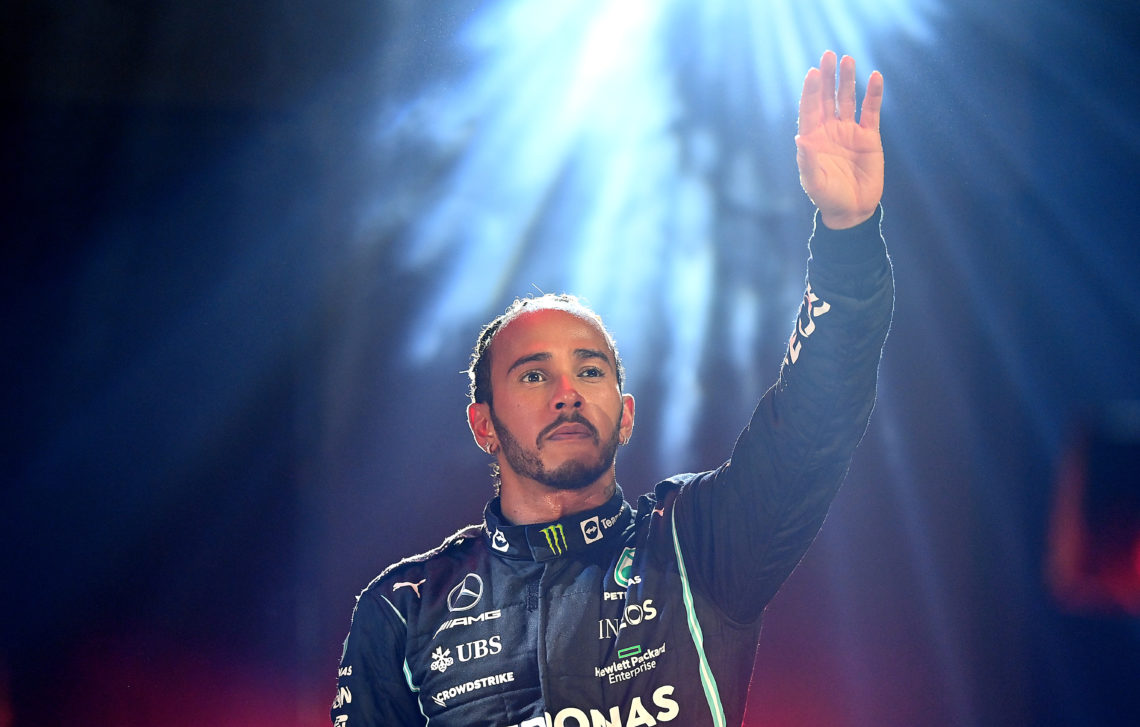


Key Stats
Date of Birth: 7 January 1985
Place of Birth: Stevenage, UK
Height: 1.74m (5’8”)
Current Team: Mercedes
Race starts: 314
Wins: 103
Podiums: 192
Poles: 103
Career points: 4453.5
Fastest laps: 61
First race: 2007 Australian Grand Prix
First win: 2007 Canadian Grand Prix
World Championships: 7 (2008, 2014, 2015, 2017, 2018, 2019, 2020)
How Old is Lewis Hamilton?
Lewis Hamilton was born in Stevenage, England on 7th January 1985, making the British racing driver 38 years old.
What Is Lewis Hamilton’s Height?
Hamilton is 1.72m or 5’8” which makes him slightly below average for a Formula 1 driver.
How Much Does Lewis Hamilton Earn and What’s His Net Worth?
Lewis Hamilton’s net worth is estimated at $285 million [£227 million] and reportedly makes $65 million [£52 million] each year from his Mercedes contract and endorsements, according to Forbes.
Early life
Lewis Hamilton is a living legend in the sport of Formula 1 and has won seven World Championships to date. Hamilton is known for his skill, precision, and dominance on the track, but his journey to becoming a world champion was not an easy one.
Before he discovered his love for karting, Hamilton was already fascinated with cars and racing. As a child, he would often play with toy cars and watch racing events on television with his father. At the age of six, Hamilton’s love for speed and competition began to take shape.
Lewis Hamilton’s Karting career
Lewis Hamilton’s karting career was nothing short of impressive. He quickly made a name for himself in the sport, showcasing his talent and determination at every turn. In 1999, he competed in the Intercontinental A and made significant progress in the ranks. He continued his upward trajectory in 2000, racing in the Formula A and Formula Super A categories for TeamMBM.com, alongside Nico Rosberg, who would later be his teammate in Formula 1.
Hamilton’s success in 2000 culminated in him becoming the European Champion, an impressive feat that saw him become the youngest driver ever to be ranked number one in the sport. He continued his winning streak in 2001, further cementing his place as a rising star in the world of karting. In that year, he even had the honour of racing against Michael Schumacher, who made a one-off return to karts. The race also featured other future Formula One drivers, including Vitantonio Liuzzi and Rosberg.
Although Schumacher and Hamilton saw little of each other on the track, the seven-time world champion praised the young Briton for his impressive performance. Despite finishing the final in seventh place, four places behind Schumacher, Hamilton’s raw talent and potential were already evident.
Following his string of karting successes, Hamilton was made a “Rising Star” Member by the British Racing Drivers’ Club in 2000. This recognition served as a testament to his hard work and dedication to the sport. Hamilton’s karting career paved the way for his eventual entry into Formula One, where he would go on to become one of the greatest racers of all time.
Hamilton and Ron Dennis
One of the most pivotal moments in Lewis Hamilton’s racing career occurred during his time in karting, where he had the opportunity to meet Ron Dennis, the CEO of McLaren. Hamilton’s talent and potential had already been recognized by many in the racing world, but it was this meeting that would ultimately lead to his entry into Formula One.
In 1998, Hamilton caught the attention of Dennis while he was still racing in karting events. Impressed with the young racer’s natural ability and determination, Dennis offered him a place in McLaren’s young driver development program. Hamilton jumped at the opportunity and worked hard to prove himself at every opportunity.
Hamilton later spoke about his chance meeting with Dennis after approaching the McLaren boss and said: “I won the [British Karting] Championship, I got this opportunity to go to this award ceremony, and I’d never been to anything like it before.

“I remember when I was going around and saying: ‘Please can you put your phone number down?’ And I got phone numbers from, like, everyone at the place basically.
“So, my dad goes: ‘That’s Ron Dennis over there, he’s the boss of McLaren that makes those cars that you love.’
“I tapped him on the side, and I said: ‘Hi, I’m Lewis Hamilton, and I’ve just won the British Karting Championship, and one day I want to be Formula 1 World Champion in your car.’
Hamilton admits he can’t recall what Dennis spoke to him about that day, but remembers one key line: ‘Phone me in nine years’.”
Lewis Hamilton steps up to Formula Renault
Lewis Hamilton’s journey towards becoming one of the greatest drivers in Formula One began in the Formula Renault series. After making his way through the karting ranks and impressing in the British Formula Renault Winter Series, Hamilton secured a seat with Manor Motorsport in the Formula Renault UK Championship in 2002.
In his debut season, Hamilton made an immediate impact by finishing third in the championship, with seven podium finishes three pole positions and three wins. The following year, he stepped up his game and dominated the championship, winning ten races and claiming the title with ease.
Hamilton’s impressive performances in the Formula Renault saw McLaren re-sign him to their young driver programme. Williams had come close to bringing him in, but engine supplier BMW wouldn’t fund his racing. This was a significant milestone in his career, as it established his pathway into a team that had produced some of the greatest drivers in Formula One history.
Hamilton’s success in the Formula Renault series was a clear indication of the talent and determination that would later take him to the pinnacle of motorsport. It was the first step on a journey that would see him become a multiple Formula One World Champion and one of the most dominant drivers of his generation.
Hamilton in Formula Three
Lewis Hamilton’s success in karting and Formula Renault caught the attention of many in the motorsport world and continued his racing journey in Formula 3. He took part in the final round of the 2003 British F2 Championship at Brands Hatch, but retired from both races.
In his full debut season in Formula 3 Euro Series, Hamilton showed his talent and skill by securing pole position in the fifth round at Norisring, going on to win the race. He finished fifth overall in the championship, just two points behind Rosberg.
The following year, Hamilton joined the ASM team and dominated the championship, winning 15 out of 20 races and securing 13 pole positions. He also set a new record for the most points in a single season, breaking the previous record set by Formula 1 world champion, Ayrton Senna. It was clear that Hamilton was a force to be reckoned with and was destined for greatness.
Hamilton’s success in Formula Renault and Formula 3 did not go unnoticed, and he was awarded the prestigious McLaren Autosport BRDC Award in 2003. This award is given to the most promising young British driver each year and has been won by many Formula 1 champions, including David Coulthard and Jenson Button.
After his dominating performance in Formula 3, Hamilton moved up to the GP2 series in 2006, the main feeder series for Formula 1.
Hamilton dominates GP2
Hamilton signed with the ART Grand Prix team in 2006 and dominated the season, winning five races and finishing on the podium in a total of 14 out of 22 races. He clinched the GP2 Championship in his rookie season with a 12-point lead over Nelson Piquet Jr., proving himself to be a dominant force in the series.
Hamilton’s success in GP2 was instrumental in his progression to Formula One. The GP2 Series, which was considered to be the main feeder series for Formula One, provided Hamilton with the perfect platform to demonstrate his ability and attract the attention of the F1 teams. His performances continued to catch the eye of the McLaren team and he was given the opportunity to test with McLaren that year before being promoted to a race seat for the 2007 season.
During his time in GP2, Hamilton was known for his aggressive driving style and his ability to overtake opponents with ease. He was a fierce competitor on the track and gained a reputation for his never-give-up attitude, which he displayed in several memorable races. One of the most iconic moments of his GP2 career was the race at Monaco in 2006, where not only won the race but set a new GP2 lap record in qualifying, with the next driver a quarter of a second slower.
Lewis Hamilton proved he was as ready as he was ever going to be to step up to Formula 1 after his debut GP2 season. The stars aligned, and an opportunity to step straight into McLaren’s race team opened up for the 2007 season.
Lewis Hamilton at McLaren
Lewis Hamilton’s rise to fame reached new heights when he joined the McLaren Formula One team in 2007. At just 22 years old, he became the first black driver to compete in Formula One and immediately impressed everyone with his skills on the track.
During his time with McLaren, Hamilton won 21 races, secured 26 pole positions, and set 49 fastest laps. He finished on the podium 49 times and scored an impressive 1,125 points in total for McLaren.
In his first season with the team, Hamilton was in a tight battle for the championship with his teammate Fernando Alonso and Ferrari’s Kimi Räikkönen. Hamilton had replaced the Finn at the start of the season and had a chance to win the championship going into the final race of the campaign. However, Raikkonen won the finale in Suzuka to win the championship by the narrowest of margins. The big talking point that season was McLaren being excluded from the Constructors’ Championship due to Spygate.
Hamilton’s secured his first World Championship in 2008, where he won five races and secured seven pole positions. In another closely fought championship battle, he eventually secured the title by just one point over Ferrari’s Felipe Massa. The season went down to the final race in Brazil, where Hamilton famously passed Timo Glock on the last lap to secure a fifth-place finish and with it, the championship.
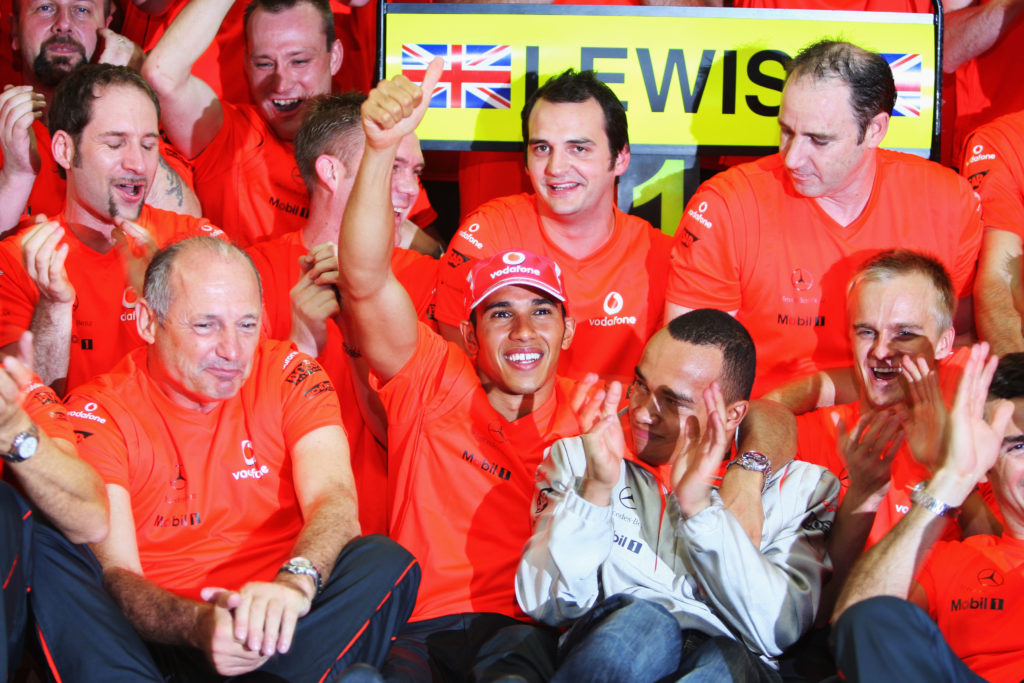
The following year, Hamilton finished the season in fifth place but still managed to secure two wins, four pole positions, and five podiums. He experienced a slight improvement in 2010, finishing fourth in the championship with three wins, but his car wasn’t able to compete with Sebastian Vettel’s Red Bull.
Hamilton’s McLaren still couldn’t compete in 2011, and although he won three races, he once again finished fifth in the Driver’s Championship.
In 2012, Hamilton secured his last win with the team at the United States Grand Prix. He finished the season in fourth place, with four wins, seven pole positions, and three fastest laps.
Despite the success on the track, Hamilton’s time with McLaren was not without its controversies. In 2009, he and McLaren misled stewards during the Australian Grand Prix, resulting in disqualification from the race. He was also involved in several on-track incidents with other drivers, including a collision with teammate Jenson Button during the 2011 Canadian Grand Prix.
After six seasons with McLaren, Hamilton announced his departure from the team at the end of the 2012 season. Despite this, his achievements with the team will be remembered for years to come. Hamilton was instrumental in McLaren’s success during this time, and his performances on the track helped to establish him as one of the greatest drivers in the sport’s history.
Lewis Hamilton’s Mercedes record
Lewis Hamilton’s switch to Mercedes ahead of the 2013 season was met with a mix of surprise and scepticism. He was leaving the team with which he had won his first world championship, and Mercedes had not been a front-running team in the years leading up to the move. However, it turned out to be a masterstroke, as Hamilton and Mercedes went on to dominate Formula 1 in the years that followed.
In his first season with the team, Hamilton finished fourth, as he watched Red Bull Racing’s Sebastian Vettel run away with the championship. Mercedes finished second in the Constructors’ Championship, and more than 200 points ahead of McLaren.
Hamilton won his second Driver’s Championship the following year, beating his teammate Nico Rosberg by 67 points. He won 11 races that year, matching his personal best from his championship-winning season with McLaren in 2011. Hamilton and Rosberg’s rivalry intensified that season, with the two drivers exchanging wins throughout the season. Red Bull suffered a serious drop-off, and it was Mercedes’s turn to dominate the sport.
Hamilton’s retained his title the following season, winning another 10 races, and finishing on the podium in all but two of the 19 races. He beat Rosberg by 59 points, and Mercedes won the constructors’ championship by a huge margin of 275 points.
However, 2016 is when his rivalry with Nico Rosberg reached its thrilling conclusion. Both drivers could win the title going into the final race in Abu Dhabi, and despite Hamilton reaching the chequered flag first, Rosberg did enough to win his one and only World Championship.
Rosberg retired immediately after winning the championship in 2016, and Hamilton was the clear favourite to win the title in 2017. He duly delivered, winning his fourth world championship and finishing 46 points ahead of Ferrari’s Sebastian Vettel. Hamilton won nine races that season, including a dominant victory in the United States Grand Prix that saw him clinch the championship with three races to spare. He won the championship again in 2018, his fifth overall, beating Ferrari’s Vettel by 88 points.
The 2019 season saw Hamilton and Mercedes continue their dominance, with the team winning their sixth consecutive constructors’ championship. Hamilton won 11 races that year, and although he faced a strong challenge from his teammate Valtteri Bottas and Red Bull’s Max Verstappen at times, he ultimately won the championship comfortably, finishing 87 points ahead of his teammate.
Hamilton’s seventh world championship in 2020 saw him equal Michael Schumacher’s record for the most championships won by a driver in Formula 1 history. He won 11 races in a disrupted season and was never put under pressure from any other driver.
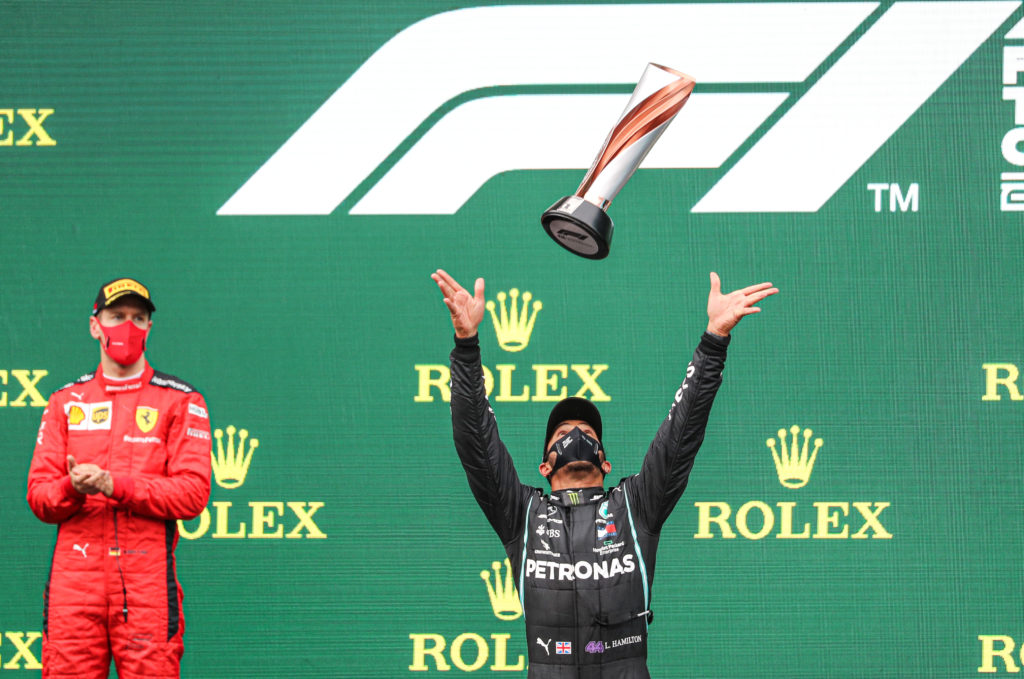
The 2021 Formula 1 season was one of the most exciting in the sport’s history. Hamilton had been level on points with Max Verstappen throughout the campaign as he chased his record eighth World Championship. It all came down to a highly controversial final lap in Abu Dhabi. The Red Bull driver overtook Hamilton on fresher tyres and won his first championship ahead of the British driver. The grace with which he took the ultimate sucker punch that evening won’t be forgotten for a long time.
Red Bull’s dominance took hold in 2022, and Verstappen ran away with the Driver’s Championship. Hamilton failed to win a race in an F1 season for the first time in his career as Mercedes struggled to build a competitive car.
Legacy
Lewis Hamilton’s legacy in Formula 1 is already secure as one of the all-time greats of the sport. With seven World Championships, he is one of only two drivers in history to have achieved this feat.
His record-breaking career has seen him win 103 races, achieve 192 podium finishes, and secure 103 pole positions, making him the most successful driver in the history of the sport in terms of wins and pole positions.
Hamilton’s talent and competitive spirit have made him a fan favourite, and his influence can be seen not only in the records he has set but also in the changes he has brought to the sport.
Hamilton has been an advocate for diversity and inclusivity in Formula 1, using his platform to push for change both within the sport and in society as a whole. He has spoken out about issues such as racial inequality and environmental sustainability.
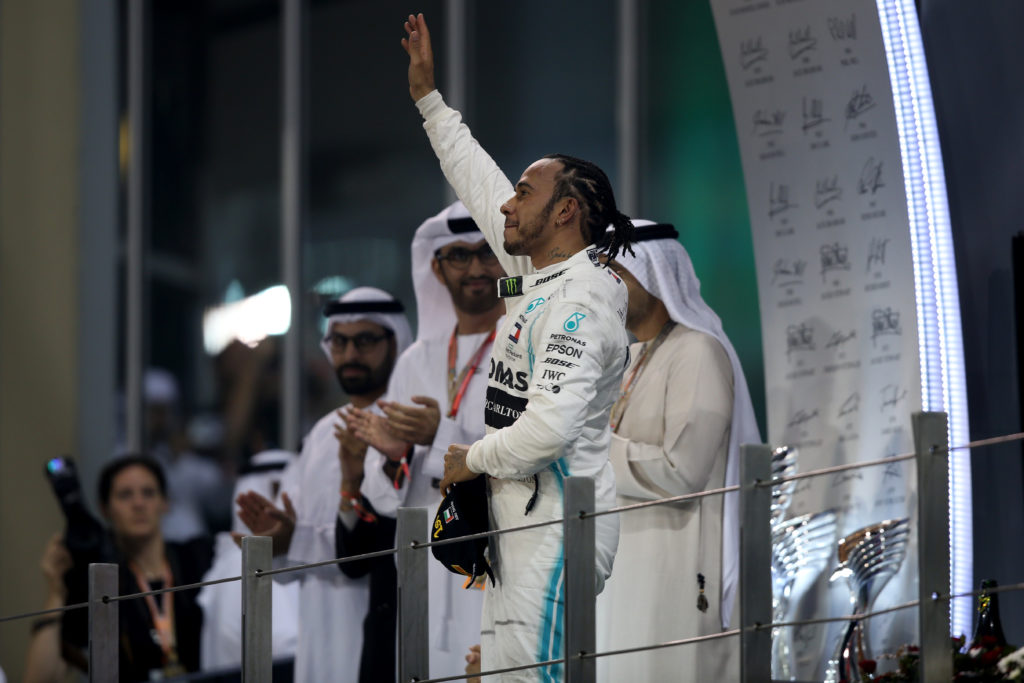
His success and influence have also helped to attract a new generation of fans to the sport, with his popularity extending far beyond the boundaries of Formula 1. Hamilton is one of the most recognised and influential sports personalities in the world, with a global following that transcends national boundaries.
Hamilton’s legacy will undoubtedly be felt for years to come, both in the records he has set and the changes he has helped to bring about in the sport. As he continues to compete at the highest level, his influence and impact on the sport will only continue to grow, and his place in the pantheon of Formula 1 legends is already secure.
What is Lewis Hamilton’s Instagram, Twitter and Facebook Handle?
Lewis Hamilton is one of the most followed sportspeople across social media. The 38-year-old has 32.5 million followers on Instagram, using the username lewishamilton. On Facebook, his page has more than 5 million followers. Hamilton can be found on Twitter @LewisHamilton and boasts more than 8 million followers on the platform.
Receive exclusive F1 news and updates twice a week to your mailbox